Five distinct rhinoceros species remain on Earth today, each with remarkable adaptations that have allowed them to survive for millions of years. Despite their similar appearance, these magnificent creatures have evolved unique features, behaviors, and habitats that distinguish them from one another in fascinating ways. In 2026, these five species face different conservation challenges, with populations ranging from over 6,000 individuals to fewer than 50.
- Five rhino species remain, each with unique adaptations: White rhinos graze with square lips, Black rhinos browse with hooked lips, Greater One-Horned have armored skin, Javan are extremely rare with single horns, and Sumatran are hairy with two horns
- African rhinos inhabit grasslands and savannas while Asian rhinos live in forests and wetlands, with dietary preferences directly linked to their lip structure
- Three species are critically endangered with populations under 80, while Black rhinos have recovered to over 6,000 individuals through conservation efforts
What Makes Each Rhinoceros Species Unique? — Distinctive Features in 2026
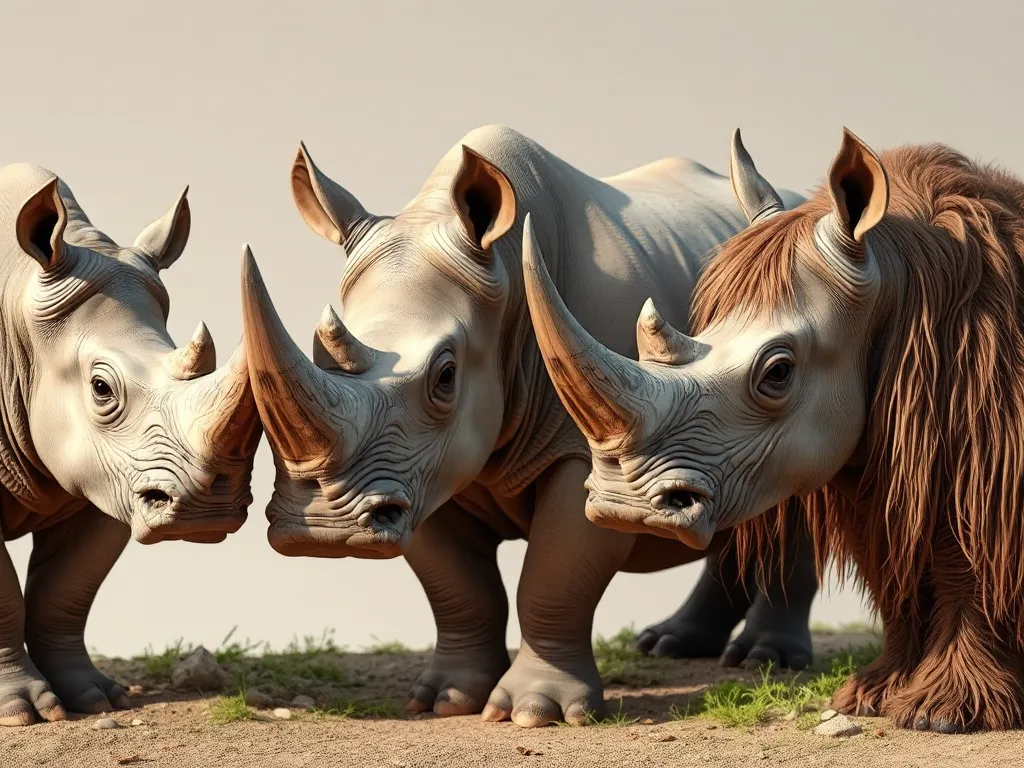
White Rhinoceros: The Grazing Giant with a Square Lip
The White Rhinoceros stands as the largest of all rhino species, distinguished by its wide, square lip perfectly adapted for grazing. This unique lip structure allows them to efficiently harvest grasses from the ground, setting them apart from all other rhino species. White rhinos can weigh up to 2,300-3,600 kg (5,000-8,000 pounds), making them true giants of the animal kingdom.
What many people don’t realize is that White Rhinos are actually divided into two subspecies with dramatically different conservation stories. The Southern White Rhino has made a remarkable recovery, with populations rebounding to over 6,000 individuals thanks to dedicated conservation efforts. In stark contrast, the Northern White Rhino is on the brink of extinction, with only two females remaining, highlighting the urgent need for continued conservation intervention.
Black Rhinoceros: The Browser with a Prehensile Hooked Lip
The Black Rhinoceros features a pointed, prehensile upper lip that acts like a delicate grasping tool, perfectly adapted for browsing leaves and shrubs rather than grazing. This hooked lip allows them to selectively browse on trees and bushes, making them more specialized feeders than their larger White Rhino cousins. Black rhinos are noticeably smaller than White Rhinos, typically weighing 800-1,400 kg (1,800-3,100 pounds).
Unlike the more social White Rhinos, Black Rhinos tend to be more solitary creatures, often living alone or in small mother-calf groups. Their solitary nature makes them particularly vulnerable to poaching, which decimated their populations throughout the 20th century. However, thanks to intensive anti-poaching efforts and habitat protection, Black Rhino numbers have doubled in recent years, offering hope for this critically endangered species.
Greater One-Horned Rhinoceros: The Armored Knight of the Wetlands
Known as the Indian Rhinoceros, this species is easily recognized by its distinctive single horn and skin folds that create an “armored knight” appearance. These skin folds give the impression of medieval armor plating, making the Greater One-Horned Rhinoceros one of the most visually distinctive rhino species. They are impressive in size, weighing between 1,800-2,700 kg (4,000-6,000 pounds).
What makes this species particularly unique is its semi-aquatic nature. Greater One-Horned Rhinos are excellent swimmers and often spend considerable time in water to cool off and feed on aquatic plants.
They inhabit the swamps and forests of India and Nepal, where their armored skin provides protection in dense vegetation. Their conservation journey represents one of wildlife conservation’s greatest success stories, with populations rebounding from near extinction to several thousand individuals.
Javan Rhinoceros: The Rare Rainforest Dweller with a Single Horn
The Javan Rhinoceros stands as one of the most endangered large mammals on Earth, with a population of only about 50 individuals remaining. This extreme rarity makes them conservation’s most urgent challenge. They are characterized by their single horn (though some males may develop a small second horn) and preference for dense tropical rainforest habitats.
What makes the Javan Rhino particularly vulnerable is their limited range – they exist only in Ujung Kulon National Park in Java, Indonesia. This single location makes the entire species incredibly susceptible to natural disasters, disease outbreaks, or any localized threats. Their dense rainforest habitat provides both food and protection, but the fragmentation of their remaining habitat continues to pose significant challenges to their survival.
Sumatran Rhinoceros: The Hairy Prehistoric Relic with Two Horns
The Sumatran Rhinoceros is the smallest and most ancient of all rhino species, often described as a “prehistoric relic” due to its hairy appearance and primitive characteristics. Unlike other rhinos, Sumatrans are covered in long hair, making them look more like woolly mammoths than their smooth-skinned cousins. They are the only Asian rhino species with two horns, though both tend to be relatively small.
Critically endangered with only 34-47 individuals remaining, the Sumatran Rhino faces extinction from multiple fronts. Their small size – typically weighing 500-800 kg (1,100-1,800 pounds) – makes them particularly vulnerable to poaching. Their prehistoric appearance isn’t just aesthetic; they represent an ancient lineage that has changed little over millions of years, making them living fossils in the world of rhinoceros evolution.
Where Do Rhinos Live and What Do They Eat? — Habitat and Diet in 2026
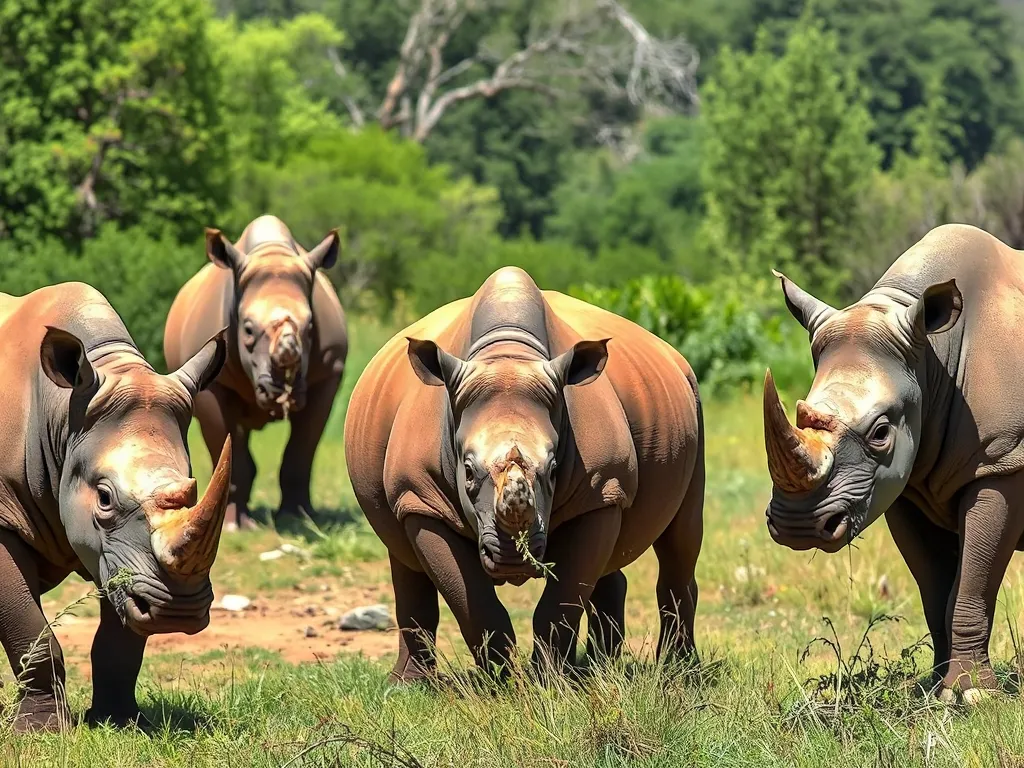
African Rhinos: Grasslands, Savannas, and Shrublands
- White Rhinoceros: Inhabits grasslands and savannas of eastern and southern Africa, preferring open areas with abundant grasses. They thrive in countries like South Africa, Kenya, and Namibia where grasslands provide their primary food source.
- Black Rhinoceros: Prefers tropical and subtropical grasslands and shrublands, often in more rugged terrain than White Rhinos. Found in countries like Tanzania, Kenya, South Africa, and Namibia, they tend to occupy more densely vegetated areas and forest edges.
Both African rhino species have adapted to seasonal variations in their habitats, moving to areas with better grazing opportunities during different times of the year. Their habitats are increasingly threatened by human expansion, agriculture, and climate change, which affects the availability of their preferred food sources and creates barriers to natural migration patterns.
Asian Rhinos: Forests, Wetlands, and Rainforest Sanctuaries
- Greater One-Horned Rhinoceros: Inhabits swamps and grasslands in the floodplains of rivers in northern India and southern Nepal. They prefer areas with tall grasses and abundant water sources, often found in protected areas like Kaziranga National Park and Chitwan National Park.
- Javan Rhinoceros: Confined to dense tropical rainforests, specifically Ujung Kulon National Park in Java, Indonesia. They prefer lowland rainforests with abundant vegetation and access to wallows for mud bathing.
- Sumatran Rhinoceros: Lives in tropical rainforests across Sumatra and Borneo in Indonesia and Malaysia.
They require dense forest cover with abundant undergrowth and need access to mineral licks and wallows.
Asian rhino habitats are characterized by higher rainfall and more dense vegetation than African rhino territories. These forest environments provide natural protection but also make the rhinos more difficult to monitor and protect. The fragmentation of these habitats has become one of the most significant threats to Asian rhino survival, as it isolates populations and reduces genetic diversity.
Dietary Differences: Grazers vs. Browsers — How Lips Determine Diet
The relationship between rhino lip structure and diet preference is a fascinating example of evolutionary adaptation. White Rhinoceros are pure grazers, using their wide, square lips to efficiently harvest grasses from the ground. Their diet consists almost entirely of various grass species, which they consume in large quantities to support their massive body size.
In contrast, Black Rhinoceros, Sumatran Rhinoceros, and Javan Rhinoceros are browsers, using their pointed, prehensile lips to selectively browse on leaves, shoots, fruits, and branches. Black Rhinos, for example, can be quite selective, often avoiding certain plants even when they’re abundant. This browsing behavior allows them to exploit food resources that grazers cannot access.
The Greater One-Horned Rhinoceros is unique in that it utilizes both feeding strategies. During the wet season, they graze on grasses, while during the dry season, they switch to browsing on leaves, fruits, and aquatic plants. This dietary flexibility has been key to their successful adaptation to changing environmental conditions.
The difference in feeding strategies also affects social behavior. Grazers like White Rhinos often form larger groups around abundant food sources, while browsers like Black Rhinos tend to be more solitary, as their food resources are more dispersed and often more competitive to obtain.
Conservation Status: How Many Rhinos Remain in 2026?
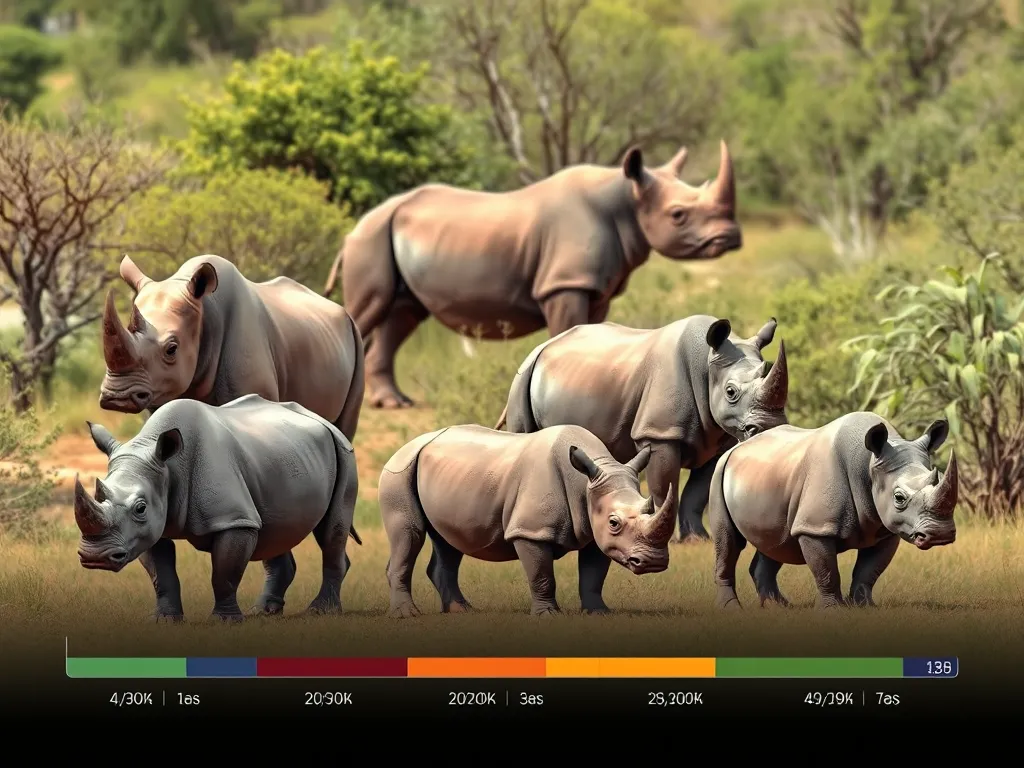
Critically Endangered Species: Javan and Sumatran Rhinos
| Species | Population (2026) | Primary Threats | Conservation Locations |
|---|---|---|---|
| Javan Rhinoceros | ~50 individuals | Extremely limited habitat, disease vulnerability, potential natural disasters, poaching | Ujung Kulon National Park, Java, Indonesia |
| Sumatran Rhinoceros | 34-47 individuals | Habitat fragmentation, poaching, low reproductive rates, genetic isolation | Sumatra and Borneo in fragmented protected areas |
The extreme endangerment of Javan and Sumatran Rhinos represents a conservation crisis of the highest order. These species face multiple existential threats that compound their vulnerability. The Javan Rhino’s situation is particularly precarious due to their single location – any catastrophic event like a volcanic eruption or disease outbreak could wipe out the entire species overnight.
Sumatran Rhinos face the additional challenge of extremely low reproductive rates. Females only reproduce every 3-5 years, and calves stay with their mothers for extended periods.
This slow reproductive cycle makes population recovery extremely difficult even if threats are reduced. Conservation efforts for both species focus on habitat protection, anti-poaching measures, and in some cases, captive breeding programs to boost genetic diversity and population numbers.
Vulnerable Species: Greater One-Horned Rhinoceros Recovery
The Greater One-Horned Rhinoceros stands as one of wildlife conservation’s greatest success stories. This species has made an astonishing recovery from near extinction to a vulnerable status, with populations growing from just a few hundred individuals in the early 20th century to over 4,000 today. This remarkable turnaround is largely attributed to intensive conservation efforts in protected areas like Kaziranga National Park in India and Chitwan National Park in Nepal.
Successful conservation strategies have included habitat restoration, community-based protection programs, and strict anti-poaching measures. The creation of protected areas with adequate resources and reduced human-wildlife conflict has been crucial to their recovery. Additionally, translocation programs have helped establish new populations in protected areas, reducing the risk of localized extinction events.
Despite this success, challenges remain. Habitat loss continues to threaten their long-term survival, and climate change is altering their wetland habitats.
Human-wildlife conflict also persists as their populations grow and expand into areas near human settlements. Continued conservation efforts are essential to ensure this species continues its recovery journey and doesn’t slip back toward endangerment.
Near-Threatened Species: White Rhinoceros Subspecies Divide
The White Rhinoceros presents one of the most complex conservation stories in the rhino world. While the Southern White Rhino has recovered to over 6,000 individuals and is classified as Near Threatened, the Northern White Rhino faces imminent extinction with only two females remaining. This dramatic subspecies divide highlights how different populations of the same species can face vastly different conservation futures.
The Southern White Rhino recovery is attributed to successful conservation programs, particularly in South Africa, where intensive protection and habitat management have allowed populations to flourish. These efforts demonstrate that with proper resources and commitment, even severely depleted populations can recover significantly.
In contrast, the Northern White Rhino situation appears dire. With no males remaining, the subspecies faces extinction unless advanced reproductive technologies like IVF using stored genetic material can successfully create offspring.
This situation serves as a stark reminder of the importance of proactive conservation before populations reach such critically low numbers. The conservation community continues to explore innovative solutions to save this unique subspecies from disappearing entirely.
The complex conservation status of White Rhinos underscores the importance of subspecies-specific conservation approaches. While the Southern subspecies can focus on maintaining and growing healthy populations, the Northern subspecies requires emergency intervention and potentially revolutionary reproductive technologies to prevent extinction.
The survival of all five rhinoceros species depends on continued conservation efforts, international cooperation, and addressing the root causes of their decline, including habitat loss and poaching. Each species represents millions of years of evolution and plays a unique role in its ecosystem, making their conservation not just a matter of preserving individual animals, but of maintaining biodiversity and natural heritage for future generations.
For those interested in learning more about wildlife conservation efforts and how they can contribute, explore the comprehensive resources available through Wildlife conservation initiatives. You can also discover more about big cats by reading our complete guide to all big cats: conservation status, habitat, and range, or explore marine conservation through our article on all 7 species of sea turtles: differences, status, and where they live. For additional insights into endangered species, check out our detailed coverage of all 4 species of great apes: intelligence, behavior, and survival threats.
What many people don’t realize is that rhinos have been on Earth for over 50 million years, surviving multiple extinction events that wiped out other megafauna. Their evolutionary success demonstrates incredible adaptability, yet today they face unprecedented threats from human activities. Supporting certified conservation organizations and spreading awareness about rhino horn trade issues are concrete actions individuals can take to help ensure these magnificent creatures continue their evolutionary journey into the future.
Frequently Asked Questions About The 5 Remaining Rhinoceros Species: What Makes Each One Unique
What is unique about rhinoceros?
A rhino's horn is not attached to its skull. It is actually a compacted mass of hairs that continues to grow throughout the animal's lifetime, just like our own hair and nails. The longest horn on record belonged to a white rhino and measured just under 60 inches (five feet).
What makes the rhino a unique creature?
Answer. Explanation: Because of their huge bodies, strong horns and thick, armour-like skin, rhinos have no natural predators…. The main threat to these beautiful animals is illegal hunting, largely because their horns are used in traditional folk medicine, particularly in Asia.
How many species of rhinoceros are left?
The five rhino species are very different from each other in biology, behavior, environments, and conservation needs. In total, there are only about 27,000 rhinos left in the world.
What makes the rhino a unique creature?
Answer. Explanation: Because of their huge bodies, strong horns and thick, armour-like skin, rhinos have no natural predators…. The main threat to these beautiful animals is illegal hunting, largely because their horns are used in traditional folk medicine, particularly in Asia.
Are rhinos one of the big 5?
In Africa, the Big Five game animals are the lion, leopard, rhinoceros, elephant, and African buffalo. The term was coined by big-game hunters to refer to the five most difficult animals to hunt on foot.