The four species of great apes—gorillas, chimpanzees, bonobos, and orangutans—are facing critical survival threats primarily from human activities, including habitat loss from agriculture, poaching for the bushmeat trade, and disease. All species are endangered or critically endangered, with their intelligence and complex social structures unable to prevent the rapid destruction of their environments. These remarkable creatures, our closest living relatives, exhibit extraordinary cognitive abilities and emotional depth that make their conservation an urgent global priority.
- All four great ape species—gorillas, chimpanzees, bonobos, and orangutans—are highly intelligent, self-aware creatures capable of tool use and complex communication
- Each species exhibits unique social structures and behavioral patterns that reflect their evolutionary adaptations
- All great apes are endangered or critically endangered due to habitat loss, poaching, and disease
The Four Great Ape Species and Their Unique Characteristics
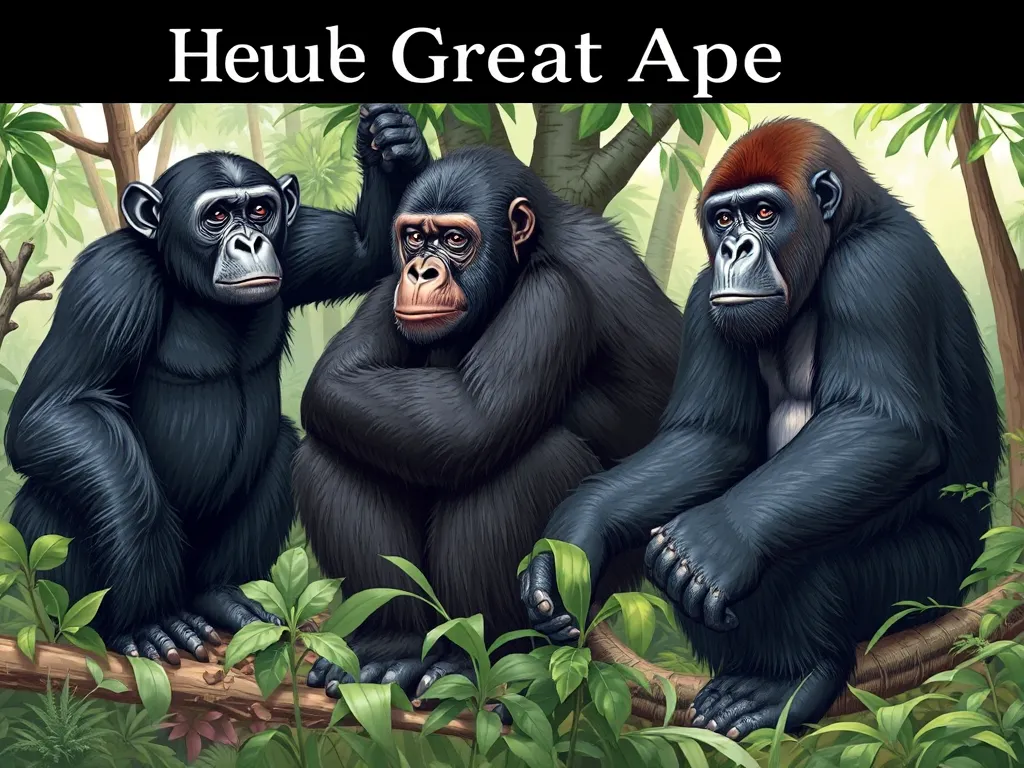
Gorillas (Genus: Gorilla) – Social Structure and Physical Traits
- Family structure: Gorillas live in tight-knit family groups led by a silverback, with multiple females and their offspring forming cohesive social units that can remain stable for decades
- Physical traits: Adult males can weigh up to 400 pounds and stand 5-6 feet tall, with distinctive silver hair on mature males giving them their name; they possess incredible strength, about 10 times that of humans
- Behavioral characteristics: They display emotional depth, curiosity, and sophisticated communication through vocalizations, gestures, and facial expressions; gorillas have been observed mourning their dead and showing empathy toward injured group members
- Intelligence: Known for high social intelligence and strong family bonds, gorillas demonstrate problem-solving abilities and emotional awareness; they can learn simple sign language and solve complex puzzles in captivity
- Habitat: Primarily found in the forests of central Africa, with mountain gorillas inhabiting higher altitudes (8,000-13,000 feet) and lowland gorillas living in tropical forests; their range has been reduced by over 60% in the past century
Chimpanzees (Genus: Pan troglodytes) – Tool Use and Social Complexity
- Human relation: Closely related to humans, sharing approximately 98% of our DNA, making them our closest living relatives after bonobos; their genetic similarity has made them invaluable for understanding human evolution
- Tool innovation: Capable of making and using sophisticated tools (e.g., fishing for termites with sticks, using stones to crack nuts, creating spears for hunting) in the wild; chimpanzee tool use varies between communities, indicating cultural transmission
- Social behavior: Engage in complex, sometimes violent, territorial warfare between communities, with organized hunting and meat-sharing practices; they form political alliances and demonstrate strategic thinking in social interactions
- Communication: Highly social with intricate communication systems including vocalizations, gestures, and facial expressions that convey specific meanings; they can learn sign language to communicate with humans and remember the name sign for individuals they have not seen for several years
- Cognitive abilities: Exhibit remarkable memory, planning skills, and self-awareness; chimpanzees have been observed planning future actions, deceiving others, and demonstrating understanding of numerical concepts
Intelligence and Behavior Patterns Across Great Ape Species
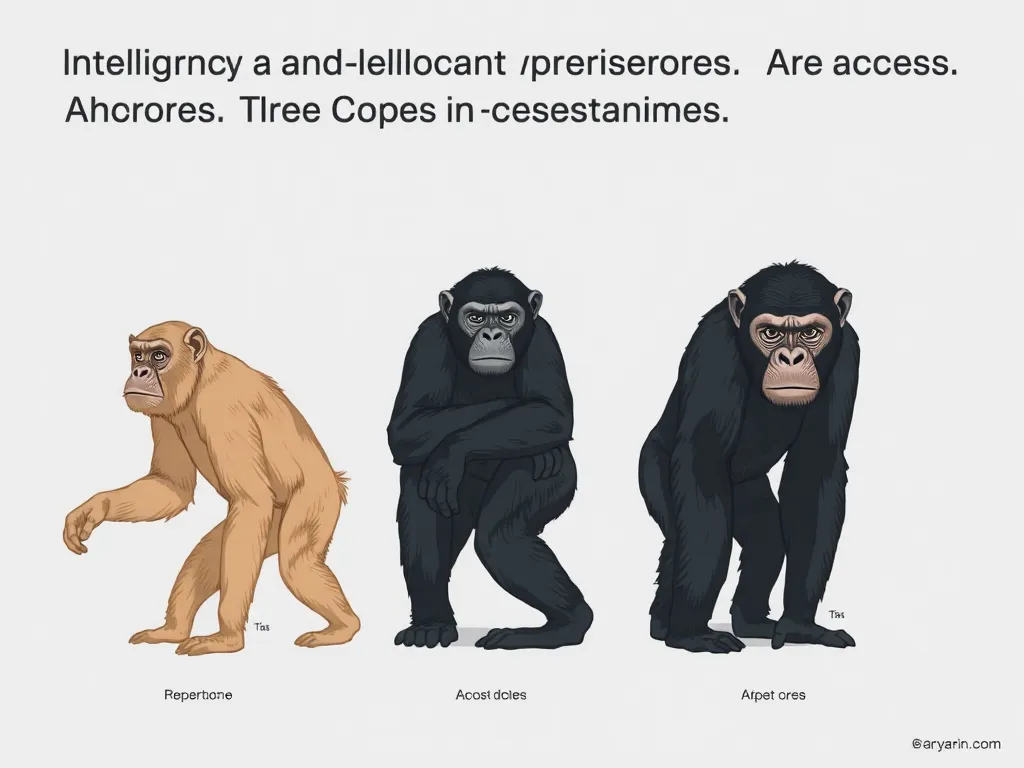
Cognitive Abilities and Theory of Mind in Great Apes
All four great ape species share a remarkable cognitive ability known as “theory of mind,” meaning they can recognize what others know and feel, allowing them to anticipate behavior and make strategic decisions. This sophisticated cognitive capacity enables them to understand social dynamics, plan for the future, and solve complex problems. Research from scientific studies indicates that great apes make more sophisticated decisions than was previously thought, often weighing risks and rewards in ways that mirror human decision-making processes.
Their ability to understand causal relationships—demonstrated through experiments with hidden objects and displacement tasks—reveals a level of abstract thinking that was once thought to be unique to humans. This cognitive sophistication allows them to navigate complex social environments and adapt to changing circumstances in their natural habitats.
Studies have shown that great apes can recognize themselves in mirrors, demonstrating self-awareness that is rare in the animal kingdom. They also exhibit planning behavior, such as selecting and transporting tools for future use, indicating an understanding of future needs and the ability to prepare for them.
Communication Systems and Social Intelligence
Great apes possess an intellect often referred to as Machiavellian, which enables them to remember favors owed and debts incurred while operating in a sophisticated “service economy” within their social groups. Their communication systems go beyond simple vocalizations to include nuanced facial expressions, body language, and gesture-based communication that can convey complex emotions and intentions. Both ape and monkey species use tools to eat otherwise inaccessible food, demonstrating practical intelligence that varies between species and even between individuals.
The social intelligence of great apes is particularly evident in their ability to form alliances, resolve conflicts, and maintain social bonds that can last decades. This social complexity requires remarkable memory and cognitive processing abilities, as they must track relationships, obligations, and social hierarchies within their groups.
Their capacity for empathy and cooperation further distinguishes them from other primates and highlights their evolutionary proximity to humans. Studies have documented great apes comforting distressed individuals, sharing food with others, and engaging in reconciliation behaviors after conflicts, demonstrating sophisticated emotional intelligence that was once thought to be exclusively human.
Critical Survival Threats Facing Great Apes Today
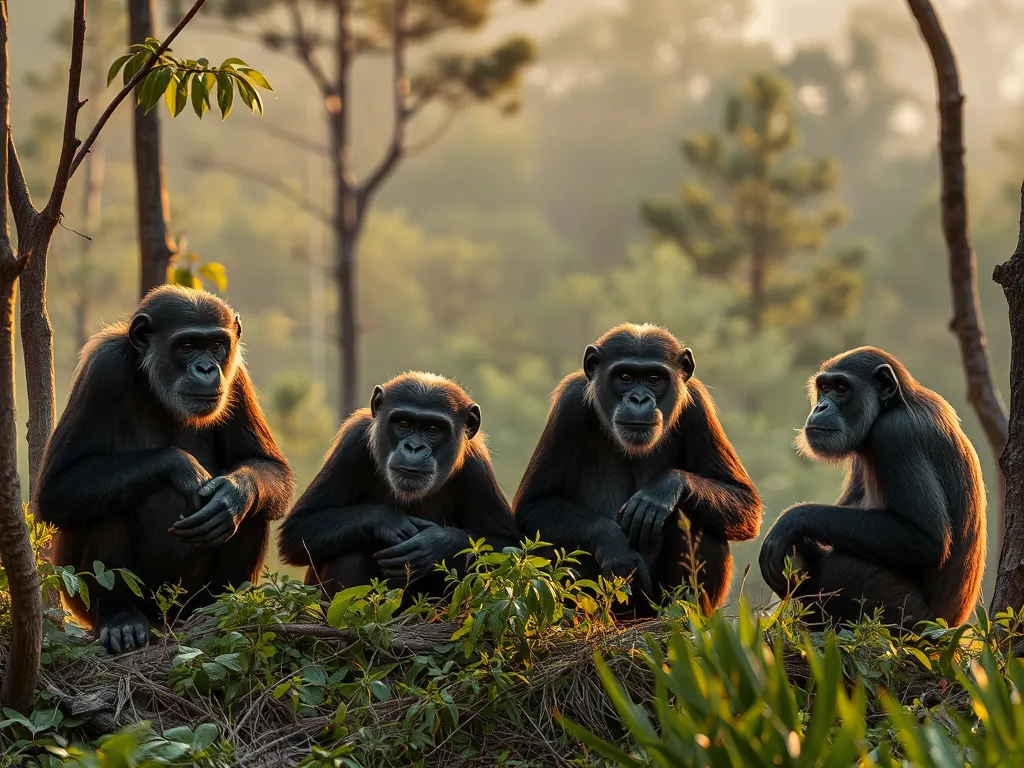
Habitat Destruction and Deforestation
| Great Ape Species | Primary Habitat Threats | Impact on Population |
|---|---|---|
| Gorillas | Agricultural expansion, logging, mining activities, climate change | Mountain gorillas critically endangered with fewer than 1,000 individuals; lowland gorillas experiencing 60% population decline |
| Chimpanzees | Deforestation for agriculture, human settlement expansion, infrastructure development | Rapid population declines with some subspecies critically endangered; overall population reduced by 80% in past century |
| Bonobos | Political instability in the Congo Basin, habitat fragmentation, civil conflict | Endangered with fewer than 30,000 individuals remaining; habitat reduced by 90% since 1980s |
| Orangutans | Palm oil plantation development in Southeast Asia, illegal logging, forest fires | Critically endangered with Sumatran orangutans facing extinction; Bornean orangutans declined by 25% in past decade |
Poaching and Disease Threats
Poaching for the bushmeat trade represents one of the most immediate threats to all great ape species, with hunters targeting adult individuals for meat and infants for the illegal pet trade. This unsustainable harvesting has caused rapid population declines across all species, particularly in areas with weak law enforcement and high poverty rates. The Ebola virus has devastated gorilla and chimpanzee populations in central Africa, with some local declines exceeding 90% in affected areas; this disease has been transmitted to humans through contact with infected ape carcasses.
Political instability in the Congo Basin has created dangerous conditions for conservation efforts, allowing illegal hunting and logging to flourish in bonobo habitats. All species are critically endangered due to human activities, with habitat destruction from agriculture, mining, and urban development continuously fragmenting their living spaces. Climate change further threatens their survival by altering forest ecosystems and reducing available food sources.
The combination of these threats creates a complex crisis that requires coordinated international conservation efforts to address effectively. Recent studies indicate that without immediate intervention, some great ape species could face extinction within the next 20-30 years, making their conservation one of the most urgent wildlife preservation challenges of our time.
The most surprising finding is that despite their extraordinary intelligence and problem-solving abilities, great apes cannot adapt quickly enough to overcome the rapid pace of human-caused environmental destruction. Their sophisticated cognitive capacities that once ensured survival in stable environments now leave them vulnerable to unprecedented rates of habitat change. As concerned global citizens, we can support great ape conservation by choosing sustainable palm oil products, reducing our consumption of resources that drive deforestation, and supporting organizations working to protect these remarkable creatures and their habitats.
Frequently Asked Questions About All 4 Species Of Great Apes: Intelligence, Behavior, And Survival Threats
What are the 4 species of great apes?
Great apes are the larger and more intelligent species of apes. They are the members of the Hominidae family.
The great apes include chimpanzees, gorillas, bonobos, and orangutans. The other type of ape is the lesser ape, which refers to gibbons.
What are the 4 species of chimpanzees?
Chimpanzee Species and Status There are four different subspecies of chimps currently recognised; the central chimpanzee, the Nigeria-Cameroon chimpanzee, the western chimpanzee, and the eastern chimpanzee.
What are the threats to great apes?
Deforestation. Population growth, expansion of agricultural activities, institutional, social and economic decline, political instability and humanitarian crises are pressure factors on great apes that can overshadow many conservation efforts: Their habitat suffers from overexploitation.
Which ape species is the most intelligent?
Orangutans are among the most intelligent non-human primates. Experiments suggest they can track the displacement of objects both visible and hidden. Zoo Atlanta has a touch-screen computer on which their two Sumatran orangutans play games.
Who would win, 10 chimps or 1 gorilla?
A fight However the gorilla can easily kill more than 10 chimpanzees in a fight because of their strength making them stronger than the chimpanzees.