There are seven species of sea turtles found in oceans globally, excluding the Arctic, and all are threatened or endangered due to human impact. These remarkable marine creatures range from the giant leatherback weighing up to 2,000 pounds to the smaller hawksbill with its distinctive sharp beak, each playing vital roles in marine ecosystems across different regions of the world. Despite their ancient lineage dating back over 100 million years, these ancient mariners now face unprecedented threats from human activities that are pushing all seven species toward extinction.
Key Takeaway
- There are seven species of sea turtles found globally, excluding the Arctic
- All species are threatened or endangered due to human impact
- Each species has unique physical characteristics, diets, and habitats
Meet All 7 Species of Sea Turtles
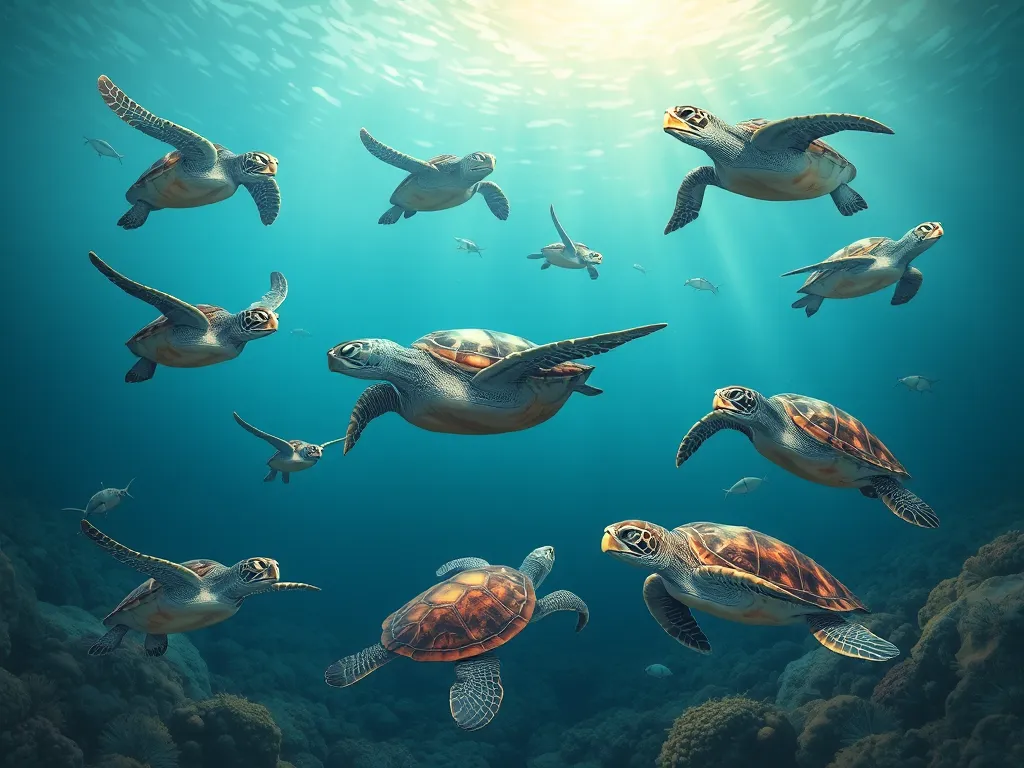
Leatherback Sea Turtle: The Giant of the Ocean
The leatherback sea turtle stands out as the largest of all sea turtle species, weighing up to 2,000 pounds and measuring up to 6 feet in length. Unlike other turtles, it has a unique rubbery shell instead of a hard one, allowing it to dive to extraordinary depths of over 3,000 feet to hunt for jellyfish in both tropical and temperate waters. This remarkable adaptation makes them the deepest diving reptiles on Earth, capable of holding their breath for up to 85 minutes during deep dives.
Their specialized physiology includes countershaped bodies and a unique blood chemistry that allows them to maintain function in cold, deep waters where few other reptiles can survive. Their status remains Vulnerable/Endangered according to conservation assessments, with populations declining in many regions despite their wide distribution.
Green Sea Turtle: The Seagrass Grazer
- Named for their fat color: Despite their name, green turtles get their name from the greenish color of their fat and cartilage, not their shell color, which typically ranges from brown to olive
- Herbivorous diet: Adults primarily graze on seagrass and algae in warm coastal waters, making them important ecosystem engineers that maintain seagrass bed health by keeping vegetation trimmed and properly distributed
- Global distribution: Found in subtropical and temperate regions of the Atlantic, Pacific, and Indian Oceans, including the Mediterranean, with major nesting sites in Florida, Hawaii, Costa Rica, and Australia
- Conservation status: Endangered/Threatened, though considered least concern in some protected areas, with global populations estimated at 1.5 million mature individuals
Green turtles play a crucial role in maintaining seagrass bed health by keeping vegetation trimmed and properly distributed. Their unique digestive system allows them to efficiently process the tough cellulose in seagrass, making them one of the few marine vertebrates capable of digesting this plant material. Hatchlings, however, are carnivorous, feeding on jellyfish and other small invertebrates before transitioning to herbivory as they mature.
Loggerhead Sea Turtle: The Shellfish Crusher
Loggerhead sea turtles are easily recognized by their large, powerful heads and strong jaws, perfectly adapted for crushing hard-shelled prey like conchs and crabs. These turtles are found throughout the Atlantic, Pacific, and Indian Oceans, making them one of the most widely distributed sea turtle species. Adult loggerheads can reach weights of 250-350 pounds and have distinctive reddish-brown shells that become more oblong with age.
Their powerful beak-like jaws can exert tremendous pressure, allowing them to break through the shells of even the toughest mollusks. Loggerheads undertake extensive oceanic migrations, traveling thousands of miles between feeding grounds and nesting beaches.
Their conservation status is listed as Threatened/Vulnerable due to various human impacts including coastal development, fishing bycatch, and habitat degradation. Notably, female loggerheads exhibit strong natal homing, returning to the exact beach where they hatched to lay their own eggs.
Hawksbill Sea Turtle: The Reef Dweller
The hawksbill sea turtle is distinguished by its narrow, tapered beak and beautifully patterned shell, featuring overlapping scutes that create a serrated appearance. These turtles rarely exceed 45 inches in length and weigh around 150 pounds, making them smaller than many other sea turtle species. Their name derives from their hawk-like beak, which is perfectly adapted for extracting sponges and other invertebrates from coral reef crevices.
Hawksbills play a critical role in reef health by controlling sponge populations, which can otherwise outcompete corals for space and resources. They are primarily found in tropical coral reefs throughout the Atlantic, Pacific, and Indian Oceans, with significant populations in the Caribbean, Indo-Pacific region, and Red Sea. Their conservation status is Critically Endangered, with populations declining by over 80% in the past century due to historic exploitation for their “tortoiseshell” and ongoing threats from habitat destruction, climate change, and pollution.
Kemp’s Ridley Sea Turtle: The Smallest and Rarest
Kemp’s Ridley sea turtle holds the distinction of being both the smallest and most critically endangered sea turtle species, with adults typically weighing only 80-100 pounds and measuring 24-28 inches in length. These turtles have distinctive heart-shaped shells and prefer shallow coastal waters and estuaries. Their most remarkable behavior is the mass nesting phenomenon known as “arribada,” where thousands of females emerge simultaneously to lay eggs, primarily occurring at Rancho Nuevo, Mexico.
This unique reproductive strategy likely evolved as a defense mechanism against predators, making it harder for any single predator to consume too many eggs. Kemp’s Ridleys have an extremely limited range, found primarily in the Gulf of Mexico with rare sightings in Atlantic waters.
Their Critically Endangered status stems from severe population declines caused by egg harvesting, bycatch in fishing operations, and habitat loss. International conservation efforts since the 1960s have helped stabilize some populations, but they remain highly vulnerable to environmental changes and human activities.
Olive Ridley Sea Turtle: The Mass Nester
Olive Ridley sea turtles are named for their olive-green coloration and are among the most abundant sea turtle species, though still classified as Endangered/Vulnerable. Adults typically weigh 75-100 pounds and have relatively small, rounded shells compared to other species. Like Kemp’s Ridleys, Olive Ridleys exhibit arribada behavior, though on a smaller scale, with mass nesting events occurring in places like Ostional, Costa Rica, and Gahirmatha, India.
These turtles have an incredibly broad distribution, found in tropical and subtropical oceans worldwide, making them the most cosmopolitan of all sea turtle species. They primarily feed on crustaceans, mollusks, and jellyfish, using their powerful jaws to crush hard-shelled prey.
Despite their wide distribution, Olive Ridleys face numerous threats including bycatch in shrimp trawls, coastal development, and ocean pollution. Their reproductive strategy of producing multiple clutches per nesting season helps compensate for high egg and hatchling mortality rates, but human impacts continue to challenge their long-term survival.
Flatback Sea Turtle: The Australian Specialist
The flatback sea turtle is unique among sea turtles for its restricted distribution, being found exclusively off the northern Australian coast from Shark Bay in Western Australia to Queensland in the east. These turtles have distinctive flat, rounded shells that lack the overlapping scutes seen in other species, and they typically reach 30-35 inches in length and weigh 70-100 pounds. Their name reflects their unusually flat carapace compared to other sea turtles.
Flatbacks are primarily carnivorous, feeding on soft-bodied invertebrates like sea cucumbers, jellyfish, and soft corals rather than hard-shelled prey. Unlike other sea turtles that undertake extensive oceanic migrations, flatbacks tend to stay within the relatively shallow waters of the Australian continental shelf.
Their conservation status is particularly concerning as “data deficient,” indicating scientists lack sufficient information about population trends for this species. This limited range makes them especially vulnerable to localized threats like coastal development, pollution, and climate change impacts specific to the Australian region.
Conservation Status and Threats to Sea Turtles
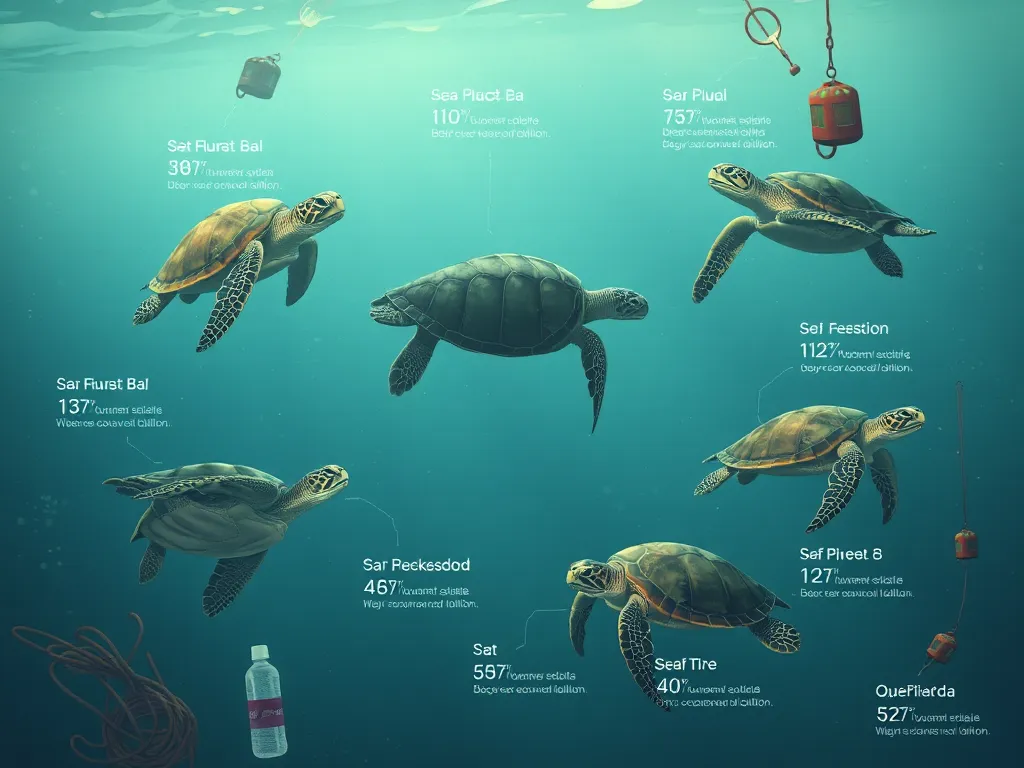
Current Conservation Status of All 7 Species
| Species | Conservation Status | Population Trend |
|---|---|---|
| Leatherback | Vulnerable/Endangered | Declining in most regions |
| Green | Endangered/Threatened | Stabilizing in some areas |
| Loggerhead | Threatened/Vulnerable | Declining in Pacific |
| Hawksbill | Critically Endangered | Declining by 80% since 1980s |
| Kemp’s Ridley | Critically Endangered | Recovering from near extinction |
| Olive Ridley | Endangered/Vulnerable | Declining in some regions |
| Flatback | Data deficient/Vulnerable | Unknown population trends |
Notably, all seven species are considered threatened or endangered, with hawksbill and Kemp’s Ridley facing the most critical situations. The flatback turtle’s status is particularly concerning as “data deficient,” indicating scientists lack sufficient information about population trends for this species found only off northern Australia.
Despite international protection efforts, sea turtle populations continue to face challenges from multiple human impacts. Conservation success stories exist, such as the recovery of Kemp’s Ridley population through intensive protection of nesting beaches and fishing regulations, but these remain exceptions rather than the rule across all species.
Major Threats to Sea Turtle Survival
- Coastal development: Beachfront construction and artificial lighting disrupt nesting habitats and disorient hatchlings trying to reach the ocean. Coastal development has eliminated or severely damaged over 50% of historical nesting beaches for many species, with Florida alone losing over 35% of its nesting habitat to development since 1980.
-
Fishing bycatch: An estimated 250,000 sea turtles are accidentally caught in fishing gear each year, making this a leading cause of mortality.
Longline fisheries, trawling operations, and gillnets particularly threaten turtles, with capture rates highest in areas where feeding and migration corridors overlap with fishing grounds.
- Marine pollution: Plastic debris, chemical runoff, and oil spills threaten turtles through ingestion, entanglement, and habitat degradation. Studies show that over 50% of sea turtles have ingested plastic debris, with microplastics now found in the tissues of all seven species, potentially affecting their health and reproductive success.
- Climate change: Rising temperatures affect nesting success, alter sex ratios (warmer sands produce more females), and threaten coastal nesting sites through sea level rise. Research indicates that a 2°C increase in sand temperature could produce 99% female hatchlings, potentially leading to unsustainable sex ratios and reduced genetic diversity.
Understanding these threats is crucial for developing effective Wildlife conservation strategies that address multiple human impacts simultaneously. The interconnected nature of these threats means that solutions must be comprehensive, addressing everything from international fishing regulations to local beach protection measures and global climate change mitigation efforts.
Where Do Sea Turtles Live Around the World?
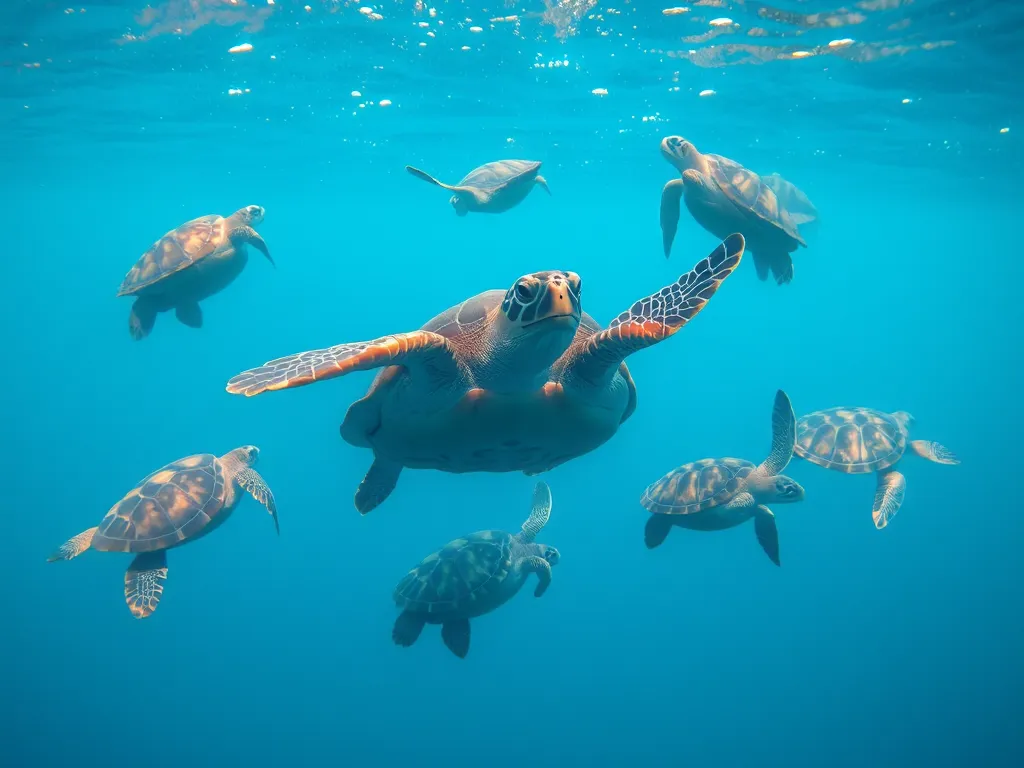
Global Distribution of Each Species
| Species | Geographic Distribution | Key Habitats |
|---|---|---|
| Leatherback | Tropical and temperate waters worldwide, including both Atlantic and Pacific Oceans | Deep ocean waters, coastal areas near nesting beaches |
| Green | Subtropical and temperate regions of Atlantic, Pacific, and Indian Oceans, Mediterranean | |
| Loggerhead | Atlantic, Pacific, and Indian Oceans with major nesting sites in Florida, Japan, and Australia | |
| Hawksbill | Tropical coral reefs throughout the Atlantic, Pacific, and Indian Oceans | |
| Kemp’s Ridley | Primarily Gulf of Mexico with rare sightings in Atlantic waters | |
| Olive Ridley | Tropical and subtropical oceans worldwide, mass nesting events in India and Costa Rica | |
| Flatback | Only found off northern Australia coast, from Shark Bay to Queensland |
The flatback turtle stands out as the most geographically restricted species, being endemic to Australia’s northern coast, while olive ridleys display the most widespread distribution across tropical and subtropical regions. Geographic distribution patterns are influenced by temperature preferences, food availability, and nesting requirements.
Leatherbacks have the broadest thermal tolerance, capable of diving into cold waters where few other reptiles can survive, while flatbacks are limited to warm Australian waters. These distribution patterns are shifting with climate change, as warming waters allow some species to expand their ranges while others face habitat contraction.
Unique Habitat Requirements
Six of the seven sea turtle species can be found in US waters, with the flatback being the only exception as it’s exclusively found in the Western Indo-Pacific. Most species spend the majority of their lives at sea, only coming ashore to nest, which makes them particularly vulnerable to coastal development.
The nesting process itself is remarkable—females return to their natal beaches, often traveling thousands of miles, to lay clutches of 50-200 eggs depending on the species. After incubation periods of 45-70 days, hatchlings emerge and instinctively navigate toward the ocean using moonlight and horizon cues.
Different temperature preferences significantly affect their distribution patterns, with leatherbacks tolerating colder waters than most other species. Each species also requires specific feeding grounds that match their dietary needs—from the leatherback’s deep jellyfish dives to the hawksbill’s specialized sponge-feeding on coral reefs.
Temperature-dependent sex determination means that warmer nesting beaches produce more females, creating a conservation challenge as climate change alters natural sex ratios. Marine habitat protection is equally critical, as feeding and migration corridors must remain free from pollution, destructive fishing practices, and other human disturbances.
Sea turtles also demonstrate remarkable site fidelity, with individuals returning to the same feeding and nesting areas throughout their lives. This behavior, while beneficial for maintaining population integrity, makes them particularly vulnerable to localized threats. The most surprising finding about sea turtle conservation is that despite their ancient lineage dating back over 100 million years, all seven species now face extinction threats primarily from human activities.
One specific action readers can take immediately is to reduce plastic consumption and properly dispose of fishing gear, as these simple changes directly address two major threats to sea turtle survival while supporting broader marine conservation efforts that protect these remarkable creatures. For more information about endangered species protection, readers can explore comprehensive guides like the 5 remaining rhinoceros species guide to understand similar conservation challenges faced by other vulnerable wildlife.