Big cats face an uncertain future in 2026, with species ranging from Endangered to Near Threatened on the IUCN Red List. These magnificent apex predators play crucial roles in ecosystems across Africa, Asia, and the Americas, but their populations continue to decline due to habitat loss, poaching, and human-wildlife conflict.
- Big cat conservation status ranges from Endangered (snow leopard) to Near Threatened (lion), with tigers, leopards, and jaguars classified as Vulnerable
- Habitats vary dramatically from African savannas to Asian mountains to American rainforests, with each species uniquely adapted to its environment
- Conservation efforts focus on establishing protected corridors, combating poaching, and promoting responsible wildlife tourism
Conservation Status of All Big Cats in 2026
Big cats—primarily tigers, lions, jaguars, leopards, and snow leopards—are apex predators in the Pantherinae subfamily, defined by their ability to roar, except for snow leopards. They face severe threats from habitat loss and poaching, with conservation status ranging from Near Threatened to Endangered. These species are vital for maintaining ecosystem balance across Africa, Asia, and the Americas.
Current IUCN Red List Classifications for Major Big Cats
| Species | IUCN Status | Population Estimate |
|---|---|---|
| Tiger (Panthera tigris) | Endangered | Approximately 4,500 individuals |
| Lion (Panthera leo) | Near Threatened | Approximately 20,000 individuals |
| Jaguar (Panthera onca) | Near Threatened | Approximately 15,000 individuals |
| Leopard (Panthera pardus) | Vulnerable | Approximately 100,000 individuals |
| Snow Leopard (Panthera uncia) | Vulnerable | Approximately 4,000-8,000 individuals |
The IUCN Red List classifications reflect the varying levels of threat facing each big cat species, with tigers facing the most critical situation. These classifications directly guide conservation priorities and funding allocation, with Endangered species like tigers receiving the most urgent attention. The stark differences in population numbers highlight the varying success of conservation efforts across species and regions.
Population Numbers and Trends for Each Species
- Tiger (Panthera tigris): Approximately 4,500 individuals remaining; populations are slowly increasing in some protected areas but continue to decline in others
- Lion (Panthera leo): Approximately 20,000 individuals; populations are decreasing in most regions except in a few well-protected areas
- Jaguar (Panthera onca): Approximately 15,000 individuals; populations are stable in some areas but decreasing due to habitat fragmentation
- Leopard (Panthera pardus): Approximately 100,000 individuals; the most numerous big cat but with decreasing populations across most of its range
- Snow Leopard (Panthera uncia): Approximately 4,000-8,000 individuals; populations are decreasing due to climate change and human encroachment
These population trends indicate that while some conservation efforts have stabilized certain populations, most big cats continue to face long-term survival challenges. Without continued intervention, even the more numerous species like leopards could face significant population declines within the next decade.
Primary Threats Facing Big Cat Populations
Big cats are in decline due to three primary threats: habitat loss and fragmentation, poaching, and prey depletion. Agriculture and deforestation continue to destroy and fragment big cat habitats at an alarming rate. For example, tigers in India and jaguars in the Amazon face particular challenges from deforestation.
Poaching remains a critical issue, driven by illegal trade in body parts for traditional medicine and the exotic pet trade. Prey depletion occurs as human encroachment reduces the natural food sources available to big cats, forcing them into closer contact with human communities and increasing conflict situations. Recent developments include increased use of technology for anti-poaching efforts and community-based conservation programs that address human-wildlife conflict.
Global Habitats and Geographic Ranges of Big Cat Species
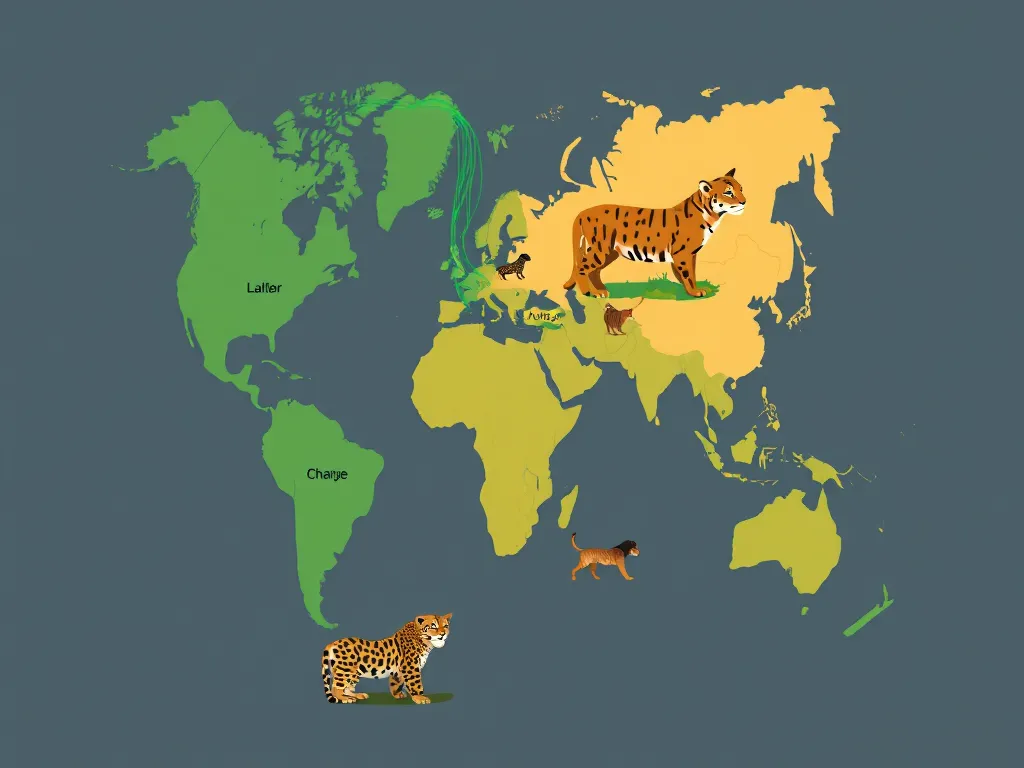
Big cats inhabit diverse ecosystems across the globe, from the African savanna to the Asian mountains to the South American rainforest. Each species has evolved specific adaptations to thrive in its particular environment, but all face increasing pressure from human activities that threaten their survival and the ecological balance they maintain.
African Big Cats: Lions, Leopards, and Cheetahs
- Lion (Panthera leo): Prefers grasslands, savannas, and open woodlands; primarily found in Sub-Saharan Africa with a small population in India’s Gir Forest
- Leopard (Panthera pardus): Highly adaptable; found in various habitats including forests, grasslands, and semi-deserts across most of Africa
- Cheetah (Acinonyx jubatus): Prefers open grasslands and savannas; found throughout Africa and a small population in Iran
Habitat fragmentation in Africa poses significant challenges to big cat conservation. As human populations expand, traditional migratory routes and hunting territories are increasingly disrupted, leading to smaller, isolated populations that are more vulnerable to local extinction. Protected areas are becoming increasingly important islands of habitat for these magnificent predators.
Asian Big Cats: Tigers, Leopards, and Snow Leopards
- Tiger (Panthera tigris): Found in diverse habitats including tropical forests, evergreen forests, grasslands, and mangrove swamps; primarily in India, with smaller populations in Russia, Nepal, Bhutan, and other countries
- Leopard (Panthera pardus): Highly adaptable to various environments including forests, mountains, and grasslands; found across Asia from Turkey to Southeast Asia
- Snow Leopard (Panthera uncia): Specialized for high-altitude environments; found in the mountain ranges of Central and South Asia
Conservation corridors are being established across Asia to connect fragmented tiger habitats, allowing for genetic exchange and population recovery. These corridors often involve multiple countries and require international cooperation, as seen in initiatives like the Transboundary Conservation Area program that connects protected areas across national borders.
American Big Cats: Jaguars, Cougars, and Ocelots
American big cats demonstrate remarkable adaptability to diverse environments. Jaguars (Panthera onca) are incredibly versatile, inhabiting rainforests, deserts, savannahs, and mountains throughout Central and South America, with occasional sightings in the southwestern United States.
Cougars (Puma concolor), also known as mountain lions or pumas, have the most extensive range of any wild cat in the Americas, found from Canada’s Yukon Territory to the southern Andes in forests, mountains, and even urban edges. Ocelots (Leopardus pardalis) prefer dense cover and are found in tropical forests, mangroves, and thorn forests from southern Texas through Central and South America.
Border issues significantly affect jaguar populations in North America, with the U.S.-Mexico border wall fragmenting critical habitats and disrupting natural migration patterns. Conservation efforts focus on establishing wildlife-friendly border crossings and protecting remaining connectivity between populations in Arizona, New Mexico, and northern Mexico.
Identifying Big Cats: Physical Traits and Behavioral Differences
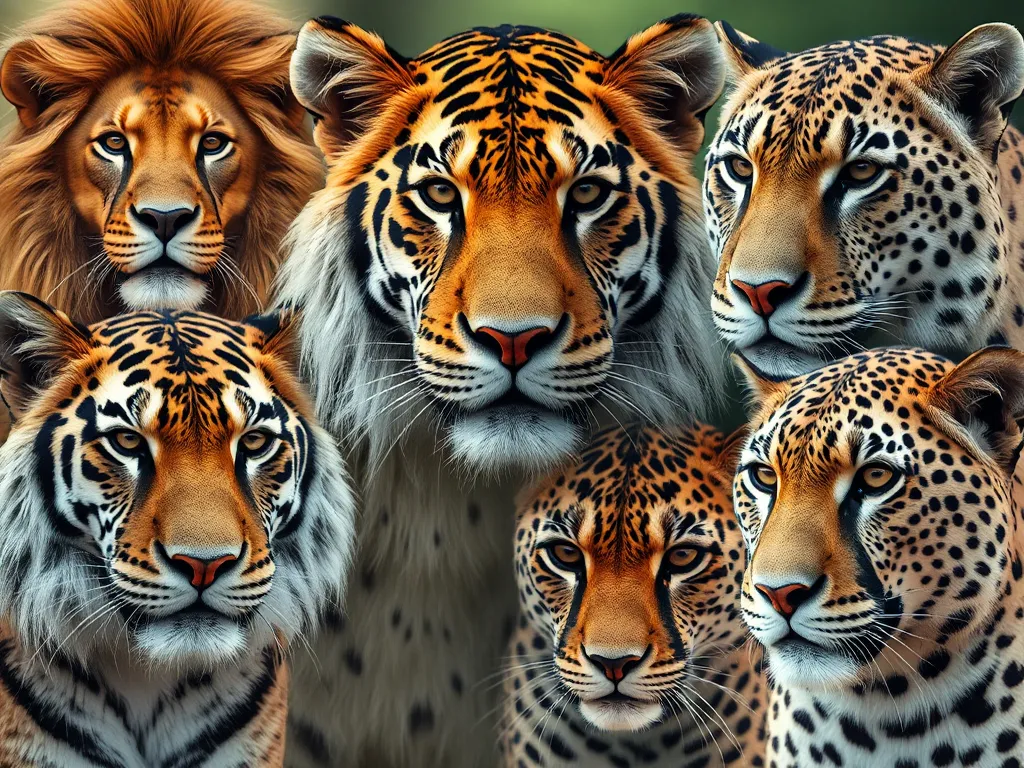
Each big cat species possesses distinctive physical characteristics and behavioral traits that reflect their evolutionary history and ecological niche. Understanding these differences not only aids in identification but also reveals how each species has adapted to its specific environment and hunting strategies.
Distinguishing Features of Each Big Cat Species
| Species | Distinctive Features | Size |
|---|---|---|
| Tiger (Panthera tigris) | Distinctive orange coat with black stripes; white underside; largest of all big cats | Up to 3.3 meters (11 feet) including tail |
| Lion (Panthera leo) | Males have distinctive manes; tawny coat; only social big cat living in prides | Up to 2.5 meters (8.2 feet) including tail |
| Jaguar (Panthera onca) | Spotted coat with rosettes; powerful build; strongest bite force of all cats | Up to 2.5 meters (8.2 feet) including tail |
| Leopard (Panthera pardus) | Spotted coat with smaller rosettes; exceptionally strong; carries prey into trees | Up to 1.9 meters (6.2 feet) including tail |
| Snow Leopard (Panthera uncia) | Grayish-white coat with black spots; long tail for balance; cannot roar | Up to 1.3 meters (4.3 feet) including tail |
These physical adaptations have evolved to help each species survive in its specific habitat. Tigers’ stripes provide camouflage in forested environments, while snow leopards’ thick fur and wide paws help them navigate steep, snowy mountain terrain. Jaguars’ powerful jaws allow them to crush turtle shells and caiman, while leopards’ strength enables them to drag prey much heavier than themselves into trees for safe consumption.
Best Locations to Observe Big Cats in the Wild
- Tigers: Ranthambore National Park (India), Bandhavgarh National Park (India), Manas National Park (India)
- Lions: Serengeti National Park (Tanzania), Kruger National Park (South Africa), Maasai Mara (Kenya)
- Jaguars: Pantanal (Brazil), Cockscomb Basin Wildlife Sanctuary (Belize), Corcovado National Park (Costa Rica)
- Leopards: Yala National Park (Sri Lanka), Sabi Sands Game Reserve (South Africa), Bardiya National Park (Nepal)
- Snow Leopards: Hemis National Park (India), Annapurna Conservation Area (Nepal), Altai Mountains (Mongolia)
When planning wildlife viewing experiences, it’s essential to choose operators committed to ethical practices. Responsible tourism ensures minimal disturbance to natural behaviors and contributes directly to conservation efforts through park fees and community benefits. Always maintain safe distances, never attempt to attract animals, and follow guidelines provided by trained rangers.
Conservation Tourism and Ethical Wildlife Viewing
Responsible tourism has become a cornerstone of big cat conservation, providing critical funding and incentives for habitat protection. Organizations like the World Wildlife Fund (WWF) and Panthera have established partnerships with local communities to create sustainable tourism models that benefit both people and wildlife. For example, community conservancies in Kenya and Namibia have successfully reduced poaching while providing income for local residents through carefully managed tourism activities.
These programs demonstrate how ethical wildlife viewing can create powerful conservation incentives. When local communities benefit economically from protecting big cats and their habitats, they become active participants in conservation rather than potential threats. This approach has proven particularly effective for species like lions and cheetahs, where human-wildlife conflict has historically been a major challenge.
Despite facing significant threats, big cats continue to demonstrate remarkable adaptability to changing environments. As we move further into 2026, conservation efforts are increasingly focusing on connecting fragmented habitats and involving local communities in protection efforts. You can make a difference by supporting certified conservation organizations, choosing ethical wildlife tourism experiences, and advocating for policies that protect big cat habitats.
Even small actions, like sharing accurate information about these magnificent creatures, contribute to their long-term survival. For more information about wildlife conservation, visit our comprehensive Wildlife resource center.
Frequently Asked Questions About Complete Guide To All Big Cats: Conservation Status, Habitat, And Range
What is the conservation status of the big cats?
The conservation status of big cats varies by species, with each one classed differently by the IUCN Red List of Threatened Species. Tigers are listed as endangered. They face a very high risk of extinction in the wild, with just 4,500 individuals estimated to remain.
Is homosexuality common in lions?
Homosexuality is common among lions as well. Two to four males often form what is known as a coalition, where they work together to court female lions.
They depend on each other to fend off other coalitions. To ensure loyalty, male lions strengthen their bonds by having sex with each other.