The primate order includes 233 living species across 13 families, divided into two main groups: strepsirrhines and haplorhines. These remarkable mammals range from the tiny pygmy marmoset that weighs less than 3 ounces to the massive mountain gorilla that can reach nearly 400 pounds. Understanding primate classification helps us appreciate the incredible diversity of our closest relatives in the animal kingdom.
Primates have evolved over 55 million years, adapting to various environments from tropical rainforests to mountainous regions. This comprehensive guide explores all major primate groups, their characteristics, and how they’ve diversified across different continents.
Key Takeaway
-
Primates are divided into strepsirrhines (lemurs, lorises, galagos) and haplorhines (tarsiers, monkeys, apes)
-
There are 233 living primate species across 13 families
-
Primate size ranges from tiny pygmy marmosets to large mountain gorillas
-
Gorillas live in groups of one male and several females
The Two Main Primate Groups: Strepsirrhines vs Haplorhines
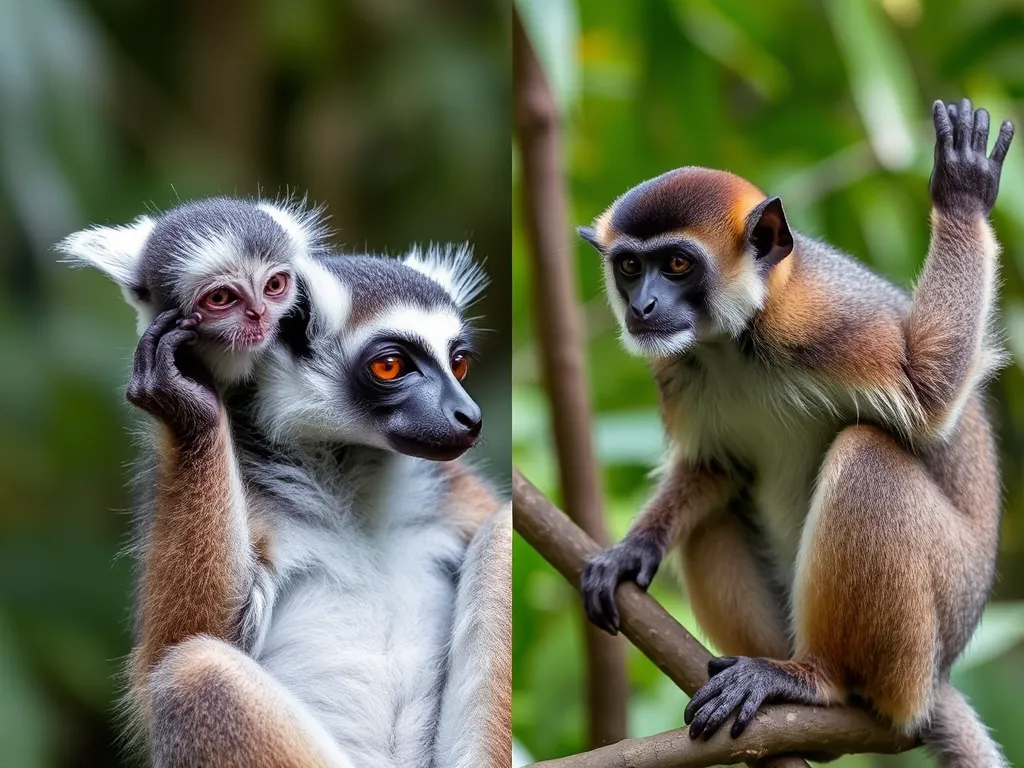
What are the 7 types of primates?
-
Strepsirrhines: Include lemurs, lorises, and galagos – the “wet-nosed” primates with moist noses and grooming claws
-
Haplorhines: Include tarsiers, monkeys, and apes – the “simple-nosed” primates with dry noses
-
Great apes: Consist of humans, chimpanzees, gorillas, and orangutans – large primates without tails
-
Old World monkeys: Have fully opposable thumbs like great apes and are native to Asia and Africa
-
New World monkeys: Native to Central and South America with different thumb structures and prehensile tails
-
Tarsiers: Small primates with enormous eyes and unique leaping abilities, found only in Southeast Asia
-
Prosimians: The most primitive primates including lemurs and lorises, retaining many ancestral characteristics
These seven categories represent the complete diversity of primate life on Earth, each with unique adaptations that help them thrive in their specific environments. Strepsirrhines, the more ancient group, are primarily nocturnal and retain the rhinarium (wet nose) that most mammals possess.
Haplorhines, which evolved later, generally have better color vision and more complex social structures. The division reflects approximately 63 million years of evolutionary divergence since the last common ancestor of all living primates.
Key Differences Between the Two Main Groups
Strepsirrhines are known as “wet-nosed” primates because they have a moist, rhinarium at the tip of their nose, similar to many other mammals. This group includes lemurs of Madagascar and lorises, pottos, and galagos of Africa and Asia.
In contrast, haplorhines have “simple noses” without the rhinarium and include tarsiers, monkeys, and apes. Another key difference is that strepsirrhines typically have a dental comb – specialized teeth used for grooming – while haplorhines lack this feature.
Scientific research confirms that all five “natural groups” – lemurs, lorisiforms, tarsiers, New World monkeys, and Old World monkeys with apes – are clearly monophyletic, meaning each group shares a single common ancestor. This evolutionary distinction helps scientists understand how primates diversified over millions of years. Genetic studies from 2025 have further refined our understanding of these relationships, showing that tarsiers are more closely related to anthropoids (monkeys and apes) than to other strepsirrhines, challenging earlier classifications based primarily on physical characteristics.
Complete Classification of All Primate Families
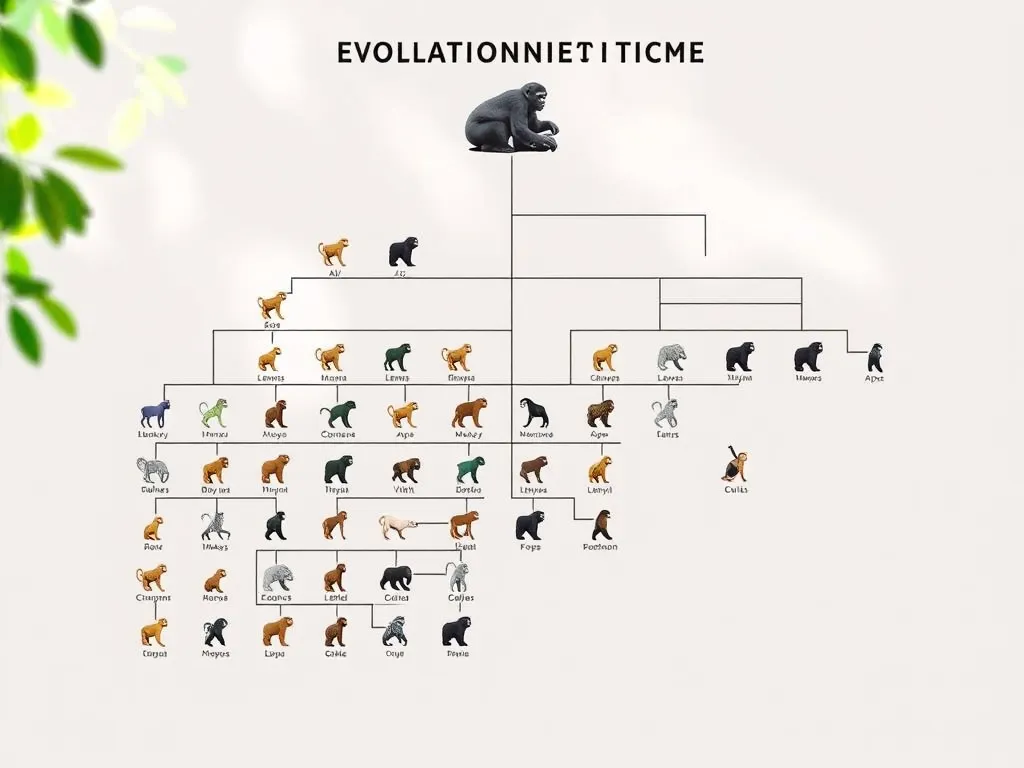
What are the 6 groups of primates?
|
Primate Group |
Key Characteristics |
Species Count |
|---|---|---|
|
Humans |
Bipedal, highly developed brain, complex culture, reduced body hair |
1 species |
|
Great Apes |
Large brains, no tails, advanced social structures, tool use |
5 species (including humans) |
|
Lesser Apes |
Gibbons and siamangs, smaller than great apes, brachiation specialists |
16 species |
|
Old World Monkeys |
Africa and Asia, opposable thumbs, non-prehensile tails, cheek pouches |
135 species |
|
New World Monkeys |
Central and South America, different thumb structures, prehensile tails |
130 species |
|
Prosimians |
Most primitive, include lemurs and lorises, dental comb, wet nose |
51 species |
These six groups represent the complete classification of primates, with 233 living species placed in 13 families. Most primates dwell in tropical forests, where they’ve evolved to fill various ecological niches over millions of years. The classification has been refined through genetic analysis in recent years, with some species reclassified based on new molecular evidence.
For example, the slow loris family was split into multiple genera in 2023 after genomic studies revealed greater diversity than previously recognized. Scientists continue to discover new primate species while others face extinction threats, reflecting broader patterns in species discovery and extinction rates across the animal kingdom.
Primate Size Range: From Pygmy Marmosets to Mountain Gorillas
-
Tiny pygmy marmoset: Weighs less than 3 ounces (85 grams) and can fit in your hand, found in South American rainforests
-
Large mountain gorilla: Weighs close to 400 pounds (180 kilograms) and stands up to 6 feet tall, inhabiting African mountain forests
-
Size variation: Represents one of the most extreme ranges in mammal orders, with over 1,000-fold difference between smallest and largest
-
Evolutionary adaptations: Size differences reflect different ecological niches and evolutionary pressures, from predator avoidance to resource competition
-
Body size correlations: Larger primates tend to have longer lifespans, slower reproductive rates, and more complex social structures
-
Island rule: Smaller mainland species often evolve larger size on islands, while larger island species tend to dwarf
This incredible size range demonstrates how primates have adapted to various environments, from dense forests where small size aids agility to open areas where larger size provides advantages in social structure and resource competition. The pygmy marmoset, the smallest primate, gives birth to twins that can account for nearly 20% of the mother’s body weight – one of the highest proportions among mammals.
In contrast, gorilla infants are relatively small at birth but grow rapidly under intense maternal care. These size-related differences in reproductive strategies highlight the diverse evolutionary paths primates have taken across different continents and habitats.
Social Structures and Physical Characteristics of Primates
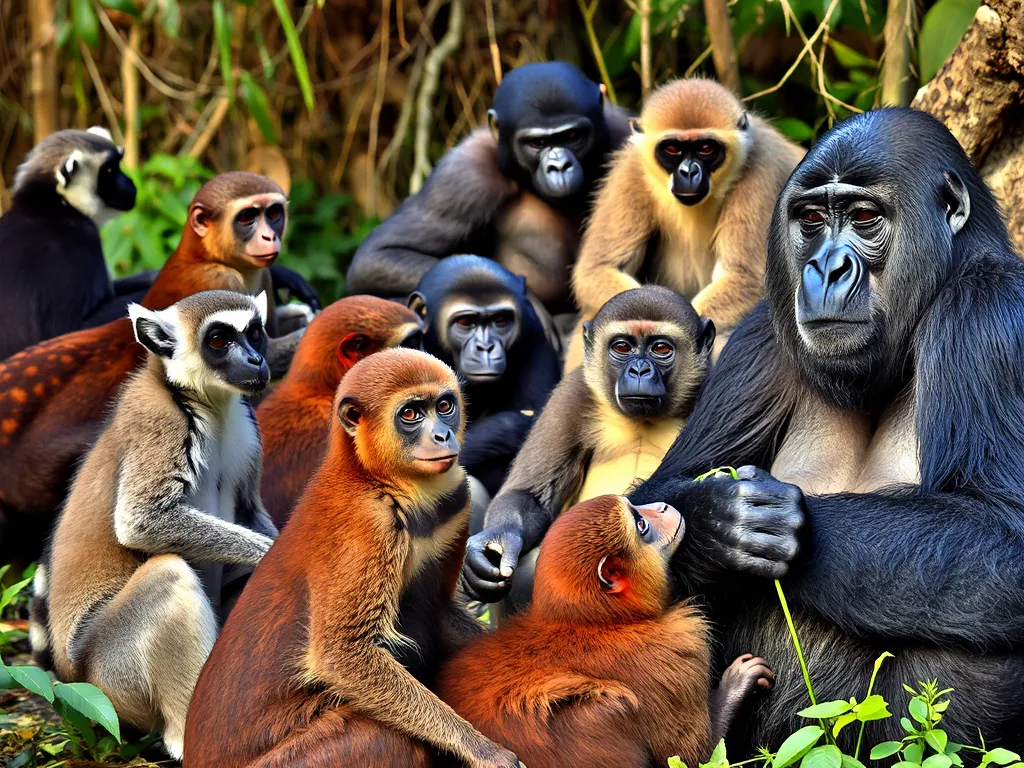
Gorilla Groups and Other Primate Social Systems
Gorillas typically live in groups of one male and several females, known as harems. These groups usually consist of 5-30 individuals, with the dominant silverback male leading and protecting the group.
Gorillas are considered folivorous, primarily eating leaves, although they can be more frugivorous depending on habitat availability. The silverback’s role includes mediating conflicts, leading the group to feeding areas, and protecting against threats from other gorillas or predators.
Social structures vary significantly across different primate families – while gorillas maintain stable groups, many monkey species form larger, more fluid communities, and some primates like orangutans are largely solitary. Chimpanzees, our closest relatives, live in complex fission-fusion societies where subgroup composition changes frequently. Ring-tailed lemurs exhibit female-dominant social structures, a rare trait among mammals.
These diverse social arrangements reflect evolutionary adaptations to specific environments and ecological pressures that have shaped primate behavior over millions of years. Recent research from 2026 has shown that primate social complexity correlates with brain size, particularly in regions associated with social cognition.
Physical Characteristics: Opposable Thumbs and Other Primate Features
-
Opposable thumbs: Primates with fully opposable thumbs include Great apes and Old World monkeys, enabling precise grasping and manipulation of objects
-
Forward-facing eyes: Binocular vision provides depth perception crucial for arboreal life and hunting, with overlapping visual fields
-
Large brains: Relative to body size, primates have larger brains than most mammals, supporting complex behaviors and social interactions
-
Nails instead of claws: Flat nails provide better support for sensitive fingertips and enhance tactile sensitivity
-
Shoulder mobility: Primates have highly mobile shoulder joints adapted for climbing and brachiation in arboreal environments
-
Color vision: Most primates have trichromatic vision, particularly important for identifying ripe fruits and young leaves
These physical characteristics define what makes primates unique among mammals and help explain their success in diverse habitats around the world. The opposable thumb, perhaps the most distinctive primate feature, has enabled tool use in several species, including humans and chimpanzees. Forward-facing eyes with overlapping visual fields provide excellent depth perception, essential for navigating complex three-dimensional forest environments.
Large brains relative to body size support complex social behaviors, problem-solving abilities, and in some cases, cultural transmission of knowledge across generations. Understanding these traits provides insight into how primates have adapted to their environments over evolutionary time and why they continue to thrive despite numerous conservation challenges.
The most surprising finding is the extreme size variation among primates, from tiny pygmy marmosets to massive gorillas. This incredible diversity highlights how primates have adapted to fill every available ecological niche across different continents.
To learn more about primate conservation efforts and how you can help protect these incredible animals, visit Wildlife resources and organizations dedicated to preserving primate habitats worldwide. Conservation efforts in 2026 have focused on protecting critical forest habitats, combating illegal wildlife trade, and implementing sustainable tourism practices that benefit both primates and local communities.
Frequently Asked Questions About All Primate Groups Explained: From Lemurs To Gorillas In One
What are the main primate groups and their species counts?
Primates consist of five main groups: Great Apes (5 species including humans), Lesser Apes (16 species), Old World Monkeys (135 species), New World Monkeys (130 species), and Humans (1 species).
How do Old World and New World monkeys differ?
Old World Monkeys (135 species) are found in Africa and Asia with opposable thumbs and non-prehensile tails. New World Monkeys (130 species) inhabit Central and South America with different thumb structures and prehensile tails for better arboreal movement.
What are the key characteristics of great apes?
Great Apes (5 species including humans) have large brains, no tails, advanced social structures, and demonstrate tool use. This group includes orangutans, gorillas, chimpanzees, bonobos, and humans.
What distinguishes lesser apes from other primates?
Lesser Apes (16 species) include gibbons and siamangs, are smaller than great apes, and specialize in brachiation (arm-swinging locomotion). They inhabit tropical forests of Southeast Asia.