There are 40-49 species of dolphins worldwide, categorized into oceanic and river families, with populations ranging from common to critically endangered. These remarkable marine mammals exhibit incredible diversity in size, habitat, and behavior, making them one of the most fascinating groups of aquatic animals on Earth. From the tiny 1.7-meter Maui’s dolphin to the massive 9.5-meter orca, dolphins have adapted to virtually every aquatic environment on our planet.
Key Takeaway
- There are 40-49 dolphin species worldwide, categorized into oceanic and river families
- Dolphins range dramatically in size from 1.7m Maui’s to 9.5m orcas
- At least 9 species are endangered due to bycatch, habitat loss, and pollution
How Many Types of Dolphins Exist Worldwide?
Oceanic Dolphins: The Largest Family
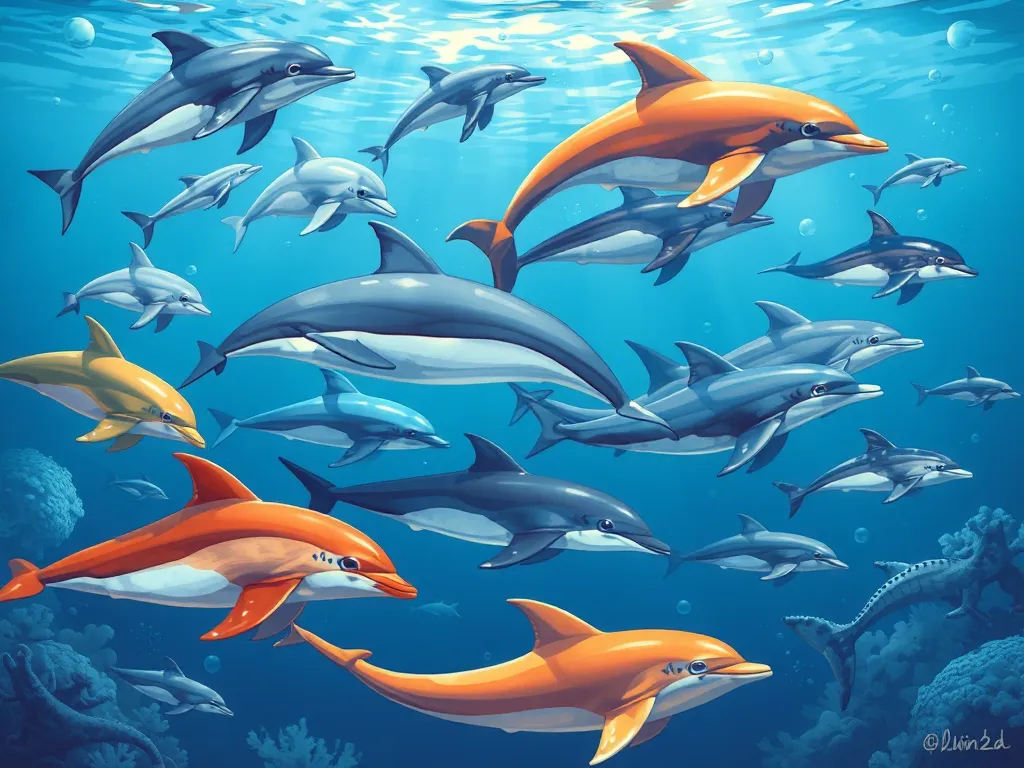
- Over 38 species in the Delphinidae family, making them the largest dolphin group
- Includes well-known species like the Common Bottlenose Dolphin, frequently seen in marine parks and coastal waters
- Features the large Orca (Killer Whale), which can reach up to 9.5 meters in length and is actually the largest dolphin species
- Contains the acrobatic Spinner Dolphin, known for its impressive aerial displays and spinning jumps
- Other notable members include the Clymene Dolphin, Atlantic Spotted Dolphin, and Risso’s Dolphin
- The Pantropical Spotted Dolphin has a global distribution in tropical and subtropical oceans
- The Dusky Dolphin is known for its playful behavior and acrobatic displays in coastal waters
- The Striped Dolphin displays distinctive longitudinal stripes along its body
The oceanic dolphin family represents the vast majority of dolphin species, distributed across all major oceans from tropical to polar regions. These dolphins typically have the characteristic curved dorsal fin, conical teeth, and elongated beaks that most people associate with dolphins.
Oceanic dolphins exhibit remarkable diversity in behavior, social structure, and feeding strategies, from the highly social pods of bottlenose dolphins to the more solitary hunting practices of some species. Their adaptability has allowed them to thrive in various marine environments, from deep ocean waters to coastal shallows.
River Dolphins: Freshwater Specialists
Five to six species live exclusively in fresh water, representing some of the most specialized and endangered dolphins on Earth. The Amazon River Dolphin, also known as the pink dolphin, inhabits the river systems of the Amazon and Orinoco basins, where its distinctive pink coloring makes it easily recognizable. The South Asian river dolphin, found in the Ganges and Indus river systems, is another freshwater specialist that has evolved to navigate murky river waters with reduced vision.
Other notable river dolphins include the Ganges River dolphin, which has a unique flexible neck that allows it to navigate shallow waters, and the Indus River dolphin, which shares similar adaptations but is found in a different river system. The La Plata dolphin, found in the coastal waters of South America, is somewhat of an exception as it can tolerate both salt and fresh water but primarily inhabits estuarine environments.
River dolphins face unique challenges compared to their oceanic counterparts. Their restricted habitats make them particularly vulnerable to habitat destruction, pollution, and dam construction. Unlike oceanic dolphins, they cannot easily move to different areas when their environment becomes degraded, which has contributed to their endangered status in many regions.
The construction of dams along major rivers has fragmented their habitats, isolating populations and reducing genetic diversity. Additionally, river dolphins often face higher levels of pollution from agricultural runoff, industrial waste, and human settlements along riverbanks.
What Are the Key Differences Between Dolphin Species?
Physical Traits: Size, Shape, and Color
| Dolphin Species | Size Range | Distinctive Features |
|---|---|---|
| Maui’s Dolphin | 1.7 meters | Smallest dolphin species, critically endangered |
| Amazon River Dolphin | 2.5-3 meters | Pinkish coloration, flexible neck |
| Bottlenose Dolphin | 2-4 meters | Gray color, prominent beak, highly social |
| Orca (Killer Whale) | 5-9.5 meters | Black and white coloration, apex predator |
| Commerson’s Dolphin | 1.5-2.3 meters | Black and white pattern, distinctive markings |
| Hector’s Dolphin | 1.2-1.6 meters | Small size, rounded dorsal fin, critically endangered |
| Risso’s Dolphin | 3-3.8 meters | Scarred white body, no beak |
| Fraser’s Dolphin | 2-2.6 meters | Dense coloration, small dorsal fin |
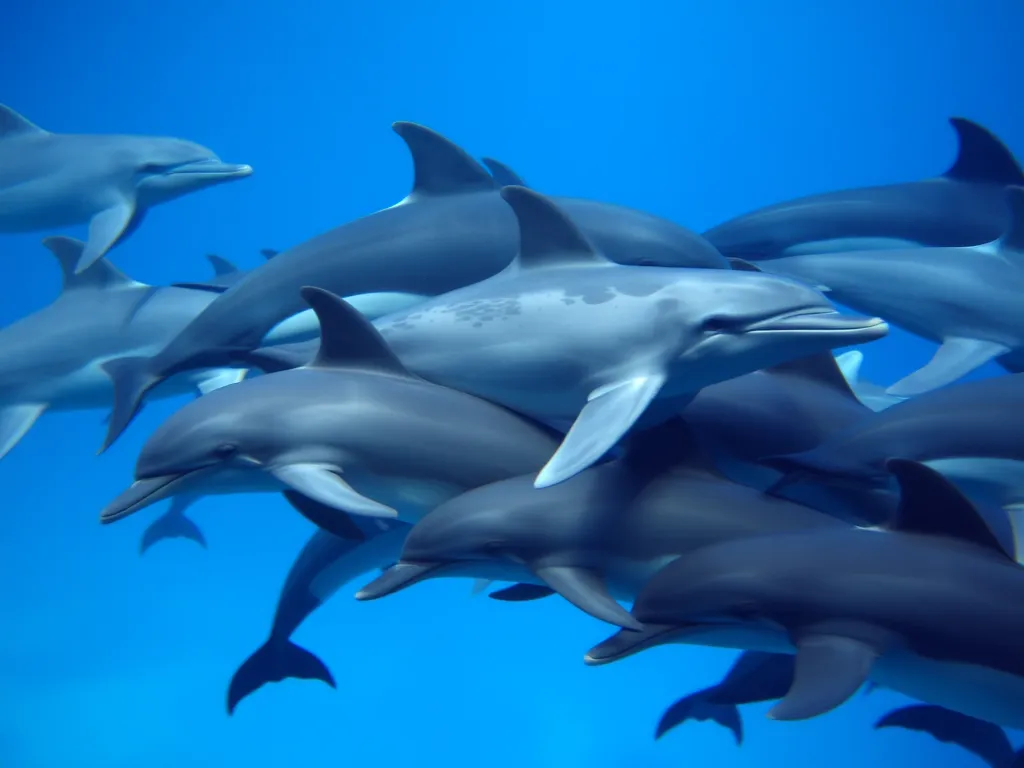
Dolphins exhibit remarkable variation in physical characteristics beyond just size. Their snout shapes range from the short, stubby beaks of some species to the elongated, slender snouts of others.
The beak length and shape often correlate with their feeding habits and preferred prey species. Some dolphins have evolved specialized teeth for specific types of prey, while others have more generalized dentition.
Dorsal fin curvature also varies significantly, with some species having tall, curved fins while others have smaller, more triangular dorsal fins. These physical adaptations help different species thrive in their specific environments and ecological niches.
Coloration patterns serve various purposes, from camouflage to species recognition. Some dolphins have countershading (darker on top, lighter on bottom) which helps them blend with their environment when viewed from above or below, while others have distinctive patterns that may play a role in social signaling or mate selection.
What are the 40 species of dolphins?
- Atlantic Humpback Dolphin – Found along the Atlantic coast of Africa, distinctive humpback appearance
- Atlantic Spotted Dolphin – Inhabits temperate and tropical waters of the Atlantic, develops spots with age
- Atlantic White-Sided Dolphin – Lives in cold waters of the North Atlantic, distinctive white patches
- Australian Humpback Dolphin – Coastal waters of northern Australia, smaller than Atlantic counterpart
- Australian Snubfin Dolphin – Shallow waters of northern Australia, distinctive snub-nosed appearance
- Chilean Dolphin – Found along the coast of Chile, stocky build with small dorsal fin
- Clymene Dolphin – Tropical and subtropical waters worldwide, similar to spinner dolphin
- Commerson’s Dolphin – Coastal waters around southern South America and Kerguelen Islands, striking black and white pattern
- Common Dolphin – Found worldwide in temperate and tropical waters, distinctive hourglass pattern
- Crane’s Dolphin – Endemic to coastal Chile, small and elusive species
- Delphinus Dolphin – Short-beaked common dolphin, widespread across oceans
- Fraser’s Dolphin – Deep and tropical waters worldwide, dense coloration
- Hector’s Dolphin – Endemic to New Zealand, smallest and rarest dolphin species
- Indo-Pacific Humpback Dolphin – Indian and western Pacific oceans, humped appearance
- Long-beaked Common Dolphin – Temperate and tropical waters worldwide, longer beak than short-beaked
These represent just a fraction of the diverse dolphin species found across the globe. Each species has evolved unique adaptations to its specific habitat, whether it’s the cold waters of the North Atlantic, the tropical rivers of South America, or the coastal regions of Australia and Africa. This diversity allows dolphins to occupy a wide range of ecological niches in marine and freshwater environments — Wildlife.
Which Dolphins Are Most Endangered and Why?
Critically Endangered Species
At least nine species are considered endangered by the IUCN or ESA, with several facing critically endangered status. The Atlantic humpback dolphin, found only along the Atlantic coast of Africa, has experienced significant population declines due to bycatch and habitat degradation. Recent estimates suggest fewer than 1,500 individuals remain, with populations in some areas having declined by over 80% in the past few decades.
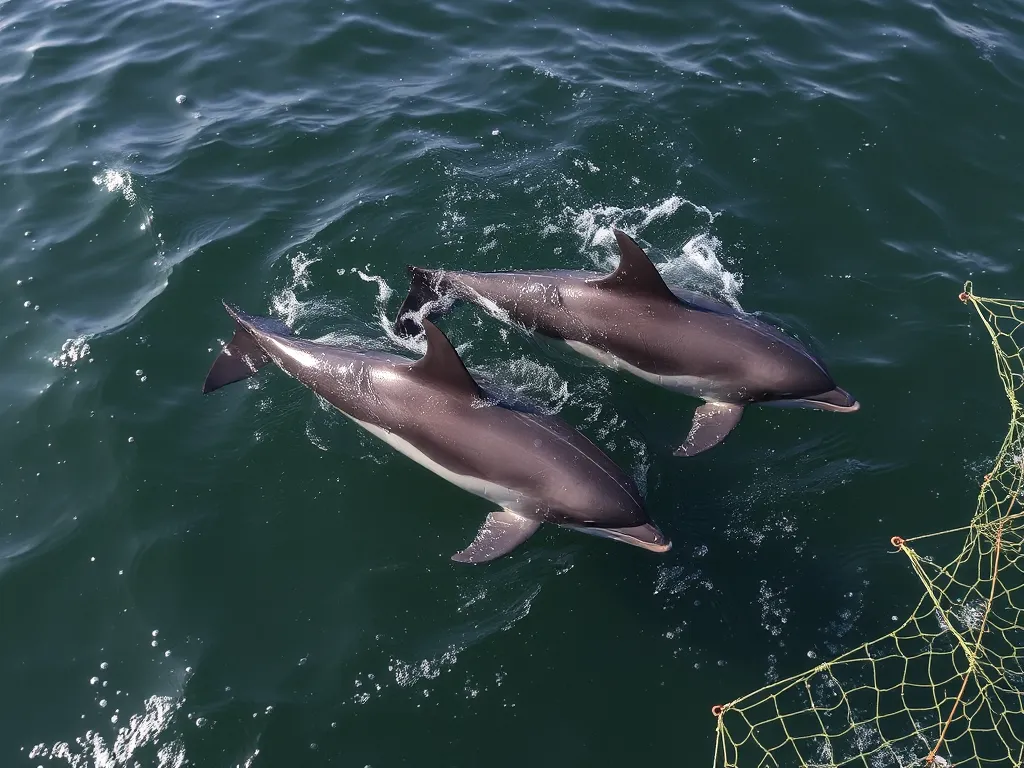
The Chinese River dolphin, also known as the baiji, is feared to be functionally extinct, with no confirmed sightings since 2002 despite extensive surveys. This species once inhabited the Yangtze River but was driven to extinction by dam construction, pollution, and boat traffic. Hector’s dolphin, endemic to New Zealand, is critically endangered with fewer than 50 mature individuals remaining, primarily due to entanglement in fishing nets.
The Maui’s dolphin, a subspecies of Hector’s dolphin, is even more critically endangered, with an estimated 63 individuals remaining as of 2023. These dolphins face threats from gillnet fishing and habitat degradation in their limited coastal habitat off New Zealand’s North Island. The Indus River dolphin has seen its population decline by an estimated 50% over the past generation due to dam construction, water extraction, and pollution in the Indus River system.
These endangered species face multiple threats beyond direct human activities. Climate change affects their food availability and habitat quality, while pollution accumulates in their bodies through the food chain.
The limited geographic ranges of many river dolphins make them particularly vulnerable to environmental changes, as they cannot easily relocate to more suitable habitats when their current environment becomes inhospitable. Conservation efforts for these species include fishing gear modifications, habitat protection, and captive breeding programs, but the challenges remain significant.
What dolphin has only 10 people left?
The vaquita, found only in the Gulf of California, Mexico, holds the unfortunate distinction of being the world’s rarest marine mammal. With only about 10 individuals remaining, this small porpoise species is on the brink of extinction. The vaquita is the smallest cetacean, reaching only about 1.5 meters in length, and is distinguished by its dark eye rings and lip patches.
The vaquita’s rapid decline exemplifies the broader crisis facing cetaceans worldwide. Unlike many other marine mammals, the vaquita faces an existential threat from gillnets used in illegal fishing for the totoaba fish, whose swim bladders are highly valued in traditional Chinese medicine and can fetch thousands of dollars on the black market. Despite international agreements and protection measures, including a two-year gillnet ban in the vaquita’s habitat, the species continues to decline at an alarming rate.
Conservation efforts to save the vaquita have been hampered by the difficulty of protecting such a small population in a vast marine environment. The Mexican government has implemented various strategies, including increased patrols, surveillance technology, and alternative livelihood programs for local fishermen, but these efforts have had limited success due to the scale of illegal fishing operations and the economic incentives driving them.
The plight of the vaquita serves as a stark reminder of the urgent need for stronger conservation measures and international cooperation to protect marine biodiversity and prevent the loss of irreplaceable species. Other critically endangered dolphins include the Ganges River dolphin, with populations declining due to pollution and dam construction, and the Franciscana dolphin, which faces threats from bycatch in fishing nets along the coasts of Brazil, Uruguay, and Argentina.
The incredible diversity of dolphin species, ranging from the tiny 1.7-meter Maui’s dolphin to the massive 9.5-meter orca, highlights the remarkable adaptability of these marine mammals. However, with at least nine species classified as endangered, urgent conservation action is needed, as seen with other vulnerable species like endangered eagles. Supporting sustainable fishing practices, reducing plastic pollution, and protecting critical habitats are concrete steps individuals can take to help ensure these intelligent creatures continue to thrive in our oceans for generations to come.