Deforestation directly threatens 85% of endangered species by destroying, degrading, and fragmenting their habitats. According to the IUCN Red List, habitat loss is the primary cause of biodiversity decline, affecting the majority of threatened species worldwide. As forests are cleared for agriculture, logging, and infrastructure, species lose essential food sources, shelter, and breeding grounds, making survival impossible in altered landscapes.
- Habitat loss is identified as a main threat to 85% of threatened species on the IUCN Red List.
- Agriculture drives 80% of global deforestation, converting forests into cropland and pasture.
- Approximately 80% of terrestrial biodiversity lives in forests, making tree loss catastrophic for species survival.
- Deforestation causes 137 species of plants, animals, and insects to be lost every day.
Habitat Loss and Fragmentation Mechanisms
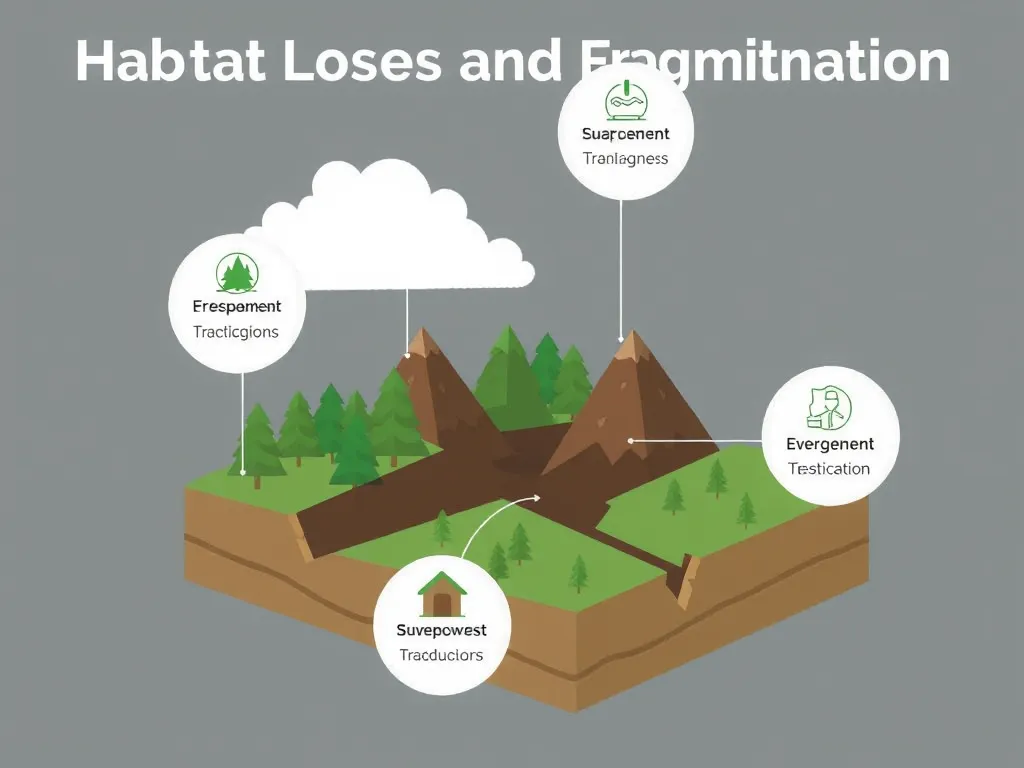
Habitat destruction occurs when natural environments can no longer support native species. Deforestation splits continuous ecosystems into isolated patches, reducing genetic diversity and limiting animal movement. This fragmentation exposes wildlife to edge effects, such as increased heat and invasive species, which further degrade survival conditions.
How Forest Clearing Creates Isolated Patches
When trees are removed, remaining forest fragments become disconnected. Animals cannot migrate or find mates across cleared land, leading to inbreeding and population decline. Research from the University of Maryland’s GLAD Lab shows that forest loss creates “islands” of habitat surrounded by hostile agricultural or urban landscapes.
Edge Effects and Increased Vulnerability
Forest edges experience higher temperatures and lower humidity, altering microclimates. Invasive species thrive in these disturbed zones, outcompeting native flora and fauna. The Global Forest Watch 2025 report notes that fragmented forests lose up to 50% of their biodiversity value compared to intact ecosystems.
Daily Species Loss Statistics
Deforestation causes 137 species of plants, animals, and insects to vanish every day. This rate is driven by the destruction of mature rainforests, which house the highest concentrations of endemic species. According to the UN’s 2026 biodiversity assessment, this daily loss accelerates extinction risks for specialized forest dwellers.
Link to IUCN Red List Threats
The International Union for Conservation of Nature (IUCN) identifies habitat loss as the leading threat to 85% of threatened species. This statistic underscores how deforestation directly undermines global conservation efforts. Species like the Sumatran orangutan and Amazonian jaguar face imminent extinction due to forest clearance.
Agricultural Expansion as the Primary Driver
Agriculture is the dominant cause of deforestation, accounting for nearly 90% of global forest loss in 2025. Cropland expansion and pasture creation for commodities like soy, palm oil, and beef drive this trend. Forests are cleared at a rate of 10 million hectares per year, with tropical regions hit hardest.
What Is Responsible for 80% of Deforestation?
Agriculture is responsible for 80% of global deforestation, transforming vast forest landscapes into farms and ranches. In 2025, cropland expansion and livestock grazing became the top drivers, surpassing logging and urbanization. This shift directly removes habitats for countless species, pushing them toward extinction.
Commodity-Driven Forest Loss
Palm oil plantations in Southeast Asia and cattle ranching in the Amazon are major contributors. These industries clear forests at an alarming pace, destroying biodiversity hotspots. The Global Forest Resources Assessment 2025 by the FAO confirms that commodity-driven deforestation has increased by 80% since 2023.
Impact on Terrestrial Biodiversity
Approximately 80% of terrestrial biodiversity resides in forests. When these areas are converted to agricultural land, species lose their homes instantly. For example, the Amazon rainforest houses 10% of the world’s known species, yet it faces unprecedented deforestation rates.
Daily Habitat Destruction Scale
On average, 2,400 trees are cut down each minute for agricultural expansion. This relentless clearing leads to the loss of 137 species daily, as reported by the UN’s 2026 biodiversity report. The scale of destruction highlights the urgent need for sustainable land-use practices.
Ecological Consequences and Species Vulnerability
Deforestation triggers cascading ecological effects that amplify species vulnerability. Beyond direct habitat loss, it alters local climates, reduces carbon sequestration, and increases human-wildlife conflicts. These factors compound the threats faced by endangered species.
How Deforestation Contributes to Extinction
Deforestation leads to habitat destruction, which is the primary cause of species extinction. When forests are cleared, animals and plants lose their shelter, food, and breeding grounds. The IUCN Red List shows that habitat loss affects 85% of threatened species, making deforestation a direct pathway to extinction.
Human-Wildlife Conflict Intensification
As habitats shrink, wildlife is forced into smaller areas or closer to human settlements. This proximity increases dangerous interactions, such as crop raiding or predation on livestock, leading to higher mortality rates for both animals and humans. In 2025, reports from the World Wildlife Fund noted a 30% rise in human-wildlife conflicts in deforested regions of Africa and Asia.
Degradation Beyond Clear-Cutting
Even without full clearing, logging and encroachment degrade forests. Selective logging destroys the structural integrity of ecosystems, removing canopy cover and disrupting microhabitats. Species like arboreal mammals and specialized insects suffer disproportionately from this degradation.
Climate Feedback Loops
Deforestation reduces carbon sequestration, exacerbating climate change. Warmer temperatures and altered rainfall patterns further stress surviving species. The IPCC 2019 report links deforestation to increased wildfire risks, creating a feedback loop that accelerates biodiversity loss.
What’s Next: Protecting Wildlife Through Action
To mitigate deforestation’s impact on wildlife, support indigenous land management, which safeguards 80% of the world’s remaining biodiversity. Advocate for sustainable agriculture policies and participate in reforestation projects. For deeper insights, explore how habitat fragmentation drives animal extinction and how climate change affects polar bears.
Learn about de-extinction science and its potential role in conservation. Visit Wildlife for more resources on protecting endangered species.
Frequently Asked Questions About How Does Deforestation Directly Threaten 85% Of Endangered Species?
What percentage of endangered species are directly threatened by deforestation?
85% of endangered species are directly threatened by deforestation. This is due to habitat loss and fragmentation mechanisms, as detailed in the article's first section.
What is the primary driver of deforestation threatening endangered species?
Agricultural expansion is the primary driver, accounting for 80% of global deforestation. This directly threatens 85% of endangered species by destroying their habitats.
How does deforestation cause species vulnerability?
Deforestation causes species vulnerability through habitat loss and fragmentation, affecting 80% of terrestrial biodiversity. The article explains these ecological consequences in its third section.
What is the rate of global forest loss?
2,400 trees are cut down each minute, contributing to 90% of global forest loss. This rapid loss directly threatens 85% of endangered species.