Science can bring back proxies of extinct species, but not exact replicas. Using gene editing and cloning, researchers create hybrids by inserting ancient DNA into the genomes of closely related living species to restore traits, aiming to revive animals like the Woolly Mammoth or Passenger Pigeon. This process, known as de-extinction, represents a breakthrough in biotechnology but is currently more about creating “living paleoart” than perfectly resurrecting the past.
Key Takeaways
- De-extinction creates hybrid “proxies,” not exact clones of extinct animals.
- Technologies like CRISPR and cloning are the primary methods used.
- Companies like Colossal Biosciences target species such as the woolly mammoth and dodo.
- Major challenges include finding suitable habitats and surrogate mothers.
How De-Extinction Works: The Science of Resurrection
De-extinction is the process of human intervention to generate an organism that either resembles or is an extinct organism. According to the Wikipedia entry on de-extinction, there are several ways to carry out this process, with cloning being the most widely proposed method, alongside genome editing and selective breeding.
The only method that would provide an animal with the same genetic identity is cloning, but ancient DNA is often degraded, making perfect replication impossible. In 2026, researchers continue to refine these methods, focusing on practical applications rather than theoretical perfection.
The “Proxy” Concept: Hybrids Over Clones
Because ancient DNA is often degraded and fragmented, it is impossible to perfectly replicate an extinct species. The result is a hybrid—a living species with “proxy” traits of the lost one, not a 100% accurate clone. This approach acknowledges the limitations of ancient DNA preservation and focuses on functional restoration rather than genetic purity.
Scientists use advanced genetic technologies, such as somatic cell nuclear transfer (cloning) or CRISPR-based genome editing, to edit the cells of living species to match the genome of an extinct relative. This approach focuses on restoring key functional traits rather than creating a genetic duplicate. For example, a woolly mammoth proxy might retain cold tolerance and shaggy hair but lack the exact social behaviors of the original species.
Key Technologies: CRISPR and Cloning
The primary technologies driving de-extinction are CRISPR gene editing and somatic cell nuclear transfer (cloning). CRISPR allows scientists to precisely swap genes between species, while cloning involves transferring a nucleus from an extinct animal’s cell into an egg of a living relative. These methods are complementary: CRISPR edits the genome, and cloning provides a pathway to gestation.
For example, Colossal Biosciences pairs CRISPR/Cas9 with other DNA-editing enzymes to splice woolly mammoth genes into the Asian elephant genome. The company has used 65 different mammoth genomes across about 700,000 years to create an assembled ancient DNA genome. This massive dataset allows researchers to identify specific genes responsible for traits like fat storage and hair growth, which are critical for survival in cold climates.
Target Species: Woolly Mammoth, Dodo, and Thylacine
Key projects focus on iconic extinct animals. Colossal Biosciences is attempting to bring back the woolly mammoth, dodo, and thylacine (Tasmanian tiger). These species were chosen for their ecological significance and the availability of close living relatives.
The woolly mammoth shares 99.6% of its DNA with the Asian elephant, making it a prime candidate for gene editing. Colossal aims to develop a proxy species by swapping enough key mammoth genes into the Asian elephant genome, targeting traits like a 10-centimeter layer of insulating fat and shaggy hair to help the hybrid tolerate cold weather.
The dodo, extinct since 1662, is being recreated using the Nicobar pigeon as a living relative, focusing on restoring its flightless characteristics and ecological role in seed dispersal. The thylacine, or Tasmanian tiger, went extinct in 1936, and its project uses the fat-tailed dunnart as a surrogate, aiming to restore its predatory functions in Australian ecosystems.
Challenges and Ethical Debates in De-Extinction
While de-extinction offers scientific promise, it faces significant technical, ethical, and ecological hurdles. Beyond finding suitable surrogate mothers for cross-species breeding, researchers must address habitat suitability and the potential impact on modern ecosystems.
The scientific debate centers on whether extinction is fundamentally irreversible, as an animal requires its original environmental context, social behaviors, and ecological relationships. In 2026, these debates are more active than ever, with conservationists weighing the costs and benefits.
Technical and Ecological Hurdles
Major challenges include finding suitable surrogate mothers for cross-species breeding and finding suitable habitats for reintroduction. Environmental shifts since the species went extinct mean that the original ecosystem may no longer exist. For example, the woolly mammoth’s habitat was the mammoth steppe, which stretched across northern Eurasia and North America, but this landscape has changed significantly over thousands of years due to climate warming and human activity.
Additionally, surrogate mothers must be closely related to the extinct species to ensure successful gestation. For the woolly mammoth, Asian elephants are the primary candidates, but elephant pregnancies last 22 months, and cross-species cloning success rates remain low. Habitat restoration is equally critical; without the mammoth steppe, reintroduced proxies may struggle to survive or fulfill their ecological roles.
Ethical Concerns and Conservation Priorities
Ethical concerns argue that the enormous effort and funding required for de-extinction could be better spent on protecting currently endangered species. Reintroducing a species that has been gone for thousands of years could destabilize modern ecosystems, which have adapted in its absence.
According to Yale Environment 360 (2025), scientists increasingly agree that “de-extinction” is not possible in the exact sense, but breeding living animals with genes similar to those lost species can be a useful conservation tool. This perspective emphasizes the importance of focusing resources on preventing extinctions rather than reversing them.
Another ethical issue is the welfare of the proxy animals themselves. Creating hybrids with traits from extinct species may result in animals that suffer from health problems or cannot thrive in modern environments. Conservationists argue that de-extinction should only proceed if it benefits existing ecosystems and does not harm surrogate species.
The Future of De-Extinction Projects
Colossal Biosciences has set a goal to grow a woolly mammoth calf by 2028, aiming to reintroduce them to the Arctic tundra habitat. The company plans to use African and Asian elephants as potential surrogates and is developing artificial elephant wombs lined with uterine tissue as a parallel path to gestation. This innovation could reduce reliance on endangered elephants and improve success rates.
In 2023, Colossal launched the Tasmanian Thylacine Advisory Committee to release Tasmanian tiger joeys back to their original habitat after observation in captivity. By 2026, the committee has expanded to include ecologists and indigenous leaders to ensure reintroduction plans respect local ecosystems and cultural values. These projects highlight the long-term commitment required for de-extinction, spanning decades rather than years.
The Science of De-Extinction: Current State and Limitations
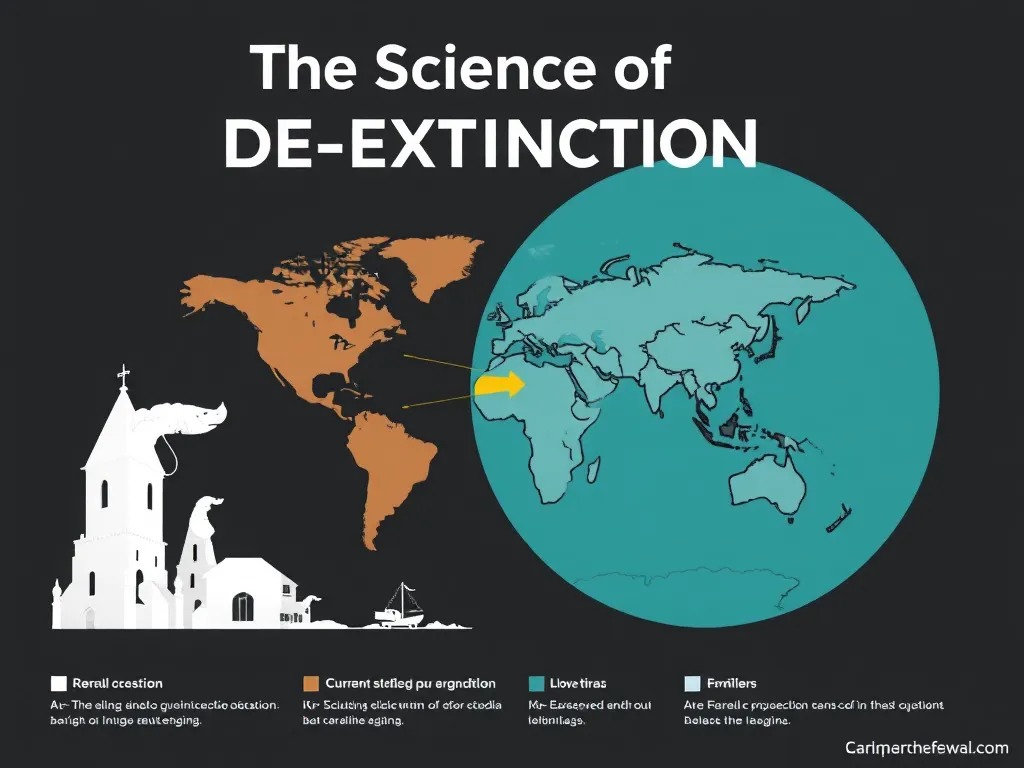
De-extinction is redefining what it means to be alive, but it remains a complex scientific endeavor. While technologies are advancing rapidly, the process is currently more about creating hybrids that resemble lost species rather than bringing back the exact original species.
This has profound implications for Wildlife conservation and our understanding of extinction. In 2026, de-extinction is a tool in the conservation toolkit, not a magic solution.
Is De-Extinction Actually Possible?
Yes, science can bring back proxies of extinct species, but not exact replicas. The process is technically feasible for species with close living relatives and preserved DNA, but it cannot recreate the exact genetic identity or the original environmental context.
For instance, the aurochs, which went extinct in 1627, is being recreated through selective breeding of primitive cattle breeds, but the resulting animals differ from the original in physical characteristics and behavior. This demonstrates that de-extinction is about approximation, not perfection.
Current projects in 2026 show that while proxies can be created, they require ongoing management and may not fully replicate the extinct species’ ecological niche. This reality underscores the importance of setting realistic expectations for de-extinction outcomes.
What Animals Are Scientists Trying to Bring Back?
Scientists are targeting species like the woolly mammoth, dodo, thylacine, and passenger pigeon. Colossal Biosciences is working on the woolly mammoth, dodo, thylacine, northern white rhinoceros, dire wolf, and moa.
These projects aim to restore key ecological functions, such as grazing patterns that could help mitigate climate change by maintaining tundra ecosystems. For example, woolly mammoth proxies could trample snow and promote grass growth, reducing permafrost thaw.
Other organizations, such as Revive & Restore, focus on the passenger pigeon and heath hen, using genomic data from museum specimens. In 2026, these efforts are coordinated through international consortia to share resources and avoid duplication.
The Role of Genetics in Resurrecting Species
Genetic sequencing is critical to de-extinction. In July 2022, VGP and Colossal announced that they successfully sequenced the entire Asian elephant genome, the first mammalian genetic code fully sequenced since the Human Genome Project.
This allows scientists to identify key genes for traits like cold tolerance and hair growth, which are essential for creating a woolly mammoth proxy. By 2026, sequencing costs have dropped significantly, enabling more species to be targeted.
Advanced bioinformatics tools now analyze ancient DNA fragments, assembling them into coherent genomes despite degradation. This progress has accelerated de-extinction timelines, with Colossal reporting a 30% improvement in gene-editing efficiency since 2023.
Limitations and Realities
Despite advances, de-extinction has clear limits. Ancient DNA is often fragmented, making perfect replication impossible.
Additionally, the social behaviors and ecological relationships of extinct species cannot be fully recreated. For instance, mammoths lived in herds with complex social structures, which proxies may not exhibit without careful rearing.
As noted in scientific debates, extinction is fundamentally irreversible because an animal is more than just its genome; it requires its original environmental context. This means de-extinction is currently more about “living paleoart” than true resurrection. In 2026, researchers emphasize that proxies are tools for education and ecosystem restoration, not replacements for lost biodiversity.
This approach to biodiversity conservation raises questions about how we value lost species versus protecting existing ones. The science continues to evolve, but the ethical and ecological implications remain central to the discussion. For example, funding for de-extinction projects in 2026 exceeds $150 million globally, yet critics argue this could fund anti-poaching efforts for 10,000 endangered animals.