Habitat fragmentation is the process where large, continuous habitats are broken into smaller, isolated patches, often by human activities like road construction and agriculture. This division directly drives animal extinction by limiting movement, reducing genetic diversity, and increasing vulnerability to threats. According to the AI Overview, 50% of global land area has been converted to cropland, contributing to this crisis, while 1 million species now face extinction risk due to habitat loss and fragmentation in 2026.
Key Takeaways
- Habitat fragmentation splits large habitats into smaller, disconnected patches, isolating wildlife populations and restricting essential movement.
- It drives extinction by reducing genetic diversity, increasing edge effects, and limiting access to food, water, and mating partners.
- Species like African wild dogs are particularly vulnerable due to increased human-wildlife conflict and disease exposure from fragmented landscapes.
How Habitat Fragmentation Directly Threatens Wildlife Survival
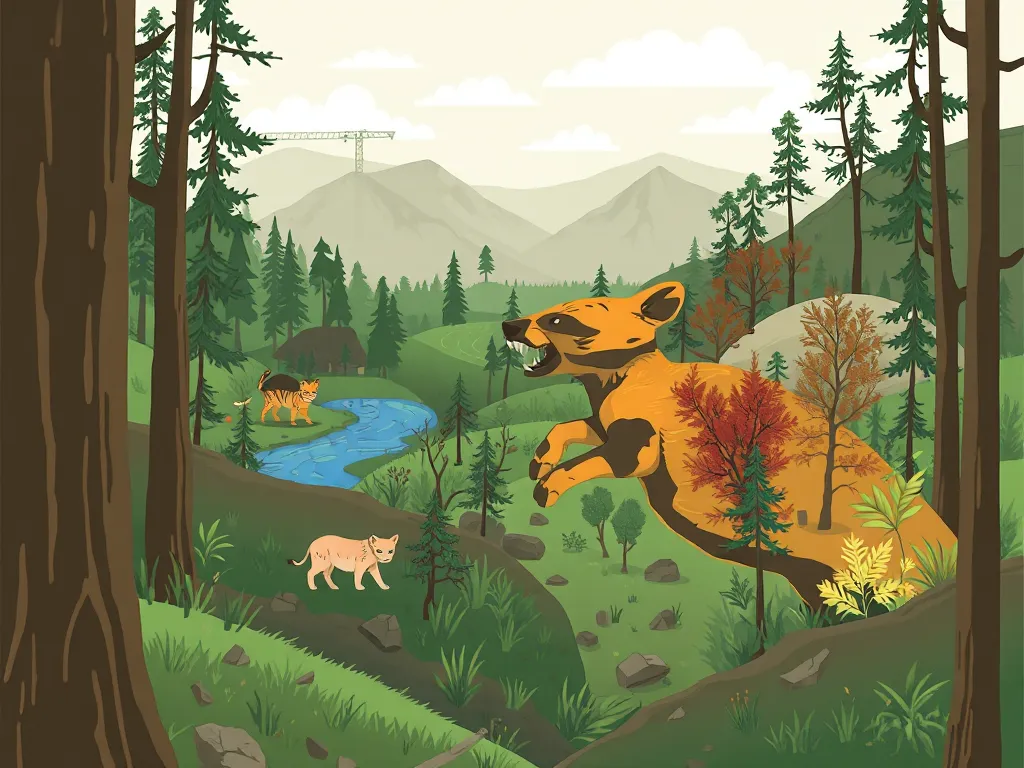
Habitat fragmentation occurs when large blocks of habitat are cut into smaller pieces by development such as roads or housing, leaving remaining blocks isolated. This process not only reduces the space available for animals but also creates barriers that limit their movement and access to essential resources.
The result is a cascade of ecological impacts that push species toward extinction. In 2026, this remains the primary driver of biodiversity loss globally, with 75% of terrestrial environments significantly altered by human expansion.
What Is Habitat Fragmentation and How Does It Drive Animal Extinction?
Habitat fragmentation describes the emergence of discontinuities in an organism’s preferred environment, causing population fragmentation and ecosystem decay. According to the Woodland Trust (2018), fragmentation happens when parts of a habitat are destroyed, leaving behind smaller unconnected areas. This process is not merely a reduction in habitat size; it fundamentally changes the spatial configuration of the landscape, creating a patchwork of isolated habitats that cannot support the same ecological functions as a continuous expanse.
This division is primarily driven by human activities like land conversion, which alter environments faster than natural processes. The National Wildlife Federation (2025) notes that habitat loss—due to destruction, fragmentation, or degradation—is the primary threat to wildlife survival in the United States. In 2026, this threat has intensified with the expansion of urban sprawl and industrial agriculture, which continue to carve up remaining natural areas at an unprecedented rate.
How Does Habitat Fragmentation Lead to Extinction?
Fragmentation limits wildlife mobility, causing individuals to struggle moving between habitat patches. This leads to inbreeding and loss of genetic diversity, reducing population health and increasing extinction risk. When animals cannot disperse, they face a higher probability of local extinction due to stochastic events like disease outbreaks or extreme weather, which can wipe out an entire isolated population.
The PMC study by Haddad (2015) explains that reduced area and increased isolation decrease seed predation and herbivory, disrupting ecosystem balance. For example, African wild dogs (Lycaon pictus) are particularly impacted by farms and grazing areas, which increase contact with humans and domestic animals, raising disease risks and human-wildlife conflict. In fragmented landscapes, these dogs must cross dangerous roads and agricultural fields to find mates, leading to higher mortality and reduced reproductive success.
What Animals Are Affected by Habitat Fragmentation?
African wild dogs are a key example, but fragmentation affects many species across different ecosystems. The World Animal Protection (2025) reports that human activities like road construction and factory farming break natural habitats into smaller pieces, isolating wildlife. This includes large mammals like tigers and elephants, as well as smaller species like amphibians and insects that rely on specific microhabitats.
This isolation shrinks animal territories, as noted by Nature World News (2026), forcing species into smaller areas where they face increased competition and resource scarcity. The result is local population declines and, ultimately, extinction. For instance, forest-dependent birds in Southeast Asia have seen population drops of up to 40% in fragmented areas compared to continuous forests.
Mechanisms Driving Extinction Through Habitat Fragmentation
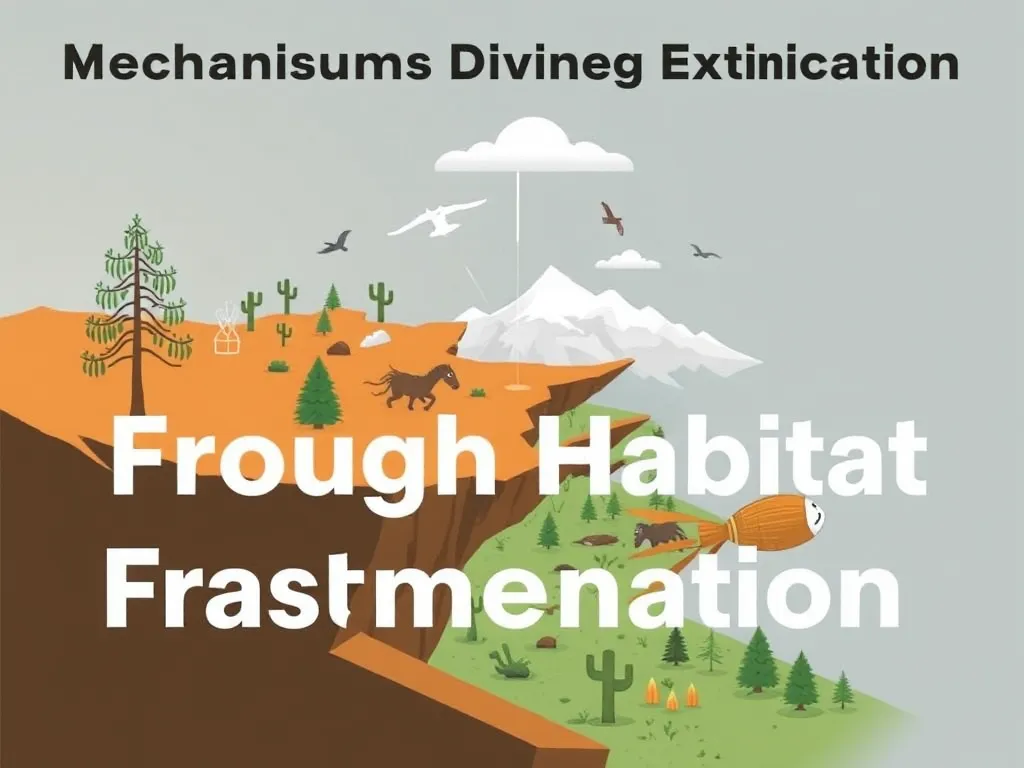
Habitat fragmentation drives extinction through specific ecological mechanisms, including edge effects and genetic isolation. These processes weaken species’ ability to survive and reproduce, accelerating biodiversity loss. Understanding these mechanisms is critical for conservation efforts in 2026, as they reveal why some species recover while others vanish despite habitat protection measures.
Edge Effects and Habitat Isolation
When forests are divided into isolated patches, more species are forced to live close to the forest’s edge, where conditions are more dangerous and less stable. ReWorld (2025) highlights that this edge exposure increases predation and competition, reducing survival rates. The edge environment has higher light levels, wind exposure, and temperature fluctuations, which can be lethal for shade-adapted species.
The patch-matrix-corridor model, developed by Richard Forman, illustrates how isolated habitat patches become “islands” in a sea of unsuitable landscape, limiting species movement and gene flow. This isolation is a primary driver of extinction, as populations cannot access mates or resources in other patches. In 2026, this model is widely used in landscape planning to design corridors that reconnect these islands.
Genetic Diversity Loss and Population Decline
Isolated populations suffer from inbreeding depression, where limited genetic diversity makes them vulnerable to diseases and environmental changes. The Cal Academy (2013) notes that the “double whammy” of fragmentation and invading species can be fatal for native wildlife. Inbreeding reduces the population’s ability to adapt to new challenges, such as climate change or emerging pathogens.
For instance, the African wild dog example shows how fragmentation increases disease exposure, leading to population crashes. Without genetic exchange between patches, species lose adaptive potential, pushing them toward extinction. Studies in 2026 show that fragmented populations of large carnivores have genetic diversity levels 30% lower than continuous populations.
Examples of Fragmentation in Wildlife
Fragmentation is evident in various species and ecosystems. African wild dogs, as mentioned, are directly impacted by agricultural expansion. Similarly, in the Amazon, deforestation for soy production has created isolated forest patches that cannot support jaguar populations, leading to local extinctions.
Forest fragmentation, a common form, reduces woodland to small remnants surrounded by farmland or development, as described by Forest Research UK (2025). This pattern applies globally, from tropical forests to grasslands, where human activities like logging and urbanization create isolated habitat patches that cannot support viable wildlife populations. In 2026, satellite data shows that 60% of the world’s forests are now fragmented.
Conservation Strategies to Mitigate Fragmentation Impacts
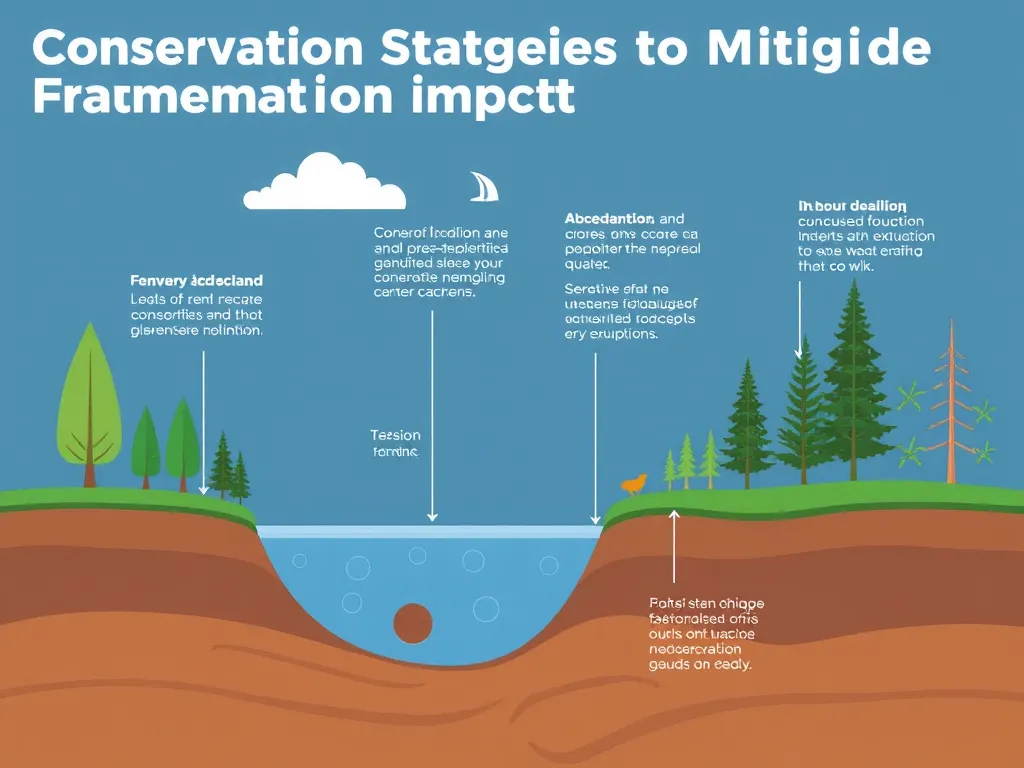
While fragmentation drives extinction, conservation strategies like wildlife corridors and habitat restoration can mitigate its impacts. These approaches reconnect isolated patches and restore ecological functions, offering hope for endangered species. In 2026, these strategies are being implemented worldwide with increasing success rates.
Wildlife Corridors and Habitat Restoration
Wildlife corridors are designed to reconnect fragmented habitats, allowing animals to move between patches and maintain genetic flow. Nature World News (2026) emphasizes that corridors can reverse territory shrinkage caused by roads and development. Successful examples include the Yellowstone to Yukon corridor in North America, which has facilitated the movement of grizzly bears and wolves across state and national borders.
Habitat restoration, as noted by UGC Berkeley (2025), increases local biodiversity by rehabilitating degraded areas, supporting species recovery. These strategies are essential for reducing extinction risks linked to fragmentation. Restoration projects in 2026 often involve planting native vegetation and removing invasive species, which can increase habitat quality by 50% within five years.
The Role of Biodiversity in Fragmentation Resilience
Biodiversity—defined as the variety of life in an ecosystem—plays a key role in resilience against fragmentation. Earth.org (2022) states that habitat fragmentation is a major neglected environmental issue affecting biodiversity.
By maintaining diverse species interactions, ecosystems can better withstand fragmentation impacts. High biodiversity provides functional redundancy, where multiple species perform similar roles, ensuring ecosystem stability even if some species are lost.
Conservation biology, as a field, focuses on protecting these interactions to prevent extinction, drawing on interdisciplinary research to inform policy and practice. Wildlife conservation efforts must address fragmentation through integrated approaches, combining corridor implementation with restoration to safeguard species. In 2026, conservationists emphasize that protecting biodiversity hotspots is more effective than focusing on single species.
For deeper insights on related threats, explore how deforestation directly threatens 85% of endangered species and how climate change affects polar bears specifically. These interconnected issues highlight the urgency of holistic conservation strategies in 2026.