Biodiversity is the immense variety of life on Earth, spanning ecosystems, species, and genetic variations within them. It matters because this interconnected web ensures ecosystem resilience, providing essential services like clean air, water, crop pollination, and medicines. Without this diversity, ecosystems become unstable, threatening food security and humanity’s future.
Why Does Biodiversity Matter More Than You Think?
Biodiversity is not just about saving animals; it is the foundation of human survival. In 2026, the economic stakes are higher than ever, with over half of global GDP dependent on nature and its services. The loss of species is not just an ecological tragedy but a direct threat to economic stability and human health.
Ecosystem Resilience and Stability
High biodiversity acts as a buffer, allowing ecosystems to withstand and recover from disasters, climate change, and stressors like pests. According to the Royal Society, biodiversity is essential for the processes that support all life on Earth, including humans. Without a wide range of animals, plants, and microorganisms, we cannot have the healthy ecosystems that provide the air we breathe and the food we eat.
Essential Human Services (Natural Capital)
Biodiversity is the foundation for ecosystem services essential to human survival, including clean water, food, and air. The United Nations notes that ecosystems absorb over half of all carbon emissions, playing a critical role in climate regulation. This natural capital is irreplaceable and underpins our daily lives.
Food Security and Agriculture
Genetic diversity within crops and livestock makes them more resilient to diseases and climate extremes. The Environmental Protection Agency (EPA) states in 2025 that biodiversity supports food security and sustained livelihoods through overall genetic diversity. This diversity is crucial for adapting to changing environmental conditions.
Medicine and Health
A vast number of drugs and treatments are derived from diverse plant, animal, and microbial species. The American Museum of Natural History (AMNH) highlights that biodiversity refers to the variety of life at all levels, from genes to ecosystems, which is the source of many modern medicines. Protecting biodiversity means protecting future medical discoveries.
What Is Biodiversity and Where Is It Greatest?
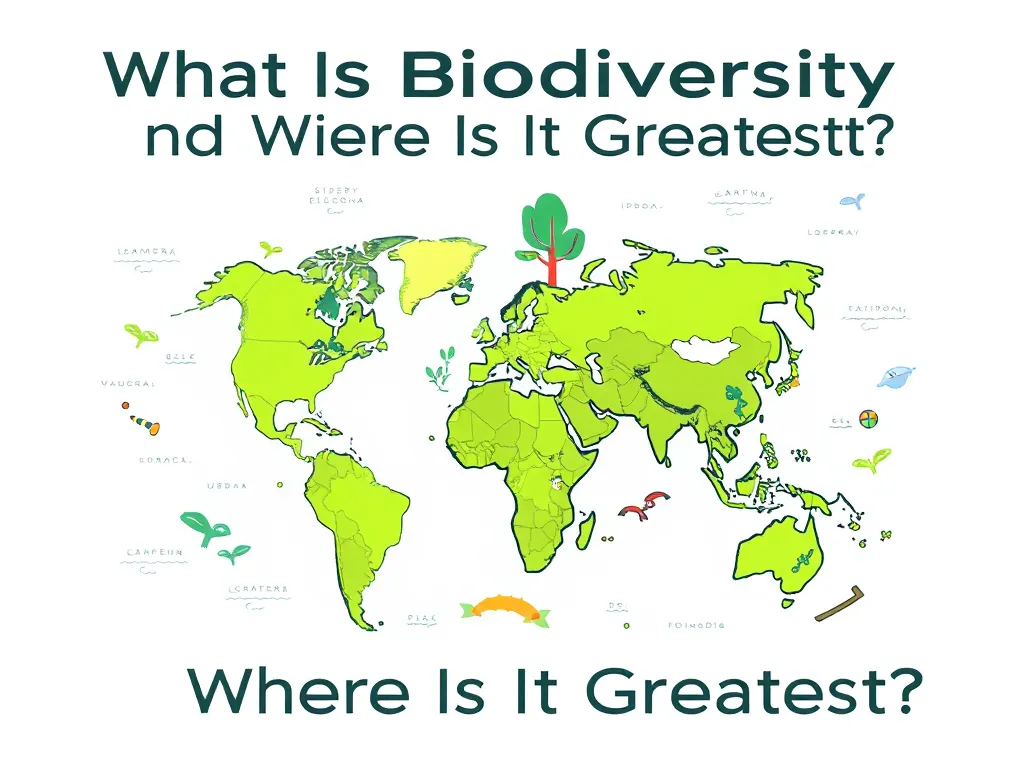
Biodiversity is the variability of life on Earth, measured across genetic, species, and ecosystem levels. It is not distributed evenly; the tropics host the greatest diversity due to warm climates and high productivity.
Levels of Biodiversity
Biodiversity operates on three main levels: genetic, species, and ecosystem diversity. Genetic diversity refers to the variety of genes within a species, which is crucial for adaptation.
Species diversity is the number of different species in an area, and ecosystem diversity encompasses the variety of habitats and ecological processes. According to Frontiers in Ecology and the Environment (2022), these levels are interconnected and essential for ecosystem function.
Global Distribution of Biodiversity
Diversity is greater in the tropics as a result of the warm climate and high primary productivity near the equator. Tropical forest ecosystems cover less than one-fifth of Earth’s terrestrial area but contain about 50% of the world’s species, as noted in biodiversity research. This concentration makes tropical regions critical for global conservation efforts.
Threats to Biodiversity Hotspots
Human activities have led to an ongoing biodiversity loss, often called the Holocene extinction or the sixth mass extinction. Habitat destruction for farming is a key reason, and climate change exacerbates these threats. The Intercept (2022) reports that up to 30% of all species could be extinct by 2050 if current trends continue, highlighting the urgency of protecting these hotspots.
How Does Biodiversity Matter for Our Future?
Biodiversity matters because it directly supports human life and economic stability. In 2026, the link between biodiversity and global GDP is clearer than ever, with over half of the economy reliant on nature.
Economic Dependence on Nature
Over half of global GDP is dependent on nature and its services, according to research from The Guardian. This includes industries like agriculture, tourism, and pharmaceuticals, which rely on healthy ecosystems. Losing biodiversity means losing economic resilience.
Climate Regulation and Carbon Absorption
Ecosystems like forests, wetlands, and oceans are critical carbon sinks, absorbing over half of all carbon emissions. This helps regulate the climate and mitigate the effects of global warming. Protecting these ecosystems is essential for climate stability in 2026 and beyond.
The Biodiversity Crisis and Species Extinction
Up to one million species are threatened with extinction, creating a biodiversity crisis that affects all life on Earth. The United Nations emphasizes that protecting biodiversity is not only an ecological necessity but a cornerstone for future stability.
This crisis demands immediate global action.
Wildlife conservation efforts are crucial in addressing these threats and ensuring a sustainable future.
For more on protecting species trade, see our guide on what CITES is and how it protects wildlife trade. Additionally, explore the science behind bringing back extinct species at can an extinct species be brought back.