alligator vs crocodile, tell apart alligator crocodile, alligator snout shape, crocodile teeth visible, wildlife identification
Telling an alligator from a crocodile takes less than 30 seconds if you know exactly what to look for. The two reptiles share similar armored bodies and powerful jaws, but specific physical features reveal their true identity instantly.
- Snout Shape: Alligators have a broad, U-shaped snout; crocodiles have a narrow, V-shaped snout.
- Teeth Visibility: When closed, an alligator’s lower teeth are hidden, while a crocodile’s fourth upper tooth remains visible.
- Color and Habitat: Alligators are darker and prefer freshwater; crocodiles are lighter and tolerate saltwater.
Quick Visual Cues for Instant Identification
The most reliable method to distinguish these reptiles involves checking two primary features: the snout shape and the teeth. These visual cues allow for rapid identification without needing to measure or handle the animal.
Snout Shape: U-Shape vs. V-Shape
Alligators possess a wide, rounded snout shaped like a “U,” which is broader and more robust. This shape supports their diet of crushing turtles and tougher prey.
In contrast, crocodiles have a narrow, pointed snout shaped like a “V,” built for slicing through water and catching fish. According to PBS (2026), the wider snout of the alligator is a key differentiator.
Teeth Visibility: The “Smile” Test
When an alligator’s jaws are closed, only its upper teeth are visible, creating an overbite. Conversely, a crocodile’s teeth interlock, making both upper and lower teeth visible, especially the fourth upper tooth. As noted in verified search facts, the crocodile’s fourth upper tooth is visible when jaws are closed, whereas an alligator’s are not.
Color and Habitat Preferences
Alligators typically appear darker, often blackish or gray, and prefer freshwater environments like swamps and lakes. Crocodiles are lighter, usually olive-green or tan, and have salt glands that allow them to live in saltwater and coastal areas. This habitat difference is crucial for identification in regions where both species coexist, such as South Florida.
Step-by-Step 30-Second Identification Guide
Follow these steps to identify an alligator or crocodile in under 30 seconds. Each step focuses on a specific physical trait that is immediately observable.
Step 1: Observe the Snout from a Safe Distance
Look at the animal’s head shape. If the snout is broad and rounded like a “U,” it is likely an alligator.
If it is narrow and pointed like a “V,” it is likely a crocodile. This single observation takes less than 10 seconds and is the most reliable initial cue.
Step 2: Check the Teeth When the Mouth is Closed
If the animal’s mouth is closed, look for visible teeth. If only the upper teeth are visible, it is an alligator.
If you can see both upper and lower teeth—especially a prominent fourth upper tooth—it is a crocodile. This step confirms the initial snout observation and takes another 10 seconds.
Step 3: Note the Color and Surrounding Environment
Observe the animal’s coloration and habitat. Darker colors and freshwater settings point to an alligator.
Lighter colors and proximity to saltwater indicate a crocodile. This final check takes the remaining 10 seconds to complete the 30-second identification process.
Common Mistakes and Safety Precautions
Misidentification can lead to unsafe assumptions about animal behavior. Understanding common errors and safety measures is essential for anyone exploring wildlife areas.
Mistake: Relying Solely on Size or Location
Do not assume an animal is an alligator just because it is in a freshwater lake in Florida. Both species coexist in South Florida, and size alone is not a reliable identifier. Always use the snout and teeth checks for accurate identification.
Safety: Maintain Distance and Respect Wildlife
Never approach or attempt to touch either species. Alligators and crocodiles are powerful predators.
Observe from a safe distance using binoculars or a camera zoom. If you encounter either species, back away slowly and do not provoke them.
When Identification is Unclear
In rare cases where visual cues are not clear, such as in murky water or at night, prioritize safety over identification. Assume the animal is a crocodile if you are in a coastal area, as they are generally more aggressive and territorial. Always err on the side of caution.
What You Need for Safe Observation
To practice identification safely, you need basic tools and knowledge. This section lists the essentials for anyone interested in wildlife observation.
Tools for Observation
- Binoculars: For viewing animals from a safe distance.
- Camera with Zoom: To capture details without approaching.
- Field Guide: A portable reference for quick checks.
Knowledge Prerequisites
- Basic Understanding of Habitats: Know the difference between freshwater and saltwater environments.
- Awareness of Local Species: Research which species are present in your area, such as the American alligator and American crocodile in the United States.
Safety Gear
- Protective Clothing: Long pants and sturdy shoes when exploring wild areas.
- First Aid Kit: For minor injuries, though avoiding contact is the best prevention.
What’s Next
After mastering 30-second identification, you can explore more about these reptiles. Learn about their evolutionary history and communication methods by reading about why giraffes have long necks or how elephants communicate.
For a comparison of other large aquatic animals, see blue whale vs. whale shark. To deepen your understanding of wildlife diversity, continue exploring related topics.
Frequently Asked Questions About Alligator Vs. Crocodile: How To Tell Them Apart In 30 Seconds
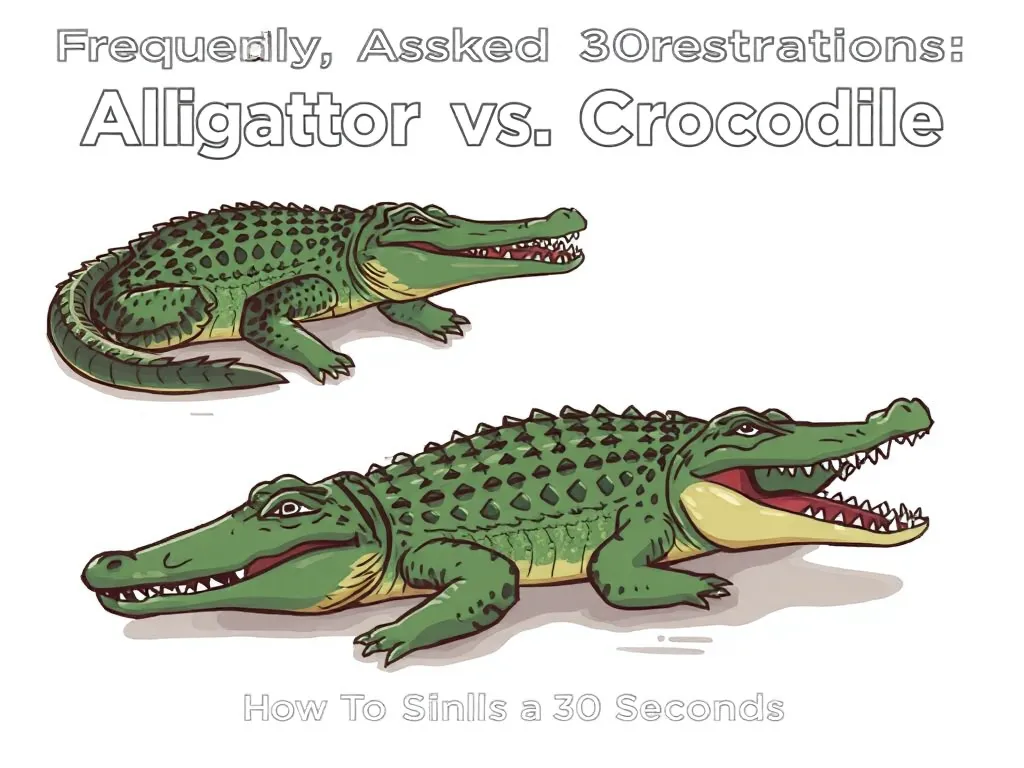
What's the easiest way to tell the difference between an alligator and a crocodile?
Look at the snout shape. Alligators have a broad, U-shaped snout, while crocodiles have a V-shaped snout. This is the quickest visual cue for instant identification.
How to remember crocodile vs alligator?
Use the snout shape: U for 'USA' for alligators (broad, U-shaped snout) and V for crocodiles (narrow, V-shaped snout). This is the easiest way to tell them apart.
How can you tell a crocodile and an alligator apart?
Check the snout: alligators have a U-shaped snout, crocodiles have a V-shaped snout. This is the key visual cue for instant identification in 30 seconds.
Which is faster, a crocodile or alligator?
Crocodiles tend to have a slight land speed advantage due to their size and limb structure. This relates to movement differences covered in the identification guide.