The blue whale is significantly larger than the whale shark, holding the title of the largest animal to have ever lived. Blue whales can exceed 100 feet in length and weigh 200 tons, while whale sharks typically reach 30–40 feet and weigh around 20 tons. This massive size difference between a marine mammal and a cartilaginous fish highlights the unique evolutionary paths of ocean giants.
- Size Difference: Blue whales reach 100 feet and 200 tons; whale sharks reach 40 feet and 20 tons.
- Classification: Blue whales are mammals; whale sharks are fish.
- Physiology: Warm-blooded mammals grow larger than cold-blooded fish due to metabolic efficiency.
- Conservation: Both species face threats from human activity, requiring specialized protection strategies.
Why Blue Whales Outsize Whale Sharks
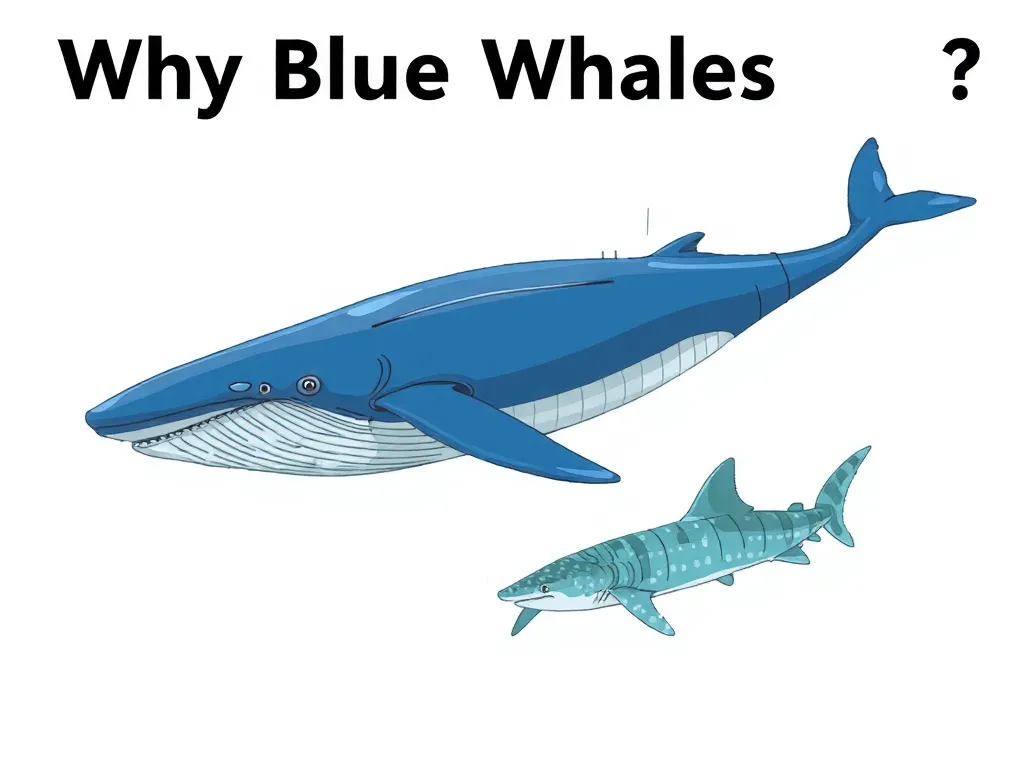
Blue whales are endothermic (warm-blooded) mammals that breathe air, allowing for higher metabolisms and massive growth. Whale sharks are ectothermic (cold-blooded) fish that rely on gills, which may limit their maximum size. The sheer mass of a blue whale—up to ten times that of a whale shark—is aided by the buoyancy of water, allowing them to exceed the structural limits of land animals.
Mammal vs. Fish Physiology
Blue whales possess a warm-blooded metabolism and lungs, enabling sustained high-energy activity and growth to immense proportions. Whale sharks, as fish, depend on gill respiration and external temperature regulation, which constrains their size compared to mammals. According to A-Z Animals (2024), this physiological divide explains why the largest fish is still dwarfed by the largest mammal.
Dietary Needs and Feeding Strategies
Blue whales consume massive amounts of krill, enabled by their enormous size and efficient filter-feeding baleen plates. Whale sharks are filter-feeders that often target smaller prey like plankton and fish eggs. The blue whale’s ability to process vast volumes of water for krill supports its massive energy requirements, while the whale shark’s diet limits its growth potential.
Evolutionary Limits and Buoyancy
The evolutionary path of mammals allowed for skeletal and muscular structures that support greater weight in water. Whale sharks, while massive for a fish, face structural limits inherent to cartilaginous fish. The buoyancy of water helps blue whales support their weight, a factor that land animals cannot exploit.
Conservation Status and Ecosystem Roles
Both species are considered threatened or vulnerable due to human activity, including fishing, ship strikes, and plastic pollution. The IUCN Red List lists blue whales as Endangered and whale sharks as Endangered, with populations declining by more than 50% over the last 75 years for whale sharks. Their drastically different roles in the ecosystem—apex mammal vs. top fish—require specialized conservation strategies.
Detailed Size Comparison: Blue Whale vs. Whale Shark
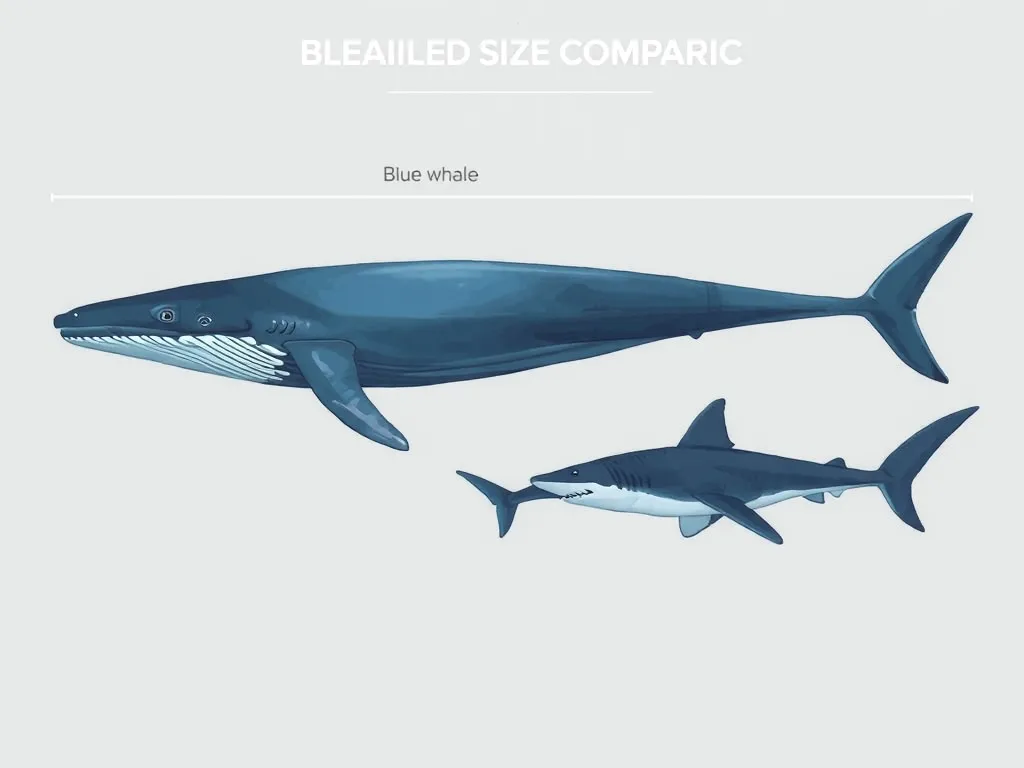
The blue whale holds the record for being the largest animal ever, while the whale shark is the largest fish species to live.
A fully grown blue whale typically reaches lengths of 80–100+ feet and weighs approximately 200 tons, whereas a whale shark reaches 30–40+ feet and weighs about 20 tons. This comparison underscores the vast difference between marine mammals and fish.
Length and Weight Metrics
Blue whales can grow up to 100 feet long and weigh over 200 tons, according to Ocean.si.edu (2025). Whale sharks, the largest fish, typically reach 30–40 feet and weigh around 20 tons, as noted by MyFahlo.com (2025). The blue whale is roughly three times longer and ten times heavier than the whale shark.
Classification Differences
Blue whales are marine mammals belonging to the order Cetacea, while whale sharks are cartilaginous fish in the class Chondrichthyes. This classification difference is fundamental to their biology and size potential. Mammals like blue whales have evolved for high metabolic rates, whereas fish like whale sharks are adapted for efficient respiration in water.
Why the Size Difference Matters
The size difference matters because it reflects evolutionary adaptations to different ecological niches. Blue whales dominate as apex consumers of krill, while whale sharks fill a different role as filter-feeders of smaller organisms. Understanding this helps in conservation efforts, as protecting these giants requires addressing specific threats like ship strikes for whales and bycatch for sharks.
Quick Comparison Table
| Attribute | Blue Whale | Whale Shark |
|---|---|---|
| Length | 80–100+ feet | 30–40+ feet |
| Weight | ~200 tons | ~20 tons |
| Classification | Marine Mammal | Cartilaginous Fish |
| Conservation Status | Endangered (IUCN) | Endangered (IUCN) |
This table highlights the stark contrast in size and classification between the two ocean giants.
Biological Reasons for the Size Gap
The biological reasons for the size gap between blue whales and whale sharks stem from metabolic and respiratory differences. Blue whales are warm-blooded and breathe air, supporting larger body mass, while whale sharks are cold-blooded and use gills, limiting their growth. This section explores the underlying biology.
Warm-Blooded vs. Cold-Blooded Metabolism
Blue whales maintain a constant body temperature, allowing for sustained activity and growth to massive sizes. Whale sharks rely on external water temperature, which restricts their metabolic rate and maximum size. According to WildlifeOnline.me.uk, this metabolic divide is a key factor in why mammals outsize fish.
Respiratory Systems: Lungs vs. Gills
Blue whales use lungs to breathe air, which supports a high-oxygen delivery system for large bodies. Whale sharks use gills to extract oxygen from water, a process less efficient for supporting extreme mass. This respiratory difference directly impacts their size potential.
Evolutionary History and Adaptations
Blue whales evolved from land mammals that returned to the sea, retaining adaptations for large size. Whale sharks evolved from fish lineages that never left the water, facing different constraints. Fossil evidence shows whale sharks have existed since the Late Oligocene, but they never reached mammalian proportions.
Impact of Water Buoyancy
Water buoyancy supports the weight of both animals, but blue whales leverage this better due to their mammalian skeletal structure. This allows them to grow larger without the skeletal stress faced by land animals. Whale sharks, while buoyant, are limited by their fish anatomy.
Which Is Bigger Between a Blue Whale and a Whale Shark?
The blue whale is bigger than the whale shark in both length and weight. Blue whales can exceed 100 feet and 200 tons, while whale sharks reach 40 feet and 20 tons. This direct comparison answers the core question of the article.
Direct Size Answer
Blue whales are considerably larger than whale sharks. The largest blue whale recorded was nearly 100 feet long, while the largest whale shark was about 60 feet. In weight, blue whales can be ten times heavier than whale sharks.
Why This Comparison Matters
Comparing these giants helps understand marine biodiversity and conservation needs. It highlights how different animal classes achieve large sizes and the threats they face.
For more on animal comparisons, see African Elephant vs. Asian Elephant: 9 Differences You Should Know.
Human Impact on Size Records
Human hunting has reduced blue whale populations, making large individuals rare. Whale sharks face similar threats from fishing and ship strikes. Conservation efforts are crucial to preserving these size records for future study.
Quick Fact: Whale Shark Lifespan
Whale sharks can live between 80 and 130 years, based on vertebral growth band studies. This long lifespan allows them to reach large sizes, but they still fall short of blue whale dimensions.
Who Would Win in a Fight: Blue Whale or Shark?
In a hypothetical fight, a blue whale would likely win against a whale shark due to its massive size and strength. However, if the whale is vulnerable—such as entangled in nets—a shark could inflict fatal wounds. This scenario is speculative but highlights the power dynamics.
Blue Whale’s Size Advantage
A blue whale’s sheer mass gives it a overwhelming advantage. Weighing up to 200 tons, it can easily overpower a 20-ton whale shark. The whale’s tail alone can generate powerful strikes.
Shark’s Attack Potential
Whale sharks are docile and filter-feeders, not aggressive hunters. They pose little threat to blue whales. However, other shark species like great whites might attack vulnerable whales, as noted in The Conversation (2022).
Real-World Encounters
There are no documented fights between blue whales and whale sharks, as they occupy different ecological niches. Whale sharks avoid large mammals, and blue whales ignore smaller fish. This peaceful coexistence is typical in marine ecosystems.
Conservation Implications
Focusing on fights distracts from real threats like ship strikes and pollution. Protecting both species requires addressing human impacts, not hypothetical battles.
For related topics, see Alligator vs. Crocodile: How to Tell Them Apart in 30 Seconds.
Why the Size Difference Matters for Wildlife
The size difference between blue whales and whale sharks matters for wildlife because it influences ecosystem roles and conservation strategies. Blue whales are apex consumers, while whale sharks are mid-level filter-feeders. Understanding this helps prioritize protection efforts.
Ecosystem Roles
Blue whales control krill populations, affecting the entire food web. Whale sharks consume smaller organisms, maintaining balance in tropical oceans. Both roles are vital for healthy marine ecosystems.
Conservation Priorities
Blue whales face ship strikes and ocean noise, while whale sharks face bycatch and finning. Tailored strategies are needed for each, as per IUCN Red List data. Protecting these giants supports broader ocean health.
Human Education and Awareness
Comparing these animals educates the public on marine biodiversity. It shows how size affects survival and threats.
For example, Komodo Dragon vs. Monitor Lizard: Are They the Same Animal? offers another comparison for learning.
Future Research Directions
Scientists study these giants to understand climate change impacts. Tracking migrations and populations helps predict future trends. Current data from 2026 shows ongoing declines, urging immediate action.
The blue whale’s dominance in size is a testament to mammalian evolution, while the whale shark represents the pinnacle of fish growth. Both are essential to ocean wildlife, and their protection is a shared responsibility.
Frequently Asked Questions About Blue Whale Vs. Whale Shark: Which Is Bigger And Why It Matters
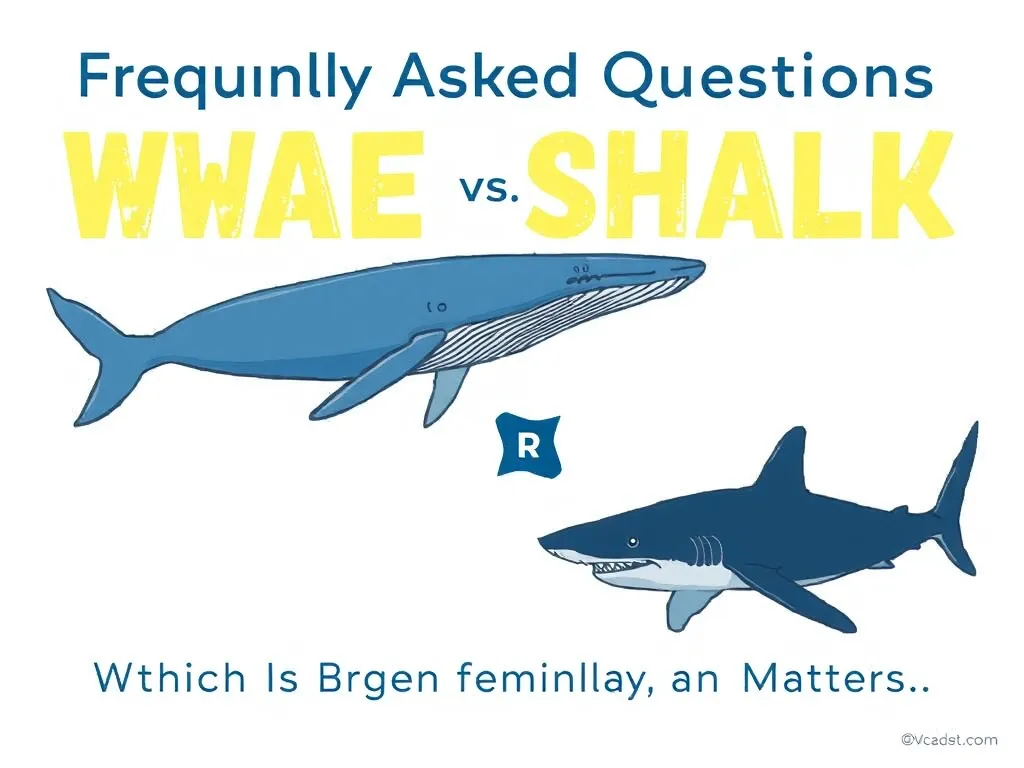
What is the size difference between a blue whale and a whale shark?
Blue whales reach 80–100+ feet in length and ~200 tons, while whale sharks reach 30–40+ feet and ~20 tons, making blue whales roughly 50% larger by weight and more than double the length.
Why are blue whales bigger than whale sharks?
Blue whales are marine mammals, while whale sharks are cartilaginous fish; this biological classification explains the size gap, as mammals evolved for oceanic scale compared to fish.
Are blue whales and whale sharks endangered?
Both species are listed as Endangered by the IUCN, highlighting conservation urgency for these large marine animals.