Elephants communicate across vast distances using infrasound—low-frequency sounds below 20 Hertz, often inaudible to humans. These rumbles are produced by laryngeal vocalizations and can travel miles through the air or as seismic vibrations through the ground, which are detected by sensitive receptors in their feet.
This complex system allows herds to coordinate movements, warn of dangers, and maintain social bonds over large territories. The efficiency of this communication network is critical for survival in the savannas and forests of Africa and Asia in 2026.
Key Takeaways
- Elephants produce “silent calls” under 20 Hz, as loud as a chainsaw, traveling several kilometers through air.
- Seismic waves generated by stomping or vocalizing travel up to 30 kilometers (20 miles) through the ground.
- Touch is essential for close-range bonding, including trunk greetings and mother-calf interactions.
The Science of Infrasound in Elephant Communication
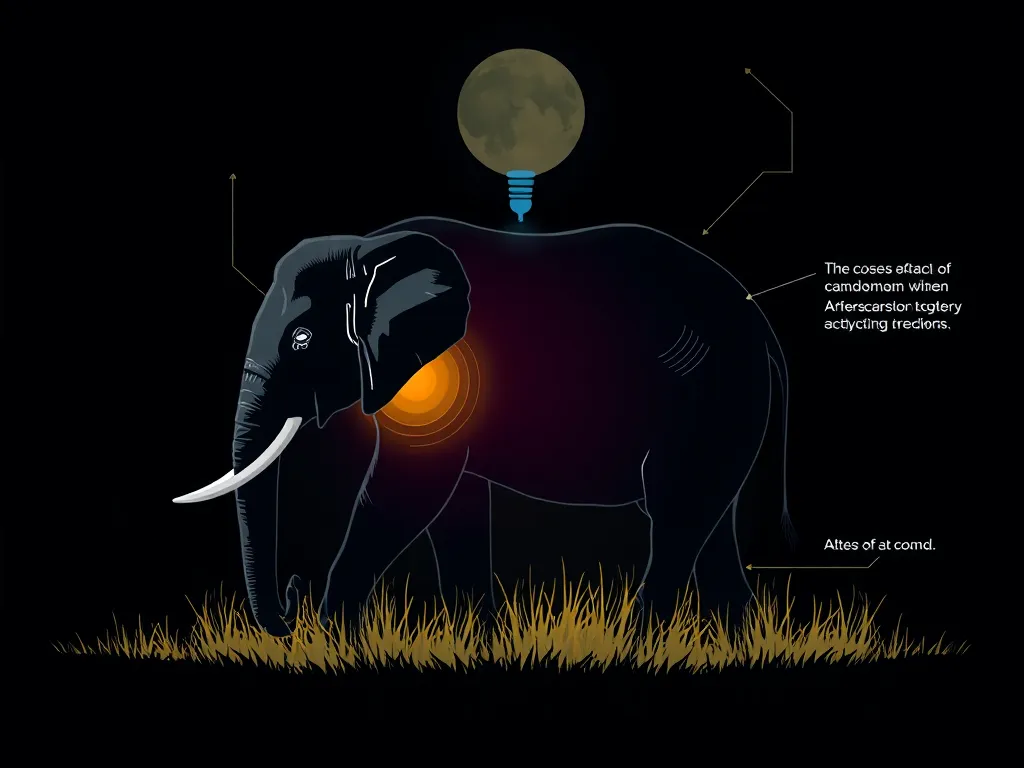
Elephants rely on infrasound for long-distance communication, using frequencies that human ears cannot detect. This method is efficient for coordinating herds across open terrain where visual contact is impossible. In 2026, researchers continue to map how these low-frequency waves propagate through different environments, from dense woodlands to open savannas, revealing the adaptability of elephant communication systems.
How Elephants Produce Infrasound Below 20 Hertz
Elephants generate infrasound using the same physical principles as human speech. Air moves through vocal folds in the larynx, causing them to vibrate—a process known as the myoelastic-aerodynamic method. However, the elephant’s larynx is significantly larger and heavier than that of most mammals, allowing it to produce extremely low frequencies.
According to research from Cornell University, the elephant’s immense larynx produces very low notes that travel far without dissipation. These “silent calls” reach volumes comparable to a chainsaw but remain below the 20 Hz threshold of human hearing. The vocal folds are thick and massive, enabling them to vibrate slowly and generate these deep rumbles that can be felt rather than heard by humans nearby.
Recent studies in 2026 have refined our understanding of the mechanics behind this production. The process involves a rapid release of air pressure combined with the relaxation of vocal fold muscles, creating a pulse of sound that decays slowly.
This efficiency allows elephants to conserve energy while maintaining contact with distant family members. The calls are not random; they are structured sequences that convey specific information about identity, location, and emotional state.
Seismic Waves Traveling 30 Kilometers Through Ground
Infrasound propagates not only through air but also through the earth. Elephants produce ground vibrations by stomping or emitting low-frequency vocalizations. These vibrations travel as seismic waves through the substrate, which can be soil, sand, or compacted earth.
Seismic waves travel through the substrate, allowing communication over 30 kilometers (about 20 miles) in open terrain. Research from Singita notes that elephants use their feet to feel these vibrations, detecting signals that originate from distant herds. This dual-channel communication—air and ground—ensures that messages are received even in windy conditions or dense vegetation where sound waves might be disrupted.
In 2026, seismic monitoring technology has improved, allowing scientists to record these ground vibrations with greater precision. Data shows that elephants can distinguish between vibrations caused by different species, such as lions or other elephants, enabling them to respond appropriately. The ability to transmit and receive seismic signals over such long distances is a testament to the evolutionary adaptation of elephants in their natural habitats.
Detection via Pacinian Corpuscles in Feet
Elephants detect seismic vibrations through specialized receptors in their feet called Pacinian corpuscles. These sensory organs transmit ground cues through the skeleton into neural pathways, which the brain interprets as signals.
This ability enables elephants to “hear” through their feet, complementing aerial infrasound detection. The Pacinian corpuscles are highly sensitive to vibrations and can detect frequencies as low as 10 Hz, which is well within the range of elephant infrasound calls.
According to studies published in 2026, the distribution of these corpuscles is concentrated in the weight-bearing parts of the feet, optimizing them for seismic detection. When an elephant stands still, it can effectively “listen” to the ground for approaching herds or potential threats.
This sensory adaptation is crucial for survival, especially in environments where visibility is limited. The integration of foot-based detection with ear-based hearing creates a robust communication system that operates across multiple sensory modalities.
The Role of Touch and Body Language in Close-Range Communication

While infrasound handles long-distance messaging, tactile and visual signals maintain cohesion within the herd. Physical touch reinforces social bonds and conveys immediate intentions. In 2026, observational studies in wildlife reserves confirm that touch is the primary method for resolving conflicts and strengthening relationships among family members.
Trunk Touching for Greetings and Bonding
Within the herd, physical touch is essential for bonding. Elephants greet each other by stroking or wrapping trunks, a behavior observed across species. This tactile interaction is not merely a greeting but a complex social ritual that conveys trust and familiarity.
According to Elephant Voices, this tactile interaction strengthens relationships and reduces tension during reunions. Mothers frequently stroke their calves, providing comfort and security. In 2026, researchers have documented that trunk touching can also serve as a form of reconciliation after conflicts, helping to restore harmony within the group.
The trunk is a highly sensitive organ with over 40,000 muscles, allowing for precise movements during touch interactions. Elephants use the tip of the trunk to explore objects and other elephants, gathering chemical and tactile information. This multimodal sensory input enhances their social understanding and bonding capabilities.
Physical Signals: Ear Flapping and Body Rubbing
Elephants communicate emotions through body language. Ear flapping signals agitation or excitement, while rubbing bodies against one another conveys affiliation. These visual cues work alongside vocalizations to create a multimodal communication system.
Science.org highlights that such signals are critical for coordinating group movements and avoiding conflicts. In 2026, high-speed video analysis has revealed that the speed and pattern of ear flapping can indicate specific emotional states, such as playfulness or alarm.
Body rubbing is another common behavior where elephants press their bodies against trees or each other. This action helps in scent marking and physical bonding. The combination of visual, tactile, and olfactory signals creates a rich communication environment that supports complex social structures.
Multimodal Communication: Combining Sound and Touch
Elephants integrate infrasound with tactile and visual signals for effective messaging. For example, foot-stomping generates seismic waves while simultaneously creating audible vibrations. This redundancy ensures messages are received even if one channel is blocked.
Research from AAAS confirms that elephants use these combined methods to maintain social structure and respond to environmental changes. In 2026, studies show that elephants adjust their communication strategies based on context, using more touch in close quarters and more infrasound in open areas.
The ability to switch between communication modes enhances their adaptability. For instance, during a drought, elephants might rely more on seismic signals to locate water sources, while in dense forests, touch and visual cues become more prominent. This flexibility is key to their survival in changing habitats.
Addressing Common Questions About Elephant Communication

How Do Elephants Communicate with Infrasound?
Elephants produce infrasound by vibrating vocal folds in their larynx, creating low-frequency rumbles below 20 Hz. These sounds travel through air for several kilometers and through ground as seismic waves up to 30 kilometers away.
Elephants detect these signals using ears and feet, enabling long-distance coordination. In 2026, advanced acoustic monitoring has confirmed that these calls are structured and context-specific, allowing elephants to convey detailed information about their environment and social status.
Which Animal Will Never Forget?
Elephants are famously known for their exceptional memory. Mahouts in Thailand report that elephants remember routes, individuals, and events over decades.
Scientific studies suggest their memory rivals or exceeds human capabilities, aiding survival in changing environments. In 2026, longitudinal studies have shown that elephants can recall the locations of water sources and migration paths from years past, which is crucial during seasonal droughts.
What Is a Sad Fact About Elephants?
Around 90% of African elephants were wiped out in the past century due to the ivory trade, leaving an estimated 415,000 wild individuals in 2026. Asian elephants have declined by at least 50% in three generations.
Habitat loss and human conflict remain critical threats to their survival. Conservation efforts in 2026 focus on anti-poaching initiatives and habitat restoration, but the population decline highlights the urgent need for global action.
For more on animal adaptations, explore why giraffes evolved long necks or learn how to distinguish . Understanding these species highlights the diversity of communication strategies.