Komodo dragons and monitor lizards are often confused, but they are not the same animal. A Komodo dragon is a specific, giant species within the larger monitor lizard family, which includes about 80 different species. While all Komodo dragons are monitor lizards, most monitor lizards are smaller, more aquatic, and live across Africa, Asia, and Australia.
In contrast, Komodo dragons are restricted to a few Indonesian islands. Understanding this distinction is key for anyone interested in wildlife and reptile biology, especially as conservation efforts in 2026 continue to highlight the fragility of isolated species.
Key Takeaways
- Komodo dragons are a single species of monitor lizard, not a separate animal group.
- The monitor lizard family (Varanidae) contains approximately 94 recognized species worldwide in 2026.
- Komodo dragons grow up to 3 metres (10 ft) long and live only on Indonesian islands like Komodo and Rinca.
- Key differences include size, habitat isolation, and physical features like neck and tail strength.
- The Asian water monitor reaches up to 7 feet, making it the closest rival in size among monitor lizards.
What is the Taxonomic Relationship Between Komodo Dragons and Monitor Lizards?
The Komodo dragon is scientifically classified as Varanus komodoensis, a member of the Varanidae family. This family is the same group that includes all monitor lizards. According to the IUCN Red List (2021), the Komodo dragon is recognized as a distinct species within this family.
The Varanidae family includes the living genus Varanus and other extinct genera closely related to it. In 2026, taxonomic research continues to refine our understanding of these reptiles, but the core classification remains stable.
Komodo Dragon Classification as a Monitor Lizard Species
The Komodo dragon is the largest living species of lizard and is a type of monitor lizard. It belongs to the genus Varanus, which contains all monitor lizard species. The family Varanidae includes the Komodo dragon, crocodile monitor, savannah monitor, and various goannas of Australia and Southeast Asia.
This classification confirms that while Komodo dragons are monitor lizards, they represent a specific, isolated species. For example, the Komodo dragon’s DNA shows unique adaptations to its island environment, distinct from other Varanus species.
Monitor Lizard Family Diversity and Species Count
Monitor lizards are lizards in the genus Varanus, the only extant genus in the family Varanidae. About 94 species are recognized globally in 2026, up from previous estimates due to new genetic studies. They are native to Africa, Asia, and Oceania.
The Asian water monitor (Varanus salvator) is another well-known species within this group, often compared to the Komodo dragon due to its size and aquatic habits. Other notable species include the Nile monitor in Africa and the Gould’s goanna in Australia, each adapted to specific ecosystems.
Key Differences in Physical Features and Size
Physical differences are clear between Komodo dragons and other monitor lizards. Komodo dragons have extremely powerful and thick necks and tails, while some monitor lizard species have average-size tails and necks. The Komodo dragon is the largest extant lizard, with males growing to a maximum length of 3 metres (10 ft) and weighing up to 150 kg.
In comparison, the Asian water monitor reaches lengths of up to 7 feet (2.1 meters), and smaller species like the Bengal monitor may only reach 1.5 feet. This size disparity is a primary distinguishing factor, with Komodo dragons possessing reinforced skulls and serrated teeth for tearing flesh.
How Do Komodo Dragons and Monitor Lizards Differ in Habitat and Behavior?
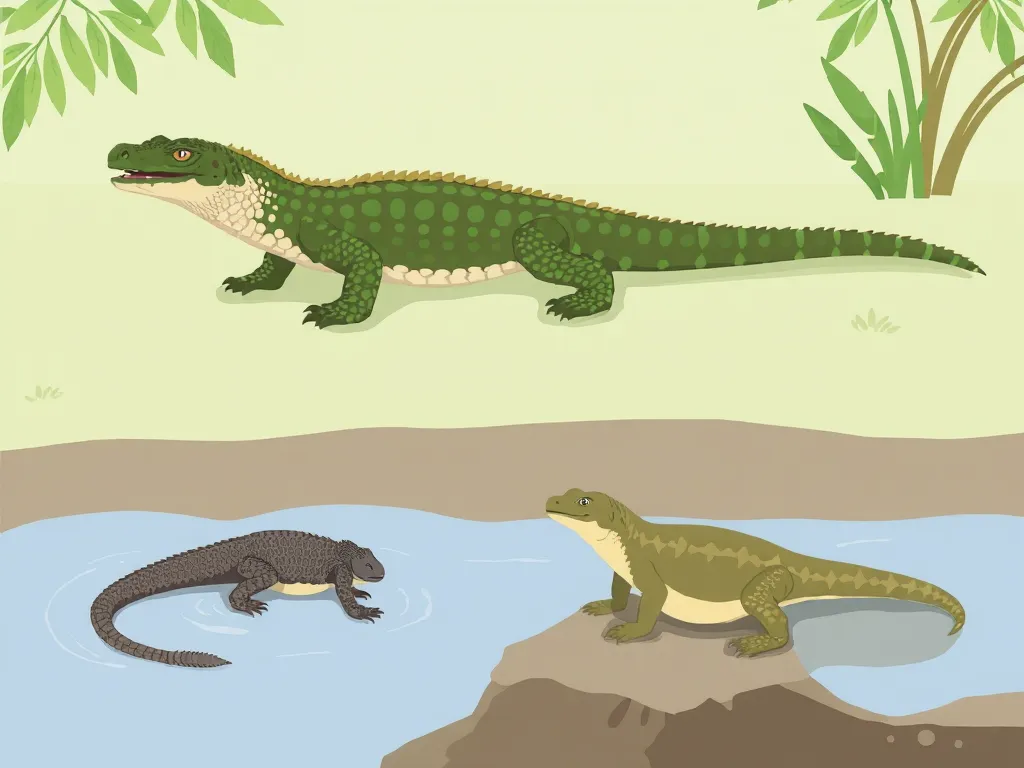
Komodo dragons are restricted to a few Indonesian islands, including Komodo, Rinca, Flores, Gili Dasami, and Gili Motang. The largest population lives within Komodo National Park, a UNESCO World Heritage site. In contrast, monitor lizards are widespread across Africa, Asia, and Oceania.
This geographical isolation makes Komodo dragons unique among monitor lizards. In 2026, climate change poses additional threats to their limited habitat, increasing conservation urgency.
Habitat Restrictions and Geographic Distribution
Komodo dragons are endemic to Indonesian islands. Their range has been reduced by human encroachment and climate change, leading to their Endangered status on the IUCN Red List. Monitor lizards, however, have a much broader distribution.
For example, the Asian water monitor is found across South and Southeast Asia, often in aquatic environments like rivers and mangroves. The Nile monitor thrives in sub-Saharan Africa, adapting to savannas and wetlands. This difference in habitat is a key factor in their classification as separate animals within the same family, with Komodo dragons facing higher extinction risks due to their isolation.
Behavioral and Ecological Differences
Komodo dragons are apex predators with exceptional group hunting behavior among reptiles. They hunt invertebrates, birds, and mammals, and their diet mainly consists of Javan rusa (Rusa timorensis), wild boar, and carrion. Young Komodo dragons are vulnerable and dwell in trees to avoid cannibalistic adults.
Most monitor lizard species are terrestrial, but many are arboreal or semiaquatic. While most are carnivorous, a few species in the Philippines eat fruit and vegetation. These behavioral traits highlight the diversity within the monitor lizard group, with Komodo dragons exhibiting unique social structures during feeding frenzies.
Why Komodo Dragons Are Not Considered the Same as Other Monitor Lizards
Although Komodo dragons are monitor lizards, they are not the same as other species due to their unique size, restricted habitat, and specific evolutionary path. The Komodo dragon’s isolation on Indonesian islands has led to distinct physical and behavioral adaptations. As noted in research, “Yes, a Komodo dragon is a type of monitor lizard, but they are not the same animal” (rekoforest.org, 2022).
This distinction is supported by their classification as a separate species within the Varanidae family. In 2026, ongoing studies emphasize that their genetic uniqueness warrants separate conservation strategies.
Which is Stronger: Komodo Dragon or Monitor Lizard?

In a one-on-one encounter, a Komodo dragon would most likely overpower a typical monitor lizard. Komodo dragons are larger, have stronger venom, and possess more muscular bodies.
Their powerful tails, sharp claws, and deadly bite give them a serious advantage over smaller monitor lizard species. This dominance is rooted in their role as apex predators in their limited ecosystem.
Physical Advantages of Komodo Dragons
Komodo dragons are the largest lizards, with males reaching 3 metres (10 ft) in length. Their size alone provides a significant advantage over most monitor lizard species. Additionally, their venom is more potent, containing anticoagulants that prevent blood clotting in prey.
Their muscular build allows for powerful attacks, with bite forces estimated at around 100 psi. This combination of size, strength, and venom makes them superior in physical confrontations, as confirmed by wildlife experts in 2026.
Comparison with Asian Water Monitor and Other Species
The Asian water monitor is one of the largest monitor lizards but is still smaller than the Komodo dragon, reaching up to 7 feet. In a battle, the Komodo dragon’s size and strength would likely prevail. Other monitor lizard species are even smaller, making the Komodo dragon the dominant predator within the Varanidae family.
For instance, the Savannah monitor averages 4-5 feet, while the Ackie monitor is only about 2 feet long. This hierarchy is evident in their predatory behaviors and physical capabilities.
Expert Opinion on Komodo Dragon vs. Monitor Lizard
Experts agree that Komodo dragons are the strongest among monitor lizards. Their apex predator status in their native ecosystems supports this view. As apex predators, Komodo dragons dominate the ecosystems they live in, a role not shared by all monitor lizard species.
In 2026, conservation biologists note that their strength is a double-edged sword, as it makes them vulnerable to habitat loss. This expert consensus underscores the Komodo dragon’s unique position within the reptile world.
Komodo dragons and monitor lizards share a family but are distinct animals. The Komodo dragon is a specific, giant species within the monitor lizard group, with unique size, habitat, and behavioral traits. Understanding these differences is essential for wildlife enthusiasts and those interested in reptile biology.
For more on wildlife comparisons, explore topics like African Elephant vs. Asian Elephant: 9 Differences You Should Know and Blue Whale vs.
Whale Shark: Which Is Bigger and Why It Matters. Learn more about Wildlife and reptile classification to deepen your knowledge.
Frequently Asked Questions About Komodo Dragon Vs. Monitor Lizard: Are They The Same Animal?
Which is stronger, Komodo dragon or monitor lizard?
In a one-on-one battle, a Komodo dragon would most likely overpower a typical monitor lizard. Komodo dragons are not only larger, but they are equipped with stronger venom and more muscular bodies.
What is the king of lizards?
Some Komodo dragons can grow up to an astounding 10 feet long (3 metres).