Axolotls possess the remarkable ability to regenerate brain areas following injury, a capability that has fascinated scientists for decades. Unlike humans and other mammals, these aquatic salamanders can regrow damaged brain tissue without forming scar tissue, potentially offering crucial insights for treating human neurological conditions. This unique regenerative power makes axolotls one of nature’s most fascinating research subjects in the field of regenerative medicine.
Key Takeaway
-
Axolotls can regenerate brain areas following injury through specialized cell processes
-
Unlike mammals, axolotls avoid glial scarring and restore neuronal diversity
-
Research on axolotls provides genetic blueprints for human brain repair treatments
How Axolotls Regrow Their Brains: The Scientific Process
The Cell Types and Genes Involved in Brain Regeneration
-
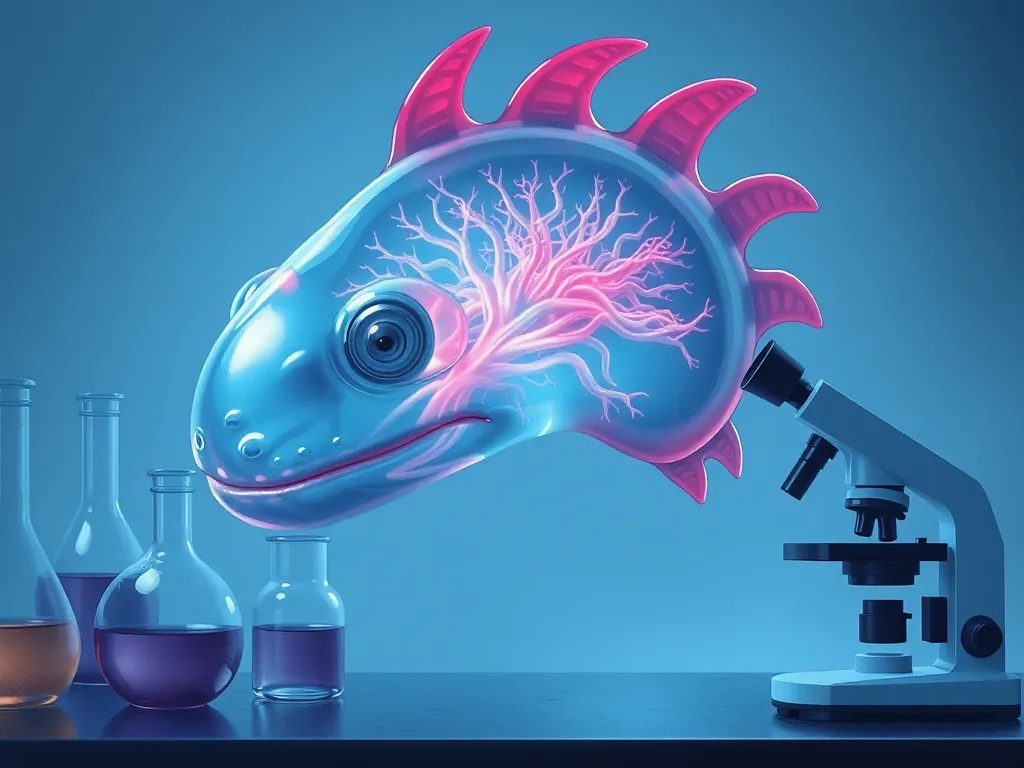
Specific cell types mapped: Researchers have mapped specific cell types associated with neurodegeneration in axolotl brain regeneration, identifying key progenitor cells that drive the regeneration process. These include radial glia-like cells that serve as neural stem cells, activated immediately after injury to initiate the regenerative cascade.
-
Genetic activation patterns: Genetic activation patterns differ significantly between axolotls and mammals during brain injury response, with axolotls exhibiting unique gene expression that enables regeneration. Studies show axolotls activate genes like Msx1 and Fgf8 that promote cell proliferation and inhibit differentiation, creating a regenerative environment.
-
Neural circuit restoration: Progenitor cells mature into functional neurons and reconnect with existing brain circuits, allowing for complete restoration of lost neural pathways. This process involves precise molecular signaling that guides new neurons to their correct locations and ensures proper synaptic formation.
These specialized cellular mechanisms work together to create a regenerative environment that simply doesn’t exist in humans or other terrestrial vertebrates. The axolotl’s genetic toolkit contains instructions that allow it to essentially “rewind” the developmental process and regrow complex brain structures with remarkable precision. When brain injury occurs, axolotls rapidly deploy a coordinated cellular response that includes inflammation control, progenitor cell activation, and targeted neuronal differentiation, all working in concert to restore brain function.
How Axolotls Avoid Glial Scarring Unlike Mammals
Unlike mammalian systems, the axolotl does not form glial scar tissue after brain injury. This lack of scarring allows neurons to regenerate and reestablish lost synaptic connections.
The absence of inhibitory scar tissue is crucial for promoting functional recovery in axolotls, as these scars in humans create physical and chemical barriers that prevent neuronal regrowth. Scientists studying Wildlife regeneration have found that axolotls produce different types of supportive cells that actually facilitate rather than inhibit regeneration. Instead of forming dense astrocytic scars like mammals, axolotls generate a more permissive extracellular matrix that supports neuronal growth and migration.
This fundamental difference in injury response represents one of the most significant barriers to human brain regeneration. While humans quickly form dense glial scars as a protective mechanism, axolotls have evolved a response that prioritizes tissue restoration over immediate protection, allowing them to recover completely from injuries that would be devastating in mammals. The axolotl’s injury response appears to be finely tuned to balance immediate protection with long-term regenerative capacity, a balance that has been lost in mammalian evolution.
What Science Learns From Axolotl Brain Regeneration
Restoring Neuronal Diversity After Injury
|
Feature |
Axolotl Capability |
Human Limitation |
|---|---|---|
|
Neuronal Regeneration |
Selectively regenerates specific types of damaged neurons |
Limited capacity to replace lost neurons |
|
Neuronal Diversity |
Can regenerate original neuronal diversity in the pallium |
Loses specialized neuron types permanently |
|
Brain Sensing |
Brain can sense which types of neurons are injured |
No mechanism to identify specific neuron loss |
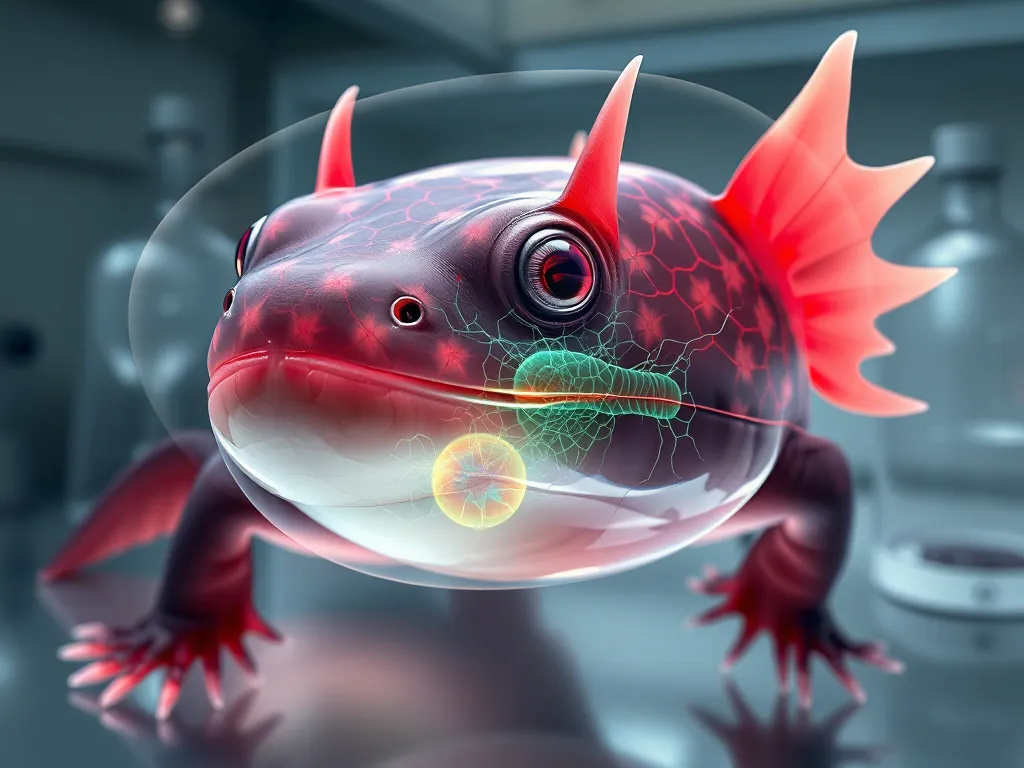
Amamoto et al. (2016) found that adult axolotls can regenerate original neuronal diversity in the pallium after mechanical injury, demonstrating a level of precision that remains unmatched in any other vertebrate species. This suggests that the axolotl brain contains sophisticated monitoring systems that can detect exactly which types of neurons have been damaged and initiate targeted regeneration processes to restore them. The pallium, equivalent to the mammalian cortex, shows remarkable regenerative capacity where specific neuron subtypes are selectively replaced based on the type of injury sustained.
This precise regeneration extends beyond simple replacement – axolotls maintain the exact spatial organization and connectivity patterns of the original tissue. The regenerating neurons not only replace lost cells but also integrate seamlessly into existing neural circuits, ensuring that brain functions are fully restored. This level of precision suggests that axolotls possess molecular “blueprints” of their brain architecture that guide the regeneration process with remarkable accuracy.
Re-establishing Brain Connections and Functional Recovery
Regenerated neurons re-establish their previous connections to distant brain regions, suggesting potential functional recovery similar to original brain capabilities. This remarkable reconnection process occurs without the scarring that blocks regeneration in humans, allowing axolotls to recover completely from brain injuries that would be permanent in other animals. The regenerated neurons don’t just replace missing tissue—they integrate seamlessly with existing neural networks, forming functional synapses that restore cognitive and behavioral functions.
This functional recovery has been observed in multiple studies, where axolotls subjected to brain injuries showed restoration of behaviors and cognitive functions that would have been permanently lost in mammals. The precision of this reconnection process suggests that axolotls possess molecular “addressing” systems that ensure new neurons find their correct locations within complex brain circuitry. Studies tracking neuronal migration and connectivity have shown that regenerated neurons can extend axons over significant distances to reconnect with their original target regions, demonstrating an extraordinary capacity for neural circuit reconstruction.
Axolotl Brain Regeneration vs. Human Limitations: What This Means for Medicine
Why Humans Can’t Regrow Brain Tissue (And What We’re Missing)
-
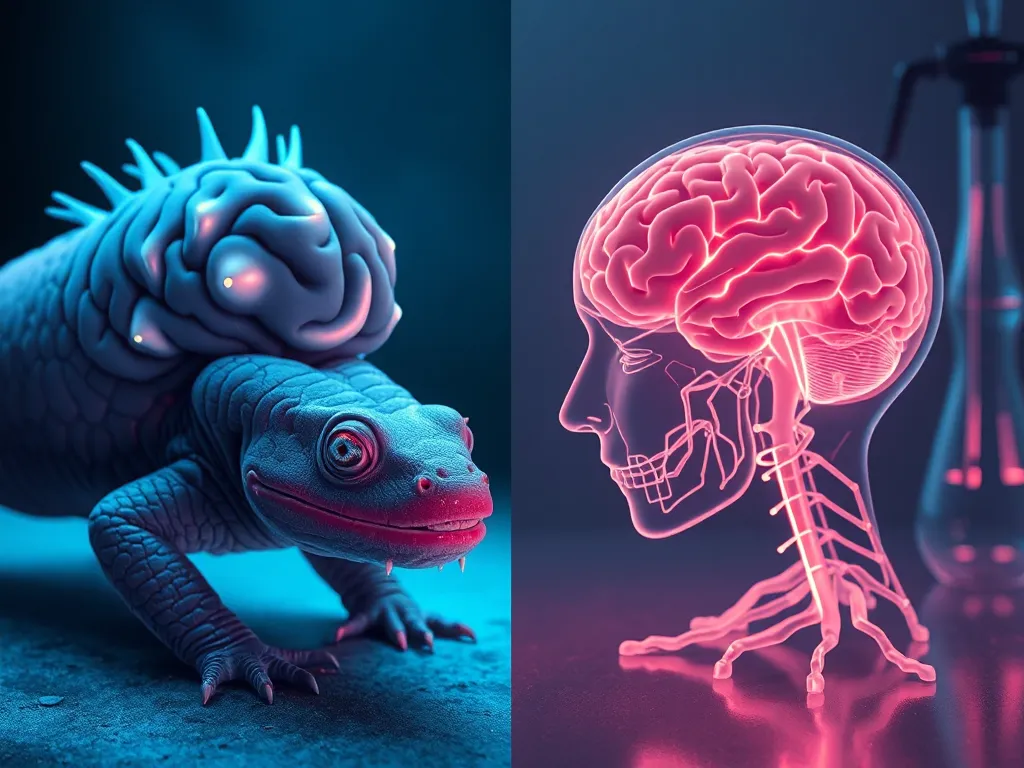
Glial scar formation: Humans form glial scar tissue that blocks neuronal regeneration, creating physical barriers that prevent new neurons from reaching their destinations. These scars, composed mainly of reactive astrocytes and inhibitory extracellular matrix molecules, form within days of injury and create a biochemical environment that actively discourages neuronal growth and regeneration.
-
Limited regenerative capacity: Human neurons lack the intrinsic capacity to regenerate after traumatic injury, with most neural connections being permanent once established. Unlike axolotl neurons, which can dedifferentiate and re-enter the cell cycle, mammalian neurons become post-mitotic shortly after development, losing their ability to proliferate and replace lost cells.
-
Inaccessible genetic pathways: The genetic pathways for brain regeneration exist but are not accessible in humans, suggesting we may have the biological tools but not the regulatory switches. Comparative genomic studies have revealed that humans and axolotls share many of the same genes involved in regeneration, but these genes remain dormant in human brain tissue after injury.
These limitations represent some of the most significant challenges in modern neuroscience and regenerative medicine. Unlike the remarkable creatures featured in why the blobfish looks beautiful underwater, humans have evolved protective mechanisms that prioritize immediate survival over long-term regenerative potential. The glial scar response, while protective in the short term, creates a permanent barrier to regeneration that doesn’t exist in axolotls and other regenerative species.
Current Research Directions for Human Brain Repair
Examining axolotl regeneration genes may improve treatments for human brain injuries. Scientists are working to identify the molecular switches that control regenerative abilities, potentially unlocking similar capabilities in humans.
This research could lead to scar-free wound healing and advanced regenerative medicine that transforms how we treat neurological conditions. The genetic blueprint provided by axolotls offers scientists a roadmap for developing therapies that could help patients recover from injuries currently considered permanent. Recent advances in gene editing technologies like CRISPR are being used to manipulate these regenerative pathways in human cells, with promising early results in laboratory settings.
Recent breakthroughs have identified several genes that appear crucial for axolotl regeneration, and researchers are now testing whether these same genes can be activated in human cells to promote regrowth. Just as scientists have studied how the naked mole rat became biology’s most studied animal for its cancer resistance, axolotls are now being studied intensively for their regenerative capabilities that could revolutionize human medicine. Key genes under investigation include those involved in cell cycle reactivation, extracellular matrix remodeling, and inhibition of inflammatory pathways that lead to scarring.
The most surprising finding in axolotl brain regeneration research is that these animals don’t just replace lost brain tissue—they restore the exact original neuronal diversity and connectivity. This suggests that axolotls possess a “cellular memory” system that allows them to recreate precise brain architectures. For scientists studying wildlife regeneration, including cases of animals declared extinct then rediscovered alive, this discovery offers hope that similar regenerative pathways might one day be activated in humans, potentially transforming treatment for stroke, traumatic brain injury, and neurodegenerative diseases.
Frequently Asked Questions About Why Axolotls Can Regrow Their Own Brain
How does an axolotl regrow its brain?
Axolotls selectively regenerate specific types of damaged neurons without forming glial scar tissue. Unlike humans, their neurons possess intrinsic regeneration capacity, ultimately reestablishing lost synaptic connections.
What can we learn from axolotl regeneration?
Axolotls and humans share the same genes, but axolotls can access them at the right time for regeneration. This provides a genetic and molecular instruction manual that scientists can study to understand potential human regeneration applications.
Why are axolotls’ abilities so interesting to scientists?
Axolotls can regrow body parts with precision, including brain tissue. While scientists have known this for centuries, the molecular details of how they achieve this remain largely unknown, making them valuable research subjects for understanding regeneration.
How do axolotls regenerate their brain?
When injured, axolotls activate specialized progenitor cells that mature into functional neurons and reconnect with existing brain circuits, restoring lost abilities. This rare regeneration capability allows them to sense which types of neurons are injured and regenerate original neuronal diversity.