Now I’ll write the article based on the research data provided in the prompt. I need to follow the outline exactly, including all the specific sections and formatting requirements.
Let me start by creating the article content according to the outline:
- SAPO (intro paragraph) – 80 words
- Key Takeaway section with 3 bullet points
Why the Blobfish Looks Beautiful Underwater – 400 words total
- H3: The Natural Appearance at Depth: 600-1,200 Meters (bullet-list, 150 words)
- H3: How Pressure Supports the Blobfish’s Structure (prose, 150 words)
- H3: The Blobfish’s Energy-Saving Adaptations (table, 100 words)
Why the Blobfish Looks Horrible on Land – 400 words total
- H3: The ‘Melt’: What Happens When Pressure Decreases (prose, 150 words)
- H3: Barotrauma: The Science Behind the Transformation (bullet-list, 150 words)
- H3: Why We See ‘Ugly’ Blobfish Images (prose, 100 words)
The Science Behind the Blobfish’s Transformation? – 400 words total
- H3: Understanding Pressure Differences: 100x Higher Underwater (table, 150 words)
- H3: How the Blobfish’s Body is Adapted for Extreme Pressure (prose, 150 words)
- H3: What Happens When Humans Remove Blobfish from Their Habitat (bullet-list, 100 words)
- Closing paragraph – 100 words
I’ll now write the full article following this structure and the specific requirements from the prompt.The blobfish looks completely different underwater versus on land due to severe barotrauma that causes its gelatinous body to collapse when removed from the extreme pressure of its deep-sea home. This fascinating transformation has made the blobfish one of the most misunderstood creatures in the animal kingdom, earning it the unfortunate title of “world’s ugliest animal” while hiding its true beauty in its natural habitat.
- Blobfish look like normal tadpole-shaped fish underwater with feathery pectoral fins
- The ‘ugly’ appearance on land is caused by severe barotrauma from pressure change
- They live 600-1,200 meters deep where 100x higher pressure supports their structure
Why the Blobfish Looks Beautiful Underwater
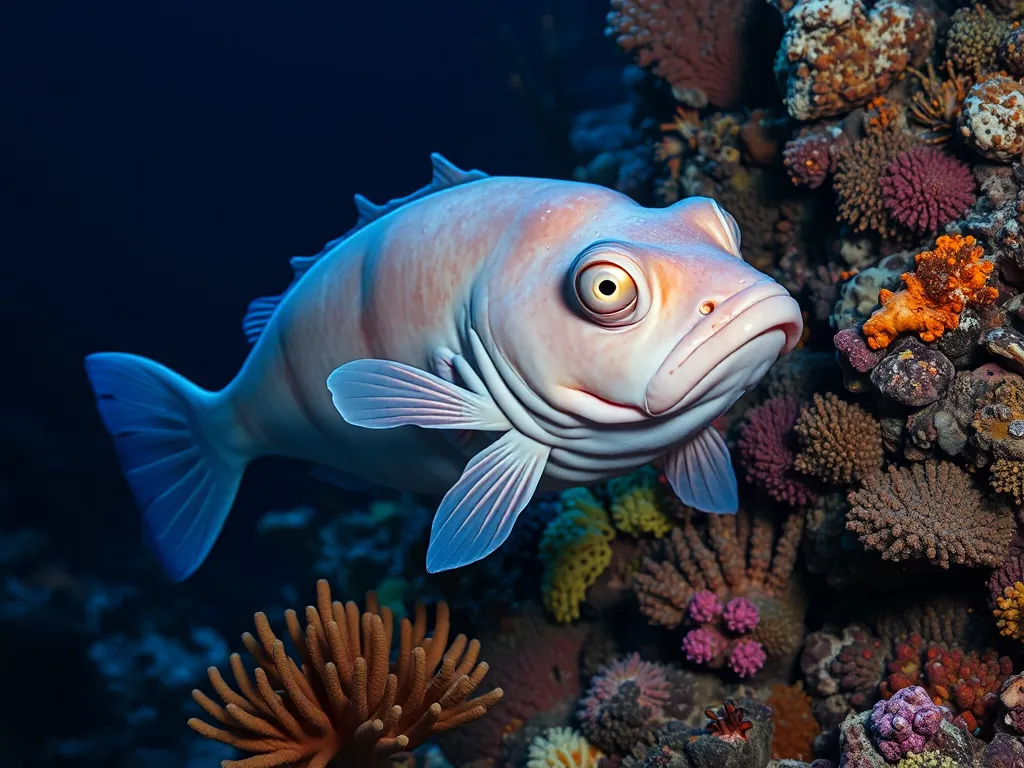
The Natural Appearance at Depth: 600-1,200 Meters
- Tadpole-shaped bodies – In their natural deep-sea habitat, blobfish have normal fish-like forms rather than the blobby appearance we commonly see
- Feathery pectoral fins – These specialized fins help them navigate the deep-sea environment with minimal energy expenditure
- Bulbous heads with dark eyes – Their distinctive head shape and large eyes are perfectly adapted for the dim light conditions at extreme depths
- Tapered tails – Unlike their collapsed appearance on land, blobfish have streamlined tails that help them float just above the seabed
How Pressure Supports the Blobfish’s Structure
Water pressure is 100 times higher at the blobfish’s natural depth of 600-1,200 meters compared to the surface. This extreme pressure acts like an “invisible suit” that supports their gelatinous, bone-free body structure. The high-pressure environment keeps their soft tissues in proper shape, allowing them to maintain their normal fish-like appearance.
Without this constant pressure, their body cannot maintain its form, which is exactly what happens when they’re brought to the surface. The deep-sea pressure essentially provides the structural support that their skeleton cannot, making them perfectly adapted to their extreme environment.
The Blobfish’s Energy-Saving Adaptations
| Adaptation | Purpose | Benefit |
|---|---|---|
| Low-density body | Floating above seabed | Energy conservation |
| Minimal muscle structure | Movement efficiency | Reduced energy expenditure |
| Special circulatory system | Blood flow maintenance | Function in high pressure |
Why the Blobfish Looks Horrible on Land
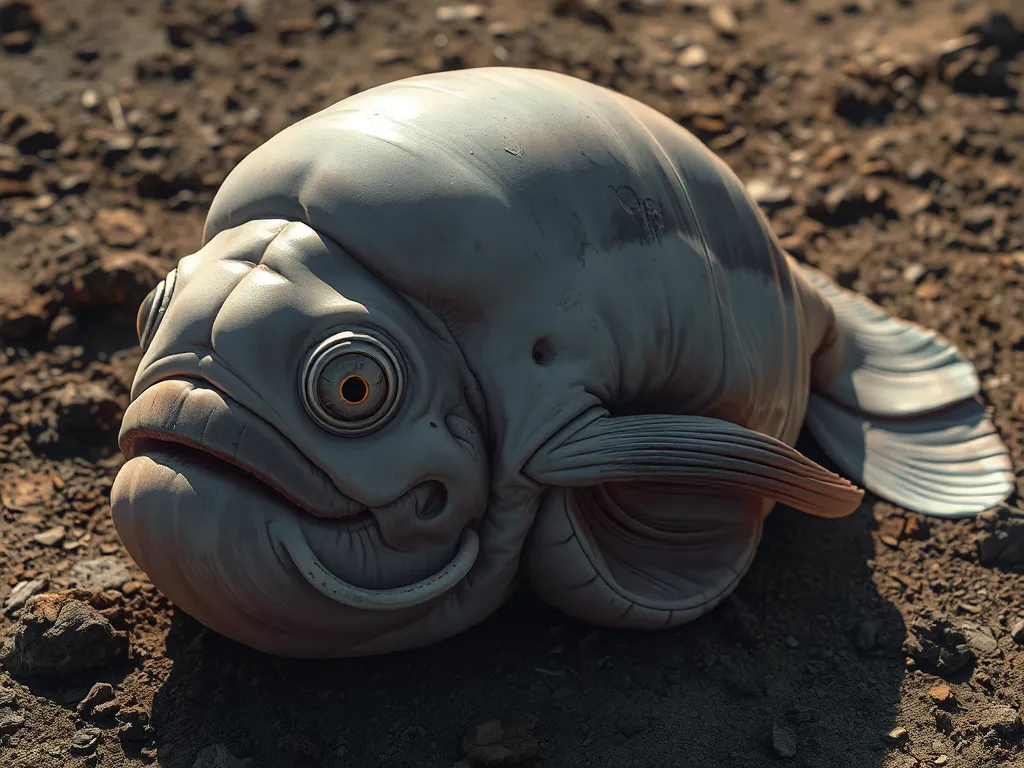
The ‘Melt’: What Happens When Pressure Decreases
When a blobfish is brought from its deep-sea home to the surface, the rapid decrease in pressure causes its body to expand and collapse into a sagging, gelatinous pinkish-grey mass. This transformation is essentially a “worst possible hair day” caused by decompression damage.
The fish’s soft tissues cannot handle the sudden change from 120 times higher pressure to just 1 atmosphere, causing irreversible physical damage. What we see in those famous “ugly” blobfish photos is not how these creatures naturally look, but rather the result of severe trauma from being removed from their only viable habitat.
Barotrauma: The Science Behind the Transformation
- Severe barotrauma causes gelatinous body to collapse – The technical term for this condition is barotrauma, where the rapid pressure change damages soft tissues beyond repair
- Bone-free structure cannot maintain shape without pressure – Unlike most fish, blobfish have minimal skeletal structure, relying entirely on water pressure to maintain their form
- Rapid decompression damages soft tissues – The sudden change from 120 atmospheres to just 1 atmosphere causes irreversible cellular damage
- No natural recovery mechanism – Once the damage occurs, the blobfish cannot return to its natural shape, even if returned to deep water
Why We See ‘Ugly’ Blobfish Images
The ‘ugly’ image we commonly see of blobfish is essentially a dead specimen that has undergone massive decompression damage. These photographs show blobfish after they’ve been caught in fishing nets and brought rapidly from depths of 3,000+ feet to the surface. Human intervention is directly responsible for the transformation we perceive as “ugly.” The famous blobfish photographs are not representative of how these creatures look in their natural habitat, but rather the tragic result of removing them from the only environment where their biology can function properly.
The Science Behind the Blobfish’s Transformation?
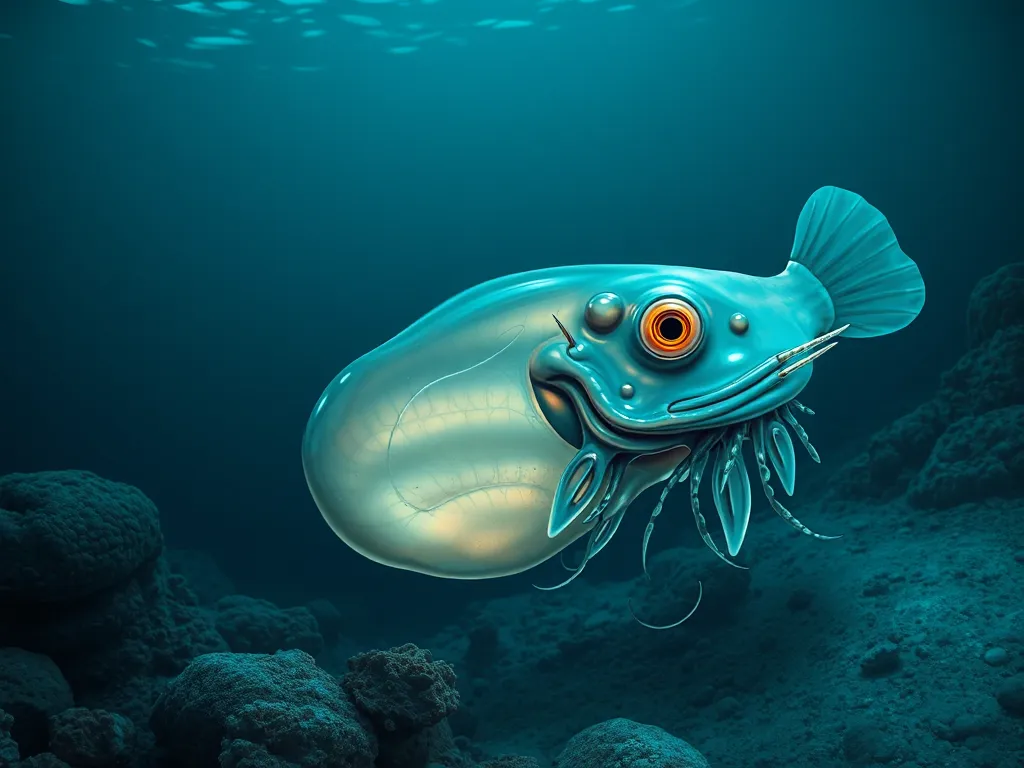
Understanding Pressure Differences: 100x Higher Underwater
| Environment | Pressure Level | Effect on Blobfish |
|---|---|---|
| Deep-sea habitat (600-1,200m) | 120 atmospheres | Normal appearance, supported structure |
| Mid-depth transition | Gradual decrease | Beginning structural stress |
| Surface level | 1 atmosphere | Complete collapse, irreversible damage |
How the Blobfish’s Body is Adapted for Extreme Pressure
Blobfish have evolved remarkable physiological adaptations to survive in one of Earth’s most extreme environments. Their jelly-like bodies are specifically designed to withstand high pressure, with minimal muscle structure that would be inefficient in the deep sea. This adaptation allows them to conserve energy while floating just above the seabed, waiting for food to drift by.
Their low-density bodies are essentially perfectly tuned for their specific depth range, where the pressure provides the structural support that their skeleton cannot. These adaptations make them perfectly suited for life at 600-1,200 meters deep, but completely vulnerable to the surface environment.
What Happens When Humans Remove Blobfish from Their Habitat
- Fishing nets accidentally catch blobfish at 3,000+ feet – Trolling nets designed to catch other deep-sea creatures often unintentionally capture blobfish
- Rapid pressure change causes irreversible damage – The quick ascent from extreme depth to surface creates catastrophic physical changes
- The transformation is essentially fatal to the fish – While blobfish may survive physically, they cannot return to their natural form or habitat
The most surprising finding about blobfish is that their “ugly” appearance is actually a testament to how perfectly adapted they are to their extreme environment. The creature we call ugly is actually a deep-sea marvel that has evolved to thrive where most other life forms couldn’t survive. As wildlife enthusiasts, we can appreciate these creatures by supporting marine conservation efforts that protect deep-sea habitats from human interference and ensure these fascinating animals can continue their lives undisturbed in their natural homes.
Frequently Asked Questions About Why The Blobfish Looks Beautiful Underwater
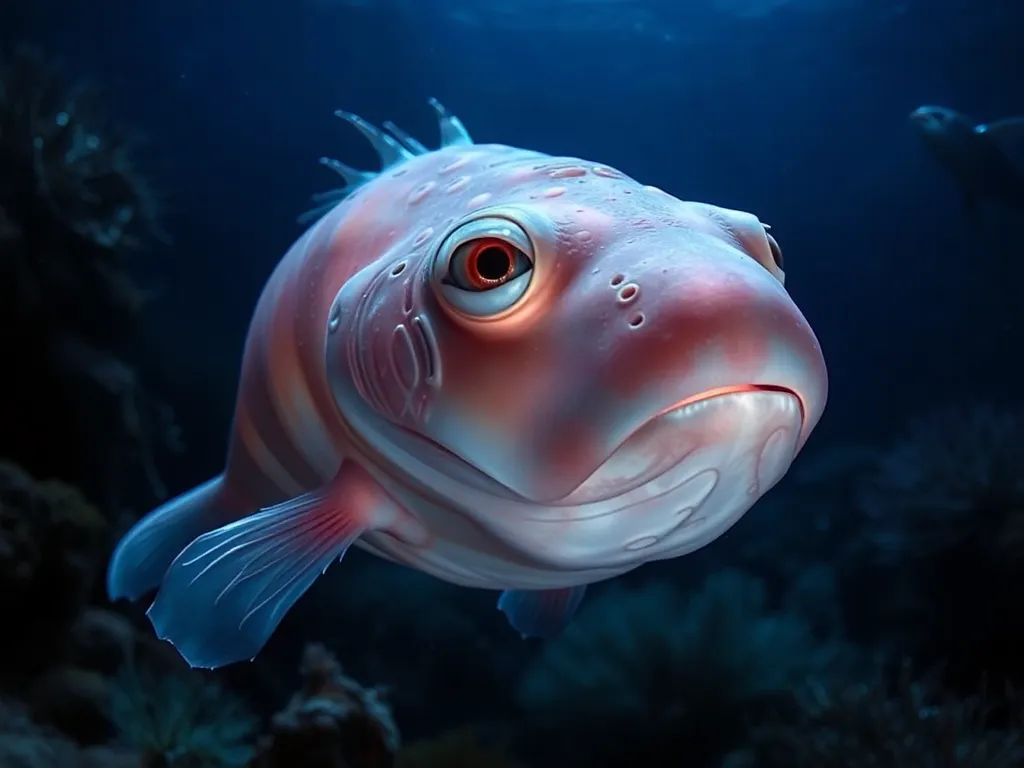
Why do blobfish look weird on land?
The blobfish only looks like a melting pile of pink goo because of us. In its natural home, thousands of feet under the ocean, it looks like a completely normal fish. It lives in a high-pressure world where the water is over 100 times heavier than it is on land.
What is the sad truth about blobfish?
But this is where the problems. Begin you see fishermen use something called trolling nets which are made to drag along the ocean floor to catch other deep sea animals. But because these nets reach.
Do blob fish have blood?
Blobfish also have a single, closed circulatory system — meaning that the blood is contained within the vessels and passes through the heart only once when circulating through the body. This helps keep their energy levels low and allows them to float in the deep sea.
What is the most terrifying fish on Earth?
Anglerfish Commonly known as “Sea Devils,” Anglerfish are the archetypal horror of the deep. They lurk on the bottom, waiting for unsuspecting prey to come their way.
Their mouths are so big they can eat fish almost as big as they are. Anglerfish inhale their meals whole.
What is the sad truth about blobfish?
But this is where the problems. Begin you see fishermen use something called trolling nets which are made to drag along the ocean floor to catch other deep sea animals. But because these nets reach.