The world is home to exactly eight distinct bear species, ranging from the massive 1,500+ lb polar bears to the tiny 60 lb sun bears. These remarkable mammals have adapted to diverse environments across the globe, from Arctic ice to tropical forests, yet six of these eight species currently face threats to their survival. Understanding the differences between these incredible animals helps us appreciate their unique ecological roles and the conservation challenges they face.
Key Takeaway
- The world is home to exactly 8 distinct bear species ranging from 1,500+ lb polar bears to 60 lb sun bears
- 6 of the 8 bear species are currently threatened with extinction due to habitat loss and climate change
- Each species has unique adaptations from the Arctic-dwelling polar bear to bamboo-eating giant pandas
Complete Comparison of All 8 Bear Species
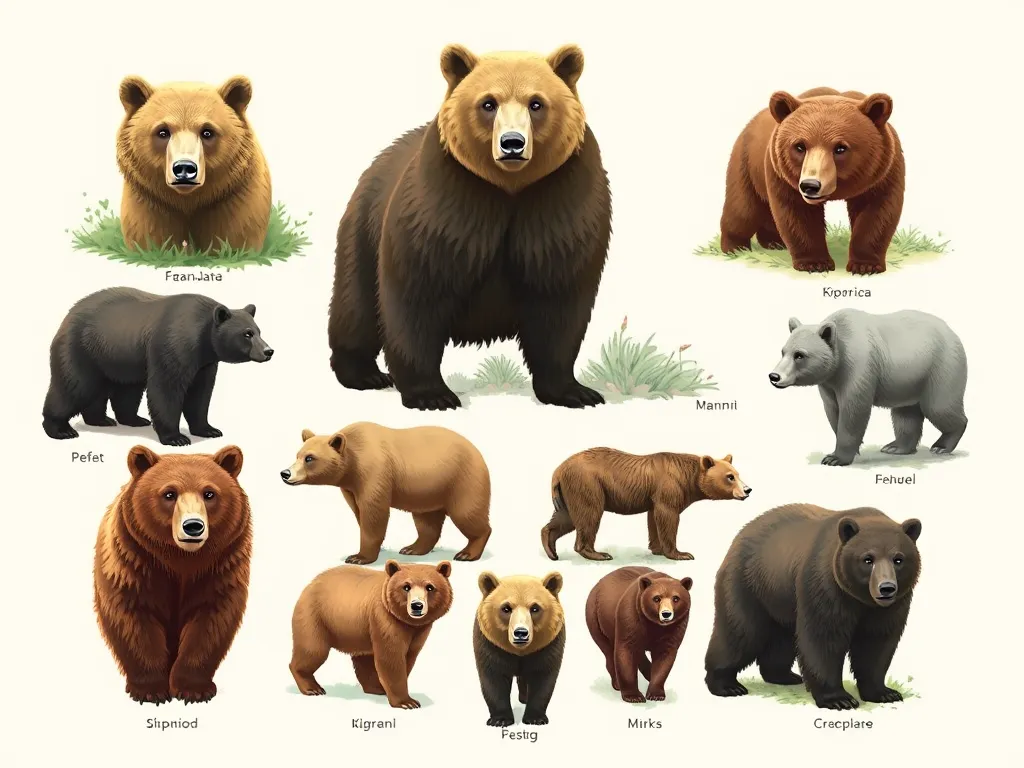
Size Comparison: From Massive Polar Bears to Tiny Sun Bears
| Species | Weight Range | Size Ranking |
|---|---|---|
| Polar Bear | 1,500+ lb | Largest bear species |
| Brown Bear | 300-1,500 lb | Includes Kodiak and grizzly subspecies |
| American Black Bear | 100-600 lb | Most adaptable size range |
| Asiatic Black Bear | 200-440 lb | Medium-sized, arboreal specialist |
| Andean Bear | South America’s only bear species | |
| Sloth Bear | 120-310 lb | Insect specialist with specialized claws |
| Giant Panda | 165-353 lb | Bamboo specialist, medium-sized |
| Sun Bear | 60-145 lb | Smallest bear species |
The size variations among bear species are remarkable, with polar bears being the largest and sun bears the smallest. This size difference reflects their evolutionary adaptations to different environments and hunting strategies. The massive size of polar bears helps them conserve body heat in the Arctic, while the smaller sun bears are better suited for navigating dense tropical forests.
Habitat Distribution: Where Each Bear Species Lives
- Polar Bear: Arctic regions, dependent on sea ice for hunting seals. Found in Canada, Greenland, Norway, Russia, and Alaska. Their survival is directly tied to Arctic sea ice availability.
- Brown Bear: Northern Hemisphere, from North America to Europe and Asia. Includes grizzly and Kodiak subspecies. Highly adaptable to various environments from coastal areas to mountainous regions.
- American Black Bear: Forests across North America, highly adaptable from Florida to Canada and Alaska. Can be found in forests, mountains, and even suburban areas near human settlements.
-
Asiatic Black Bear: Forests across Asia, known as ‘moon bear’ for crescent chest marking.
Found in countries like India, China, Japan, and Southeast Asian nations. Primarily arboreal, spending much time in trees.
-
Andean Bear: South America’s only bear species, found in Andean mountain regions.
Lives at high elevations in countries like Peru, Bolivia, Ecuador, and Venezuela.
- Sloth Bear: Found in India and Sri Lanka; prefers grasslands and forests. Has long, shaggy fur and specialized claws for eating termites and ants.
- Sun Bear: Southeast Asian tropical forests, including Malaysia, Thailand, and Indonesia. The smallest bear, with an extremely long tongue for extracting honey and insects.
-
Giant Panda: High-altitude bamboo forests in central China.
Highly specialized herbivore, consuming almost exclusively bamboo despite being classified as a carnivore.
Bear species distribution shows a clear pattern of adaptation to specific environments.
While most bears are found in the Northern Hemisphere, the Andean bear represents South America’s only native bear species. The giant panda’s specialized bamboo diet has restricted its habitat to specific regions of China where bamboo grows abundantly.
What animal eats 5000 calories a day?
Bears eat about 5,000 calories daily during summer months, which is equivalent to consuming two large cheese pizzas per day. This high caloric intake is necessary for their survival, especially as fall approaches and they begin preparing for winter through a process called hyperphagia. During hyperphagia, bears dramatically increase their food consumption to build up fat reserves that will sustain them through hibernation.
This intense feeding period can see bears consuming up to 20,000 calories per day, with some individuals gaining up to 30 pounds of fat in just a few weeks. The exact caloric needs vary by species and size, with larger bears requiring significantly more food than smaller species.
American Bear Species: Adaptations and Differences
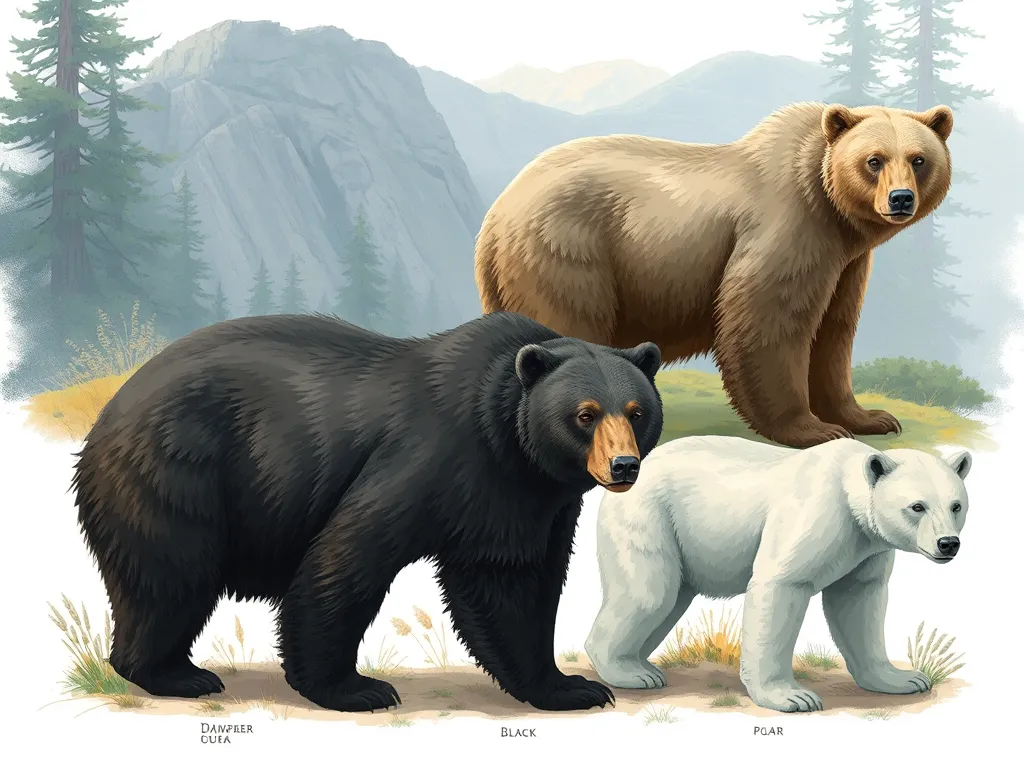
American Black Bear vs Brown Bear: Key Differences
American Black Bears are the most common bear species in North America, highly adaptable with coat colors ranging from black to brown and even white (Spirit bear variant). They typically weigh between 100-600 pounds and are excellent climbers, often using trees for escape and even sleeping. Brown Bears, which include grizzly and Kodiak subspecies, are much larger (300-1,500 pounds) and known for their distinctive shoulder hump formed by muscle mass used for digging.
Brown bears have a more aggressive reputation and are less likely to climb trees compared to their black bear counterparts. While American black bears are more widespread and adaptable to human environments, brown bears require larger territories and more remote habitats.
Spirit Bear: The Rare White American Black Bear
Spirit bears are rare white-coated American black bears found primarily in British Columbia, Canada. These unique animals are not albino but rather have a genetic mutation that results in white fur. Only about 1 in 10 black bears in certain areas of British Columbia carry this recessive gene, making spirit bears a true natural treasure.
The highest concentration of spirit bears is found on the Great Bear Rainforest coast, where they’re protected within a conservation area. These white bears are not a separate species but a color phase of the American black bear, and they play an important role in local Indigenous cultures and conservation efforts. Their white fur provides camouflage in snowy environments and may offer some hunting advantages.
Conservation Status: Threats Facing Bear Species
Has a 22 ever killed a bear?
In 1953, a remarkable case documented how a small woman in northern Alberta killed a world-record grizzly bear with a 22 caliber rifle. The woman used a beat-up single-shot rifle and fired seven “insurance rounds” until the bear stayed down.
The skull of this grizzly measured 26 7/16 inches, setting a Boone & Crockett record as the largest grizzly ever taken in North America at the time. This exceptional case demonstrates that even small-caliber weapons can be effective against bears under specific circumstances, though such incidents are extremely rare and not recommended as a general strategy for bear encounters. The record has since been surpassed, but this 1953 case remains one of the most remarkable documented instances of a small-caliber rifle successfully taking a massive grizzly bear.
Threats to Bear Species Worldwide
- 6 of 8 bear species are currently threatened with extinction according to conservation organizations. The polar bear, giant panda, sloth bear, sun bear, Asiatic black bear, and Andean bear all face significant population declines.
-
Habitat loss and climate change are major threats affecting all bear species.
Deforestation, urban development, and agricultural expansion destroy natural habitats, while climate change disrupts ecosystems and food sources.
- Polar bears face sea ice loss affecting their hunting grounds. As Arctic ice melts earlier and forms later, polar bears have less time to hunt seals, their primary food source, leading to malnutrition and reduced reproduction rates.
- Human-bear conflicts increase as bear habitats shrink. Bears venturing into human settlements in search of food often come into conflict with people, sometimes resulting in the bears being killed.
-
Poaching and illegal wildlife trade threaten several species.
Bear bile farming, paw harvesting, and the illegal trade in bear parts continue to impact populations across Asia.
Conservation efforts are crucial for protecting these magnificent animals and their habitats.
Organizations like the Bear With Us Foundation and the Great Bear Foundation work to research bear populations, protect critical habitats, and promote coexistence between humans and bears. Supporting these conservation initiatives and reducing human impact on bear habitats are essential steps toward ensuring the survival of all eight bear species for future generations.
Perhaps the most surprising finding is how adaptable American black bears have proven to be in human-dominated landscapes, while simultaneously showing how vulnerable even the largest predators like polar bears are to climate change. If you want to support bear conservation, consider donating to organizations like the Bear With Us Foundation or visiting educational facilities that promote bear awareness and habitat protection.