Climate change affects polar bears primarily by melting the Arctic sea ice they rely on for hunting seals, traveling, and breeding. This habitat loss forces bears to spend more time on land, resulting in longer fasting periods, lower body condition, reduced reproductive success, and higher mortality rates, particularly for cubs. Southern populations, such as those in the Hudson Bay area, are already showing signs of reduced body condition and survival.
Habitat Loss: How Melting Sea Ice Shrinks Polar Bear Territory
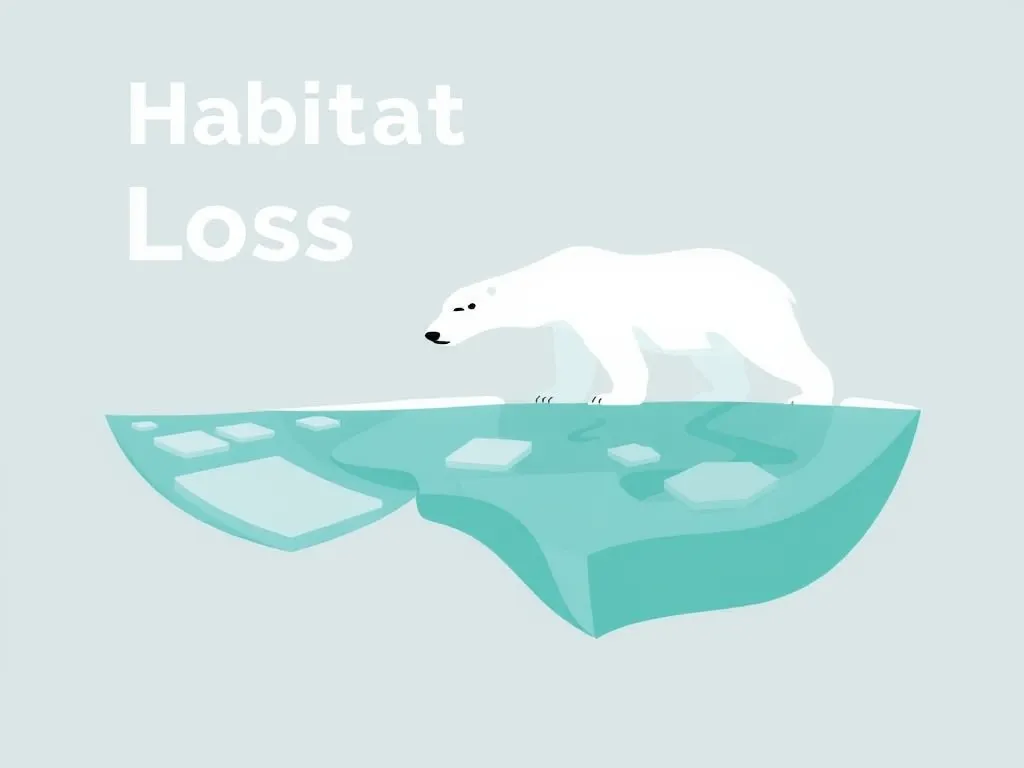
Polar bears require sea ice to hunt seals. As the Arctic warms, sea ice forms later and melts earlier, reducing their hunting season. This loss of habitat is the most direct and severe impact of climate change on the species.
Sea Ice Decline Observed Since 1979
The number of “ice covered” days decreased for 18 of the 19 polar bear subpopulations between 1979 and 2014. This trend has accelerated in recent years, with the Arctic warming at nearly four times the global average rate.
Multi-Year Ice Loss
Currently, 28% of Arctic basin sea ice is multi-year ice, which is thicker and more stable than seasonal ice. However, this multi-year ice is declining rapidly, leaving bears with less reliable platforms for hunting and denning.
Southern Populations Hit First
The impact of habitat fragmentation on animal extinction is evident in southern polar bear populations. In the Hudson Bay area, bears are already experiencing shorter hunting seasons and lower body weight due to earlier ice melt.
Nutritional Stress: Starvation and Longer Fasting Periods
With less time on the ice, polar bears cannot consume enough calories to sustain themselves, leading to weight loss and starvation. This nutritional stress is a direct result of the shortened hunting season caused by sea ice loss.
Extended Fasting Periods
Polar bears in the Southern Beaufort Sea now face fasting periods that are 30 days longer than they were in the 1980s. This extended fasting leads to significant weight loss and reduced survival rates, especially for cubs.
Lower Body Condition in Hudson Bay
Studies from the Hudson Bay region show that polar bears are entering the summer leaner than in previous decades. Female bears with lower body fat have less energy to nurse cubs, leading to higher cub mortality.
Inability to Adapt Diets
Unlike brown bears, polar bears are specialized hunters that rely almost exclusively on seal blubber. They cannot easily switch to alternative food sources on land, making them highly vulnerable to nutritional stress as ice retreats.
Reproductive Decline: Fewer Cubs and Lower Survival Rates
The cumulative stress from habitat loss and starvation is leading to declining populations. Female polar bears require significant fat reserves to produce milk for their cubs, and reduced hunting success directly impacts reproduction.
Reduced Litter Sizes
Data from the IUCN Red List indicates that polar bear litter sizes are shrinking in southern populations. Fewer cubs are being born, and those that are born have lower survival rates due to the mother’s poor body condition.
Cub Mortality Rates
Polar bear cubs are the most vulnerable to climate change. In the Southern Beaufort Sea, cub survival rates have declined as mothers struggle to find enough food during the critical denning period.
Population Collapse by 2100
According to models cited by Polar Bears International, most polar bear subpopulations could face collapse by 2100 if warming trends continue. This projection is based on current sea ice loss trajectories.
What Will Happen to Polar Bears in 2050?
Scientists predict that if current trends continue, the polar bear population will shrink by two-thirds by the year 2050 and face a high risk of extinction by the end of the 21st century. This forecast is based on the accelerated loss of Arctic sea ice and the resulting habitat degradation.
Projected Population Decline
The Arctic Ocean current is at its warmest in the last 125,000 years. Due to these warming temperatures, more than two-thirds of polar bears are expected to be extinct by 2050, with total extinction predicted by the end of this century.
Habitat Availability in 2050
By 2050, summer sea ice in the Arctic is projected to be virtually absent in many regions. This will leave polar bears with no platform for hunting seals during the critical summer months, leading to widespread starvation.
Conservation Implications
The projected decline underscores the urgency of climate action. Protecting the remaining sea ice habitat requires immediate reductions in global greenhouse gas emissions, a goal supported by organizations like WWF-UK.
Will Polar Bears Go Extinct by 2026?
While polar bears are not expected to go extinct by 2026, the species is already in decline. Current data shows that many subpopulations are shrinking, and the threats driving this decline are intensifying.
Current Status in 2026
As of 2026, the polar bear is listed as vulnerable by the IUCN Red List, with an estimated total population of 22,000 to 31,000 individuals. However, this number is decreasing in southern regions due to climate change.
Immediate Threats
The immediate threats to polar bears include continued sea ice loss, increased human-bear conflict as bears spend more time on land, and nutritional stress from longer fasting periods. These factors are already causing population declines in several regions.
Long-Term Outlook
While extinction by 2026 is not imminent, the trajectory points toward significant population reductions by mid-century. Continued warming will likely push more subpopulations toward collapse, making conservation efforts critical.
How Does Ocean Plastic Pollution Affect Arctic Wildlife?
While climate change is the primary threat, other factors like plastic pollution also impact Arctic ecosystems. Ocean plastic pollution kills marine wildlife by ingestion and entanglement, affecting the entire food chain that polar bears depend on.
Plastic in the Arctic Food Web
Microplastics are now found throughout the Arctic Ocean, ingested by fish and seals that polar bears prey upon. This introduces toxins into the bear’s diet, compounding the stress from nutritional shortages.
Entanglement Risks
Discarded fishing gear and other plastic debris in the Arctic pose entanglement risks for polar bears and their prey. This physical threat adds to the challenges posed by habitat loss.
Combined Impacts
The combined effects of climate change and plastic pollution create a multi-faceted threat to polar bear survival, requiring comprehensive conservation strategies.
What Is the Polar Bear Emoji?
The polar bear emoji 🐻❄️ depicts a white bear with black eyes, nose, and mouth. It has a round head, small ears, and a furry body. This emoji is often used in discussions about Arctic wildlife and climate change awareness.
Symbolism in Conservation
The polar bear emoji has become a symbol for climate action, representing the vulnerability of Arctic species to global warming. It is frequently used in social media campaigns by organizations like Polar Bears International.
Cultural Significance
The emoji reflects the cultural importance of polar bears as iconic Arctic animals. It helps raise public awareness about the need to protect their habitat from ongoing climate threats.