Electric eels can generate up to 860 volts of electricity—enough to knock out a horse—through specialized muscle cells called electrocytes that function like thousands of tiny biological batteries stacked in series. When threatened or hunting, these remarkable Amazonian fish discharge electricity that causes violent, involuntary muscle spasms in other animals, effectively stunning them instantly.
- Electric eels generate 600-860 volts through 6,000-10,000 specialized electrocytes that function like biological batteries
- Their shock works like a Taser, causing massive muscle contractions that effectively freeze prey
- Eels can maximize voltage by leaping from water to press their chin and tail directly against targets
How Electric Eels Generate 600-860 Volts Through Specialized Electrocytes
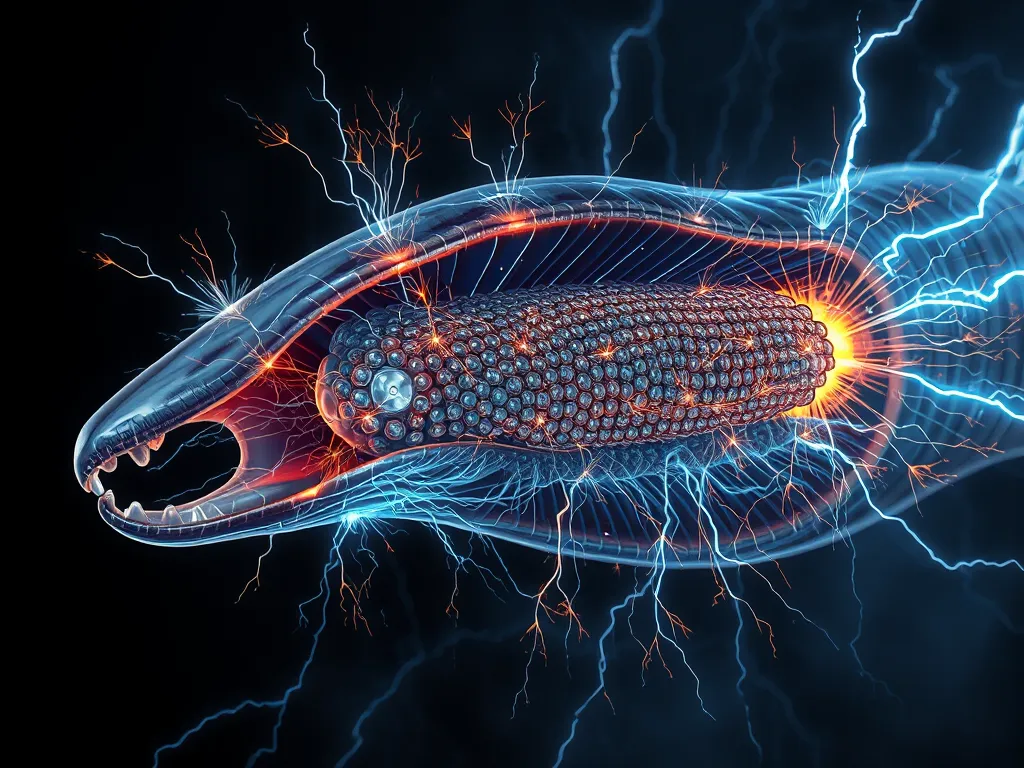
Electric eels possess one of nature’s most remarkable electrical systems, capable of generating voltages that can incapacitate large animals including horses. These fascinating creatures are part of the diverse wildlife that has evolved extraordinary survival mechanisms. This extraordinary ability stems from specialized biological structures that function similarly to electrical systems we’ve engineered through technology.
Biological Batteries: The 6,000-10,000 Electrocytes That Stack Voltage
At the core of an electric eel’s shocking ability are thousands of specialized cells called electrocytes. These remarkable biological structures function like tiny batteries stacked in series, with each cell producing a small amount of electricity that multiifies dramatically when they fire together. An adult electric eel contains approximately 6,000 to 10,000 electrocytes arranged in precise columns throughout its body.
When these cells discharge simultaneously, they can generate an astonishing 600 to 860 volts—enough electrical power to stun or even kill large animals like horses. The electrocytes account for about 80% of the eel’s body mass, making them the dominant anatomical feature in these fascinating creatures.
The Three Electric Organs: Main, Hunter’s, and Sachs Organs
- Main Electric Organ: The largest of the three organs, running along most of the eel’s body, responsible for generating the high-voltage shocks used to stun prey
- Hunter’s Organ: Located in the anterior portion, produces lower voltage but higher frequency electrical pulses used for navigation and detecting prey
- Sachs’ Organ: The smallest organ, generates very low voltage signals used for electrolocation and communication with other electric eels
These three specialized organs work in concert to create the electric eel’s complete electrical system, accounting for approximately 80% of the eel’s body. Together, they enable the fish to navigate dark, muddy waters, locate prey, communicate with other electric eels, and deliver the powerful shocks that make them one of the most formidable predators in their aquatic environment.
Neural Activation: How the Brain Triggers Simultaneous Discharge
When an electric eel detects prey or feels threatened, its brain sends rapid signals through its nervous system that trigger all electrocytes to discharge simultaneously. This coordinated neural activation creates a massive, instantaneous shock that can reach up to 860 volts. The entire process happens in milliseconds, with the eel’s brain precisely controlling which organs and cells to activate depending on the situation.
For hunting, the eel might activate its main electric organ to deliver a stunning blow, while for navigation, it might use the Hunter’s organ to emit lower voltage pulses. This neurological control allows electric eels to tailor their electrical output to specific needs, whether it’s locating hidden prey, stunning larger animals, or communicating with other electric eels in their environment.
The Taser-Like Shock Effects That Can Knock Out Large Animals
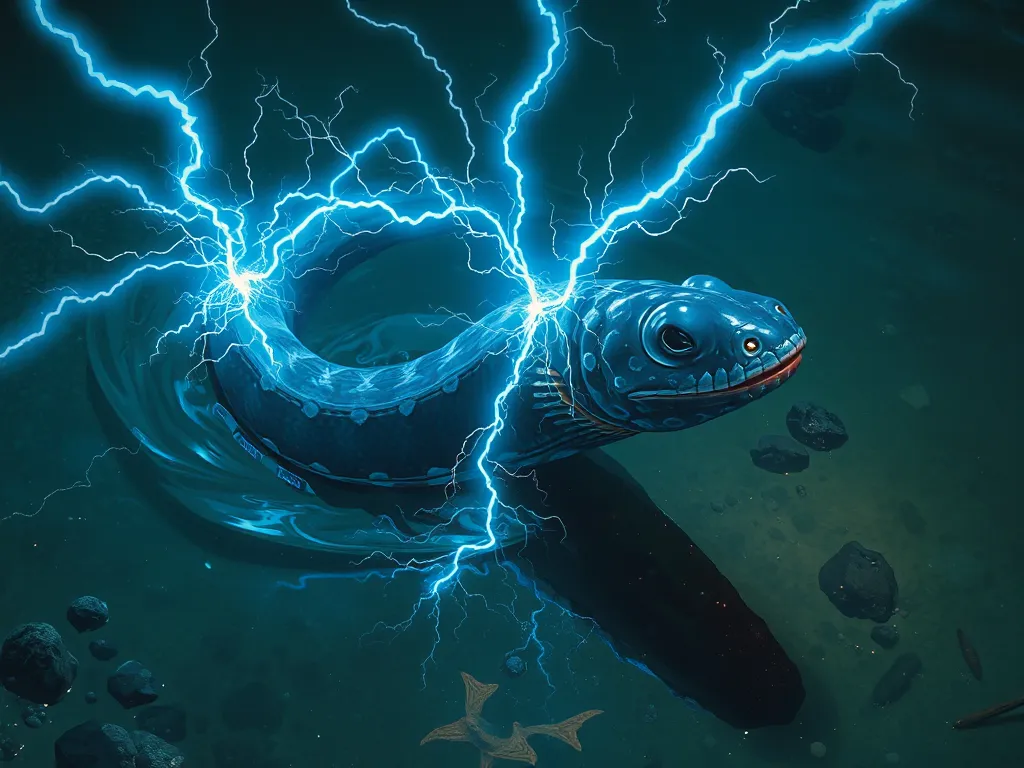
The electrical discharge from an electric eel doesn’t just create a simple jolt—it produces effects remarkably similar to a human-made Taser, capable of incapacitating animals much larger than itself. This biological electrical system has evolved to deliver precisely the kind of shock that can immobilize prey effectively.
400 Pulses Per Second: The Frequency of Electrical Discharges
Electric eels produce electrical pulses at an astonishing rate of 400 pulses per second, creating a continuous, high-frequency shock effect that overwhelms the nervous systems of their targets. This rapid firing is significantly more effective than a single, high-voltage discharge because it prevents the prey’s nervous system from recovering between pulses.
The high frequency mimics the operation of a Taser, which delivers multiple pulses to disrupt muscle control and cause temporary paralysis. For prey animals, this means experiencing uncontrollable muscle spasms and an inability to move or defend themselves, effectively freezing them in place while the electric eel moves in for the capture.
How 860 Volts Compares to Household Electricity and Tasers
To understand the power of an electric eel’s shock, consider that 860 volts is roughly five times the voltage of a standard US household wall outlet (which typically provides 120-240 volts). While household electricity flows continuously, an electric eel’s discharge is brief but extremely powerful. A standard Taser delivers about 19 high-voltage pulses per second, significantly less than the electric eel’s 400 pulses per second.
The electric eel’s shock combines both high voltage and high frequency, creating a biological equivalent of a powerful electrical weapon. This combination is what allows even a relatively small electric eel to stun much larger animals, including horses, when conditions are optimal.
The Muscle Contraction Effect: Why Prey Freeze Instantly
The electrical discharge from an electric eel causes violent, involuntary muscle contractions in prey animals by directly stimulating their muscles and nerves. Unlike normal nerve signals that travel through the central nervous system, an electric eel’s shock bypasses this control system, causing muscles to contract simultaneously throughout the body. This creates a state of total muscular rigidity where the prey cannot move, breathe properly, or defend itself.
The shock essentially overwhelms the prey’s nervous system, creating a temporary paralysis that gives the electric eel time to approach and capture its stunned victim. This Taser-like effect is particularly effective against large animals because it doesn’t rely on physical damage but rather on disrupting the electrical signals that control movement, making it an efficient hunting strategy that requires minimal physical effort from the electric eel.
How Electric Eels Deliver Maximum Voltage by Leaping from Water
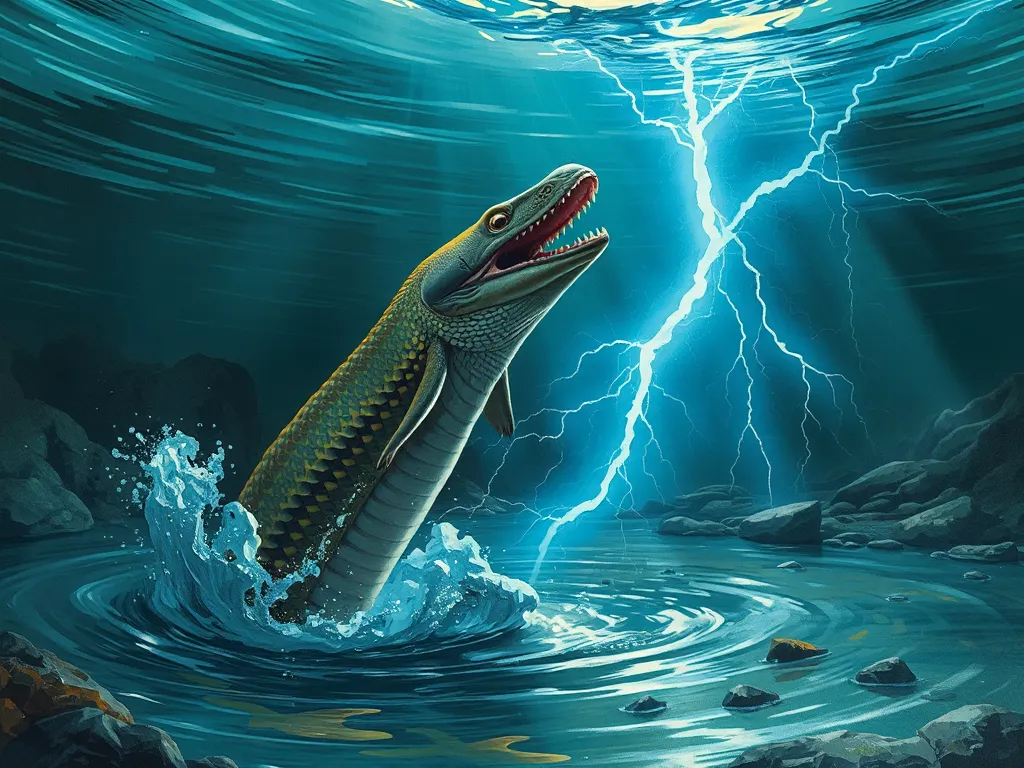
Electric eels have developed an extraordinary behavior that allows them to maximize the effectiveness of their electrical discharges against large animals. This remarkable adaptation enables them to deliver more powerful, targeted shocks that can incapacitate even very prey.
Closing the Circuit: Curling Bodies to Direct Shocks
When targeting large animals, electric eels can enhance their shocking ability by curling their bodies to create a more direct electrical circuit. In water, electrical energy disperses, but by curling, the eel can concentrate the shock by pressing its chin (which serves as the negative pole) and tail (the positive pole) directly against the target.
This behavior effectively closes the circuit, ensuring that the full force of the electrical discharge is delivered to the prey rather than being dissipated in the surrounding water. The eel’s body shape and flexibility allow it to perform this maneuver efficiently, making it possible to deliver shocks that are significantly more powerful than what would be possible if the electrical energy simply radiated into the water.
Historical Accounts: Electric Eels Affecting Horses and Large Animals
Historical accounts from naturalists like Alexander von Humboldt document the remarkable power of electric eels to affect large animals. In the 1800s, von Humboldt observed electric eels leaping from water to attack horses, delivering shocks strong enough to knock the animals off their feet. These early accounts were initially met with skepticism, but modern research has confirmed their validity.
Scientific studies have demonstrated that when submerged, an electric eel’s electrical pulses are distributed throughout the water, freezing the target into a state of shock. However, when the eel leaps from water and makes direct contact, it can deliver the full force of its electrical discharge, explaining how these fish could potentially affect large animals like horses that venture too close to their habitat.
Self-Protection: How Electric Eels Insulate Themselves from Their Own Shocks
Despite generating extremely high voltages, electric eels are protected from their own electrical discharges through specialized insulation. The eel’s body contains fatty tissues and other materials that act as electrical insulators, preventing the current from flowing through its vital organs. This biological insulation allows the electric eel to generate and deliver powerful shocks without harming itself.
Additionally, the electrocytes are arranged in such a way that the electrical current flows externally rather than through the eel’s body. This self-protection mechanism is crucial for survival, as it enables the electric eel to hunt and defend itself without risking injury from its own electrical weapons.
The electric eel’s ability to generate up to 860 volts represents one of nature’s most remarkable electrical adaptations. While human-made electrical devices require complex engineering, these Amazonian fish achieve
Frequently Asked Questions About How Electric Eels Generate Enough Voltage To Knock Out A Horse
How much voltage can an electric eel create?
Electric eels use these to navigate, seek out prey and signal one another for courtship during the breeding season. Electrophorus varii can produce the most powerful electrical shocks. They can generate up to 860 volts of electricity – nearly four times the voltage of a standard UK plug socket.
Which fish can produce 600 voltage of current?
So, it's no surprise that of the fishes able to generate an electrical discharge, electric eels are the champions, producing up to 600 volts. Electric eels live in muddy waters. Mostly blind, they rely on low-level electrical pulses to navigate and explore their surroundings.
Which animal can defeat an electric eel?
Keep picking fights with a living battery. Because this story isn't just about strength.
It's about curiosity. Risk and how far evolution will go to keep things.
What would 500 volts do to a person?
High Voltage: High voltage is anything above 500 volts. At this level, the risks of electrocution increase significantly. High voltage can cause severe burns, muscle contractions, cardiac arrest, and even death in extreme cases.
Are electric eels AC or DC?
The electric eel, however, emits not a direct current but an alternating current (in pulses), and its charge is depleted after a strong shock. Its electric organ takes some time to recharge. Even so, an encounter with a group of these animals in the water can be quite perilous.