A coelacanth (see-la-canth) is a remarkable deep-sea fish that was believed to have gone extinct 66–70 million years ago along with the dinosaurs, making its dramatic rediscovery in 1938 one of the most extraordinary events in natural history. This ancient creature, surviving virtually unchanged for over 400 million years, challenged scientific understanding of extinction and provided unprecedented insights into evolutionary biology.
- Coelacanths are ancient lobe-finned fish that have survived virtually unchanged for over 400 million years
- The 1938 discovery was called ‘the find of the century’ because it was like finding a living dinosaur
- These deep-sea creatures have unique anatomical features that provide insights into tetrapod evolution
What Is a Coelacanth?
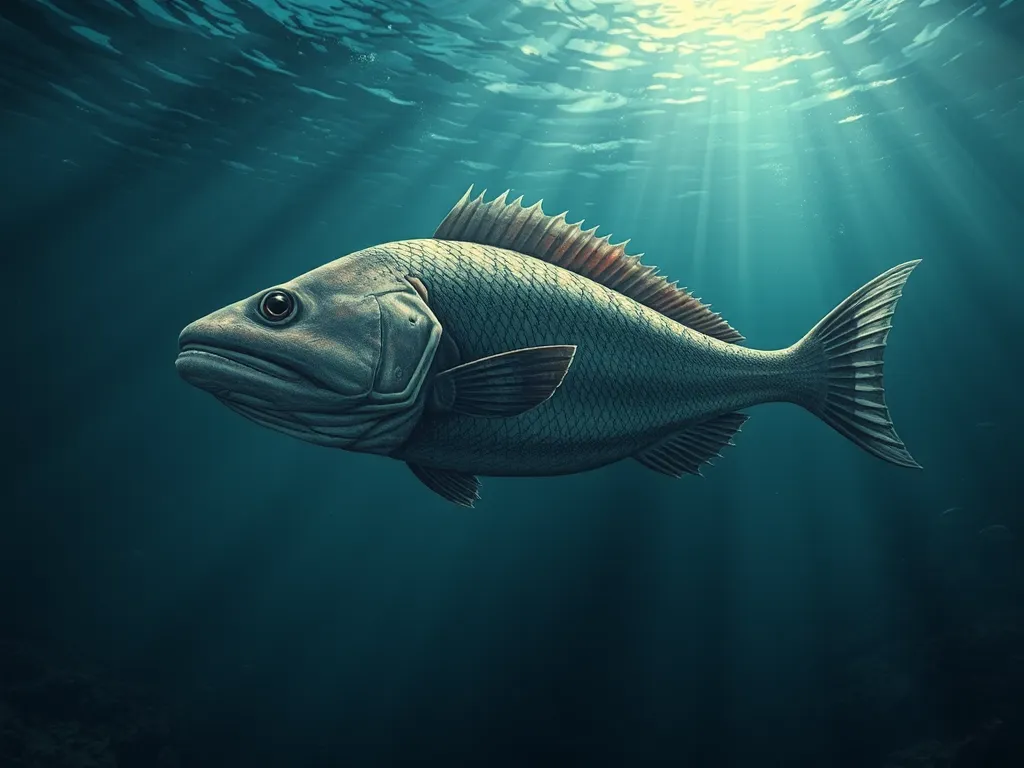
Physical Characteristics and Appearance
- Large size: Coelacanths are large, slow-moving fish that can reach up to 2 meters (6.5 feet) in length
- Weight: They weigh nearly 100 kilograms (200 lbs), making them substantial deep-sea inhabitants
- Distinctive coloring: Known for their striking steel-blue color that helps them camouflage in deep waters
- Armored scales: They possess thick, overlapping scales that provide protection in their deep-sea environment
- Unique skull structure: A distinctive hinged skull allows them to open their mouths wide to catch prey
Unique Anatomy and Evolutionary Features
Unlike most fish, coelacanths possess fleshy, lobed fins that move in an alternating, leg-like pattern rather than the typical undulating motion of other fish. Their fin movement remarkably resembles a trotting horse or the limbs of tetrapods (land-living vertebrates), providing scientists with a living example of the transitional form between aquatic and terrestrial locomotion. This unique anatomy has made them invaluable for understanding how early vertebrates might have moved from water to land environments millions of years ago.
Why Was Its Discovery Called the ‘Find of the Century’?
The Rediscovery Story of 1938
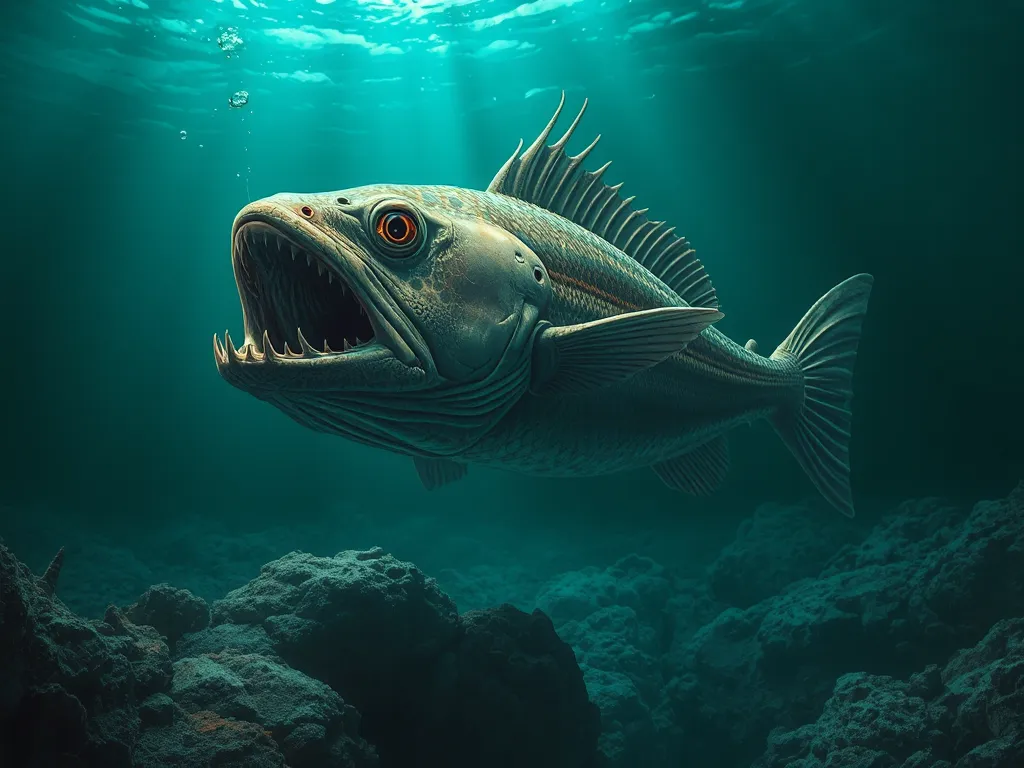
The coelacanth’s rediscovery on December 22, 1938, reads like a scientific thriller. Marjorie Courtenay-Latimer, the young curator of the East London Museum in South Africa, received a strange fish from a local trawler captain. Intrigued by its unusual appearance, she alerted prominent South African ichthyologist Dr.
J.L.B. Smith, who immediately recognized its significance.
After careful examination, Smith confirmed that this was not just an unusual fish but a species long believed extinct for millions of years. In honor of the museum curator who made the initial discovery, the species was named Latimeria chalumnae, forever linking Courtenay-Latimer to this remarkable find.
The ‘Living Fossil’ Phenomenon
Coelacanths are considered “living fossils” because they have survived virtually unchanged for over 400 million years, with a body structure that closely resembles their fossilized ancestors. The last known coelacanth fossil was from the Cretaceous period (about 66 million years ago), leading scientists to believe the entire lineage had vanished along with the dinosaurs.
Finding a living specimen was considered “impossible,” often compared to discovering a living Tyrannosaurus rex. This extraordinary survival challenged the very definition of extinction and forced scientists to reconsider what was possible in the natural world, much like how the platypus confused scientists for decades after its discovery.
What Makes the Coelacanth Scientifically Significant?
Evolutionary Insights and Tetrapod Connection
Coelacanths were initially thought to be the direct link between fish and the first land-walking animals, with their lobed fins representing the evolutionary precursor to limbs. While modern research has established that lungfish are actually more closely related to tetrapods, coelacanths still provide crucial insights into this evolutionary transition. Their anatomy helps scientists understand how fins might have gradually developed into the limbs that allowed vertebrates to colonize land, making them a living laboratory for studying one of the most important events in evolutionary history.
Habitat, Behavior, and Reproduction
- Deep-sea habitat: Coelacanths live in deep, dark volcanic caves 100 to 700 meters below the surface
- Geographic distribution: Most commonly found around the Comoro Islands and the east coast of Africa
- Unique reproduction: They give birth to live young (ovoviviparity) after a very long gestation period—potentially up to five years
- Second species: The Indonesian coelacanth (Latimeria menadoensis) was discovered in 1997, revealing these animals are more diverse than previously thought
The coelacanth continues to surprise scientists with its remarkable adaptations to deep-sea environments, demonstrating how much we still have to learn about marine life. For those interested in learning more about marine conservation efforts and other remarkable species, explore our extensive coverage of wildlife preservation initiatives around the world.