Observing bears in US national parks requires maintaining at least 100 yards (300 feet) distance at all times, using binoculars or spotting scopes for safe viewing, and following proper encounter protocols. Bears are magnificent wild animals that deserve respect and space, and approaching them can be dangerous for both humans and bears. By following established safety guidelines from wildlife experts, you can enjoy bear sightings while minimizing risks to yourself and protecting these important species.
Key Takeaway
- Maintain at least 100 yards (300 feet) distance from bears at all times
- Use binoculars and spotting scopes for safe viewing without approaching
- Never run from bears – they can run faster than 30 mph
- Carry bear spray and know how to use it properly
Maintaining Safe Distance from Bears
The 100-Yard Rule: Why Distance Matters
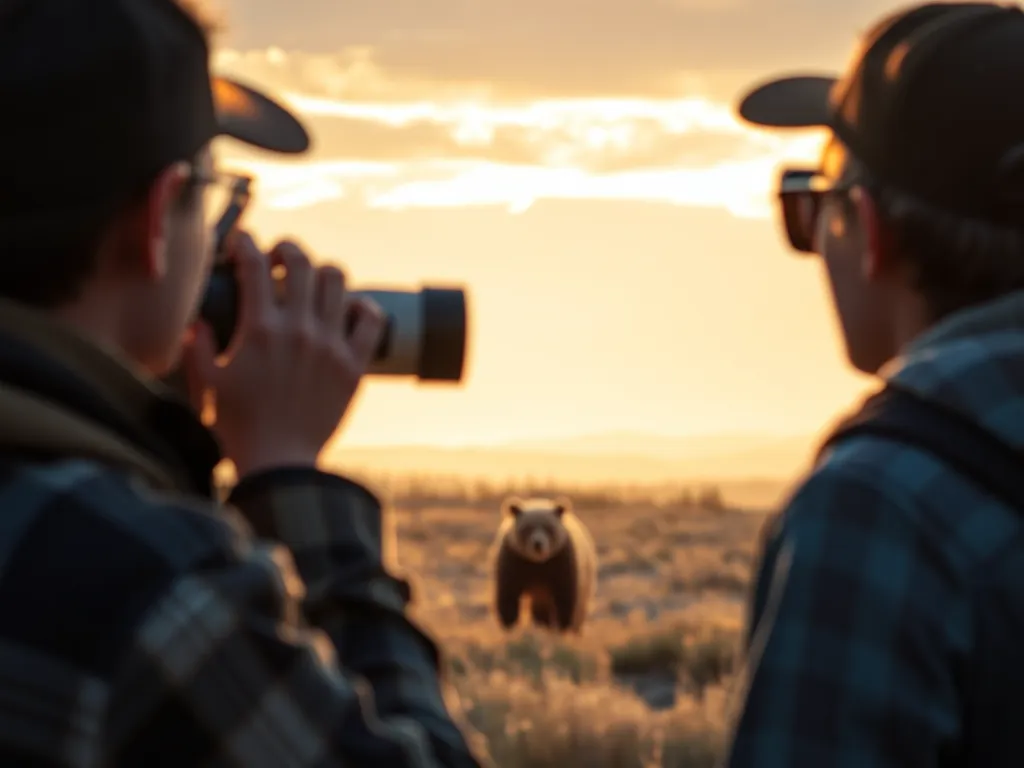
The 100-yard rule is the foundation of bear safety in national parks, established by wildlife experts to protect both humans and bears. This distance—about the length of a football field—gives bears enough space to feel comfortable and reduces the risk of defensive behavior. When you’re too close, bears may perceive you as a threat, which can trigger aggressive responses.
Bears have exceptional senses and can detect human presence from much farther away than most people realize. Additionally, bears can run faster than 30 mph, both uphill and downhill, making it impossible to outrun them if they charge. Maintaining proper distance helps prevent these dangerous situations while allowing you to still observe and appreciate these magnificent animals in their natural habitat.
Signs You’re Too Close to a Bear
- The bear stops feeding or changes its activities – Bears that suddenly pause eating or alter their behavior when they see you are indicating discomfort
- The bear watches you intently – Prolonged staring or direct attention suggests the bear is aware of your presence and may feel threatened
- The bear shows signs of stress like jaw popping or swaying – These behaviors indicate anxiety and potential defensive posturing
- The bear begins to approach you – Any movement toward you is a clear warning that you’ve crossed into unsafe territory
If you notice any of these signs, immediately and slowly back away while facing the bear. Never turn your back or run, as this can trigger a chase response.
Best Times and Locations for Bear Viewing
Bears are most active during early morning and late evening (dawn and dusk) when temperatures are cooler and food sources are more accessible. For optimal viewing opportunities, look for bears in open meadows where they dig for roots or eat berries, particularly in areas with abundant vegetation. Bears often use established trails, roads, and ridgelines to travel between feeding areas and dens, which is why understanding Rocky Mountain National Park Wildlife can help you anticipate their movements.
These travel corridors provide good visibility while maintaining safe distances. Always remain alert and scan your surroundings carefully, watching for signs of bear activity such as fresh tracks, scat, or torn-up logs that indicate recent presence in the area, similar to what you might find when exploring Olympic National Park Animals.
Essential Equipment for Bear Viewing
Binoculars vs Spotting Scopes: Which is Better?
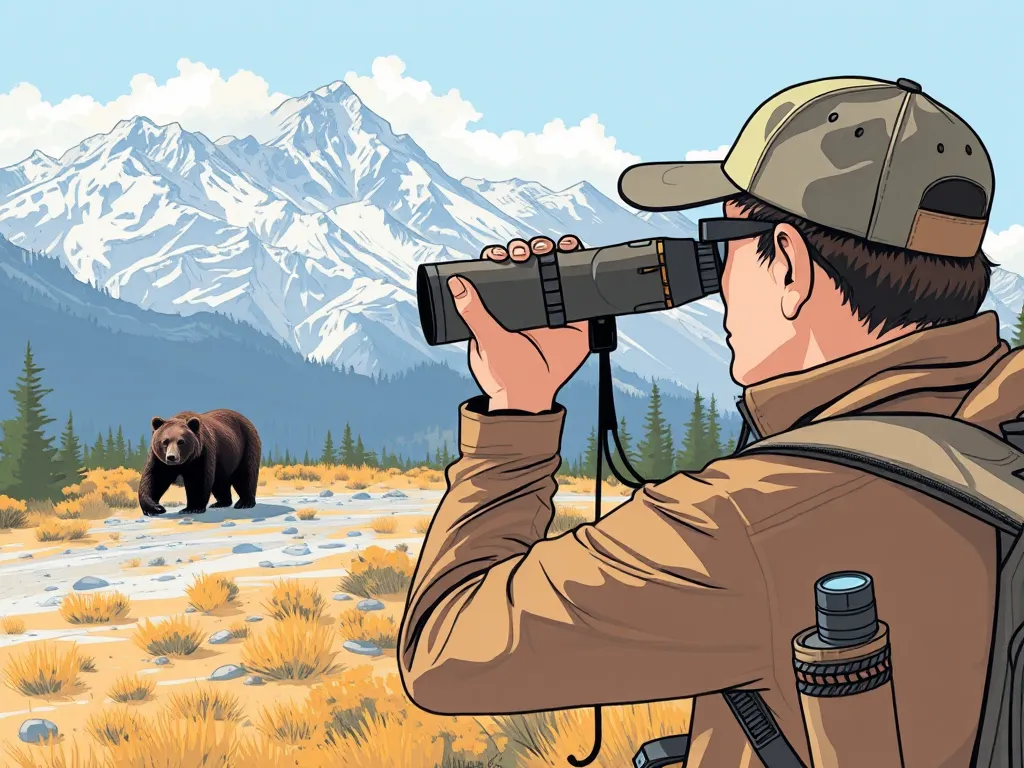
When choosing between binoculars and spotting scopes for bear viewing, consider your specific needs and viewing conditions. Binoculars are excellent for scanning large areas quickly and are more portable, making them ideal for hikers who need to cover ground efficiently.
They typically offer magnification ranges from 7x to 10x, which is sufficient for identifying bears at safe distances. Spotting scopes provide higher magnification (15x to 60x) and are better for stationary observation of distant bears, but they require a tripod for stability and are bulkier to carry, especially when hiking Best Hiking Trails for Wildlife in national parks.
Both tools allow you to view bears without getting too close, which is essential for safety. Local Expert Tip: Always carry binoculars; they’re essential for safe wildlife viewing and can help you spot bears before they become aware of your presence.
Camera Equipment for Safe Bear Photography
For safe bear photography, use telephoto lenses with 200mm or longer focal lengths to capture detailed images while maintaining the recommended 100-yard distance. Never approach bears to get better photos, as this violates wildlife safety protocols and endangers both you and the animals. When using longer lenses, employ a tripod for stability to prevent camera shake that can result in blurry images.
Consider carrying a camera with fast autofocus capabilities to capture bears in motion, and practice using your equipment before your trip to ensure you’re familiar with its operation. Remember that photography should never compromise safety—prioritize maintaining proper distances over getting the perfect shot. Always respect a bear’s space and behavior patterns, allowing them to move naturally without human interference.
Bear Spray: Your Essential Safety Tool
- Carry bear spray in an easily accessible location – Keep it attached to your belt or backpack strap, not buried inside your pack where you can’t reach it quickly
- Know how to use bear spray before you need it – Practice removing the canister and activating it in a safe environment to build muscle memory
- Check that your bear spray is not expired – Most bear sprays have a shelf life of 3-4 years, and expired products may not work effectively
- The National Park Service highly recommends bear spray over guns – Studies show bear spray is more effective at stopping aggressive bear behavior while causing less harm to the animal
What to Do During Bear Encounters
What to Do If a Bear is Staring at You?
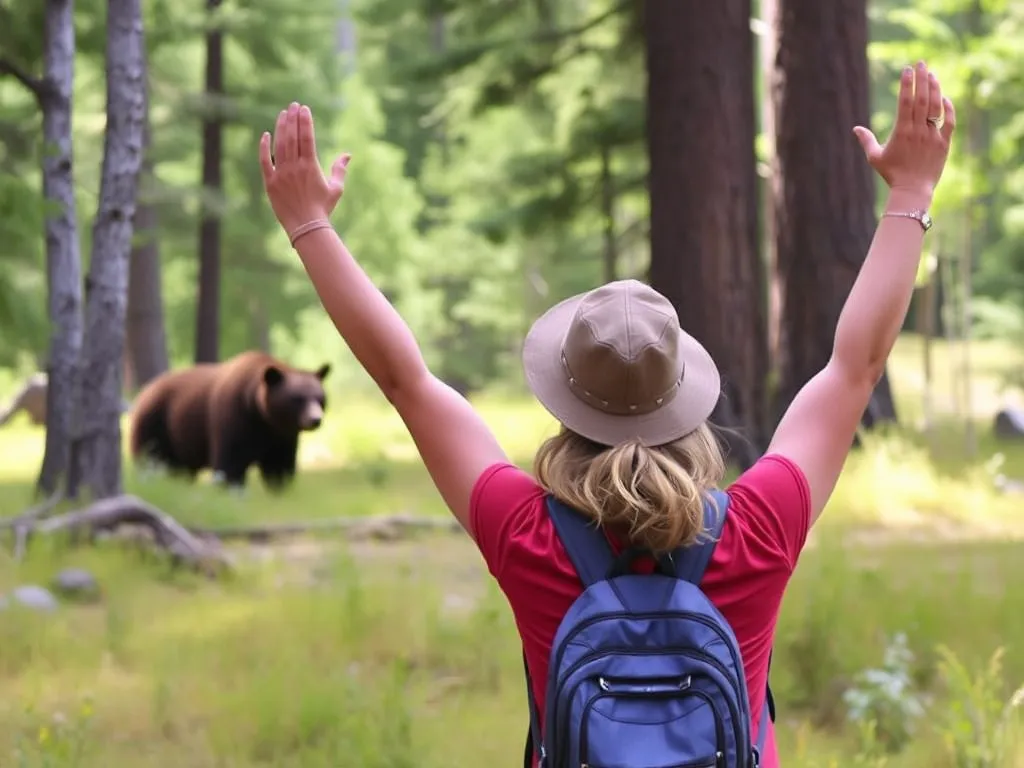
If a bear is staring at you, stand your ground and try to appear large by holding up your arms and jacket or opening your coat wide. Back away only when the bear stops its approach, moving slowly and sideways to keep the bear in your peripheral vision without making direct eye contact.
Make yourself look bigger and make noise by speaking in a calm, firm voice and occasionally waving your arms or clapping your hands. Never make direct eye contact as bears may perceive this as aggressive behavior.
The goal is to convince the bear that you are human and not prey while showing that you are not a threat. Most bear staring incidents end when the bear loses interest and moves on, especially when you demonstrate non-threatening body language and vocalizations.
How to Handle a Bear Charge
- Do not run – many charges are ‘bluff charges’ that stop at the last second – Running can trigger a chase response, and bears can easily outrun humans
- Stand your ground and make yourself look large – Hold your arms up, open your jacket, and stand as tall as possible to appear more intimidating
- Speak in a calm, firm voice – Use authoritative but non-aggressive tones to assert your human presence without escalating the situation
- If the bear makes contact, play dead for grizzlies and fight back for black bears – Curl up protecting your neck and vital areas for grizzly attacks, while using any available objects to fight back against black bears
Different Responses for Different Bear Species
| Bear Species | Recommended Response |
|---|---|
| Grizzly bears | Play dead if attacked, curl up and protect your neck and vital organs |
| Black bears | Fight back if attacked, make yourself look intimidating and use available objects |
| Brown bears | Similar response to grizzlies – play dead and protect vital areas |
| Mother bears with cubs | Extra caution needed – retreat immediately to avoid triggering protective behavior |
The most surprising finding in bear safety research is that most bear encounters end without aggression when humans follow proper protocols. By carrying bear spray and knowing how to use it properly, you significantly increase your safety margin during potential encounters.
Before your next national park adventure, practice your bear safety skills and ensure you have all necessary equipment readily available. For comprehensive wildlife safety information, explore our Wildlife resources, which include detailed guides on various national park wildlife encounters and safety protocols.
Frequently Asked Questions About How To Safely Observe Bears In Us National Parks
What is the recommended response during a grizzly bear attack?
Play dead. Curl up and protect your neck and vital organs.
How should you respond if attacked by a black bear?
Fight back. Make yourself look intimidating and use available objects.
What is the recommended action for a brown bear attack?
Play dead and protect vital areas, similar to the response for grizzly bears.
What extra caution is needed when encountering a mother bear with cubs?
Retreat immediately to avoid triggering protective behavior.