Bees are essential to the global food supply, pollinating roughly one-third of all crops consumed worldwide. This single insect group contributes an estimated $235 billion annually to agricultural production, making them a cornerstone of global food security.
Without bees, the variety, quantity, and nutritional quality of food available to the global population would decline drastically. Their work supports not only direct fruit and vegetable production but also the fodder crops that sustain livestock, creating a ripple effect across the entire food system.
How Bees Directly Support Global Food Production
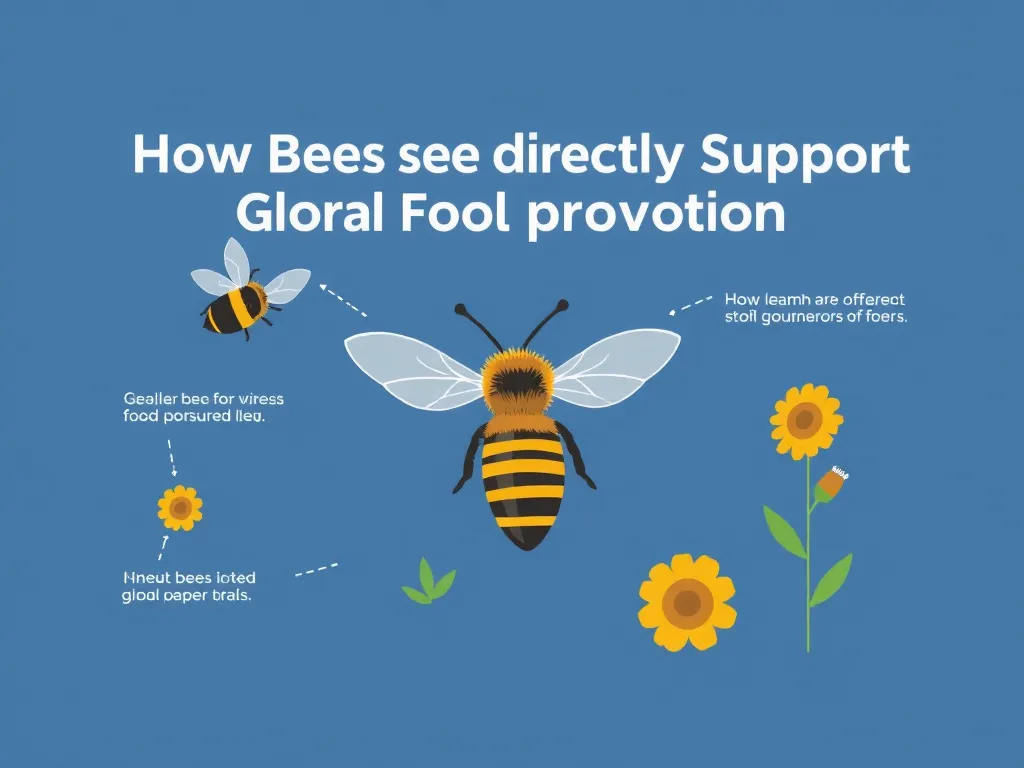
Bees contribute to the global food supply by pollinating a wide range of crops, including fruits, vegetables, oilseeds, and legumes. The economic benefit of bees to food production per year was reported including the cash crops, i.e., coffee, cocoa, almond and soybean, compared to self-pollination. This biological service is not merely a bonus but a requirement for many high-value agricultural products.
The mechanism is simple yet vital: bees transfer pollen grains from the male anther of a flower to the female stigma, enabling fertilization. This process triggers the development of fruits and seeds, which are the harvestable parts of many plants.
Bees perform a critical biological function that directly impacts what ends up on dinner tables. They transfer pollen between flowers, enabling fertilization and fruit production.
Without this process, many plants would fail to produce the nuts, fruits, and vegetables that form the basis of human nutrition. The efficiency of this transfer is remarkable; a single bee can visit hundreds or even thousands of flowers in a day, ensuring widespread pollination across agricultural fields and wild ecosystems alike.
Specific Crops That Depend Almost Entirely on Bees
In North America alone, honey bees pollinate nearly 95 kinds of fruits. The most economically significant crops that rely almost completely on bee pollination include almonds, apples, avocados, blueberries, and cranberries.
These crops are not just minor ingredients; they are central to modern diets and global trade. For instance, the almond industry is a multi-billion dollar sector that would collapse without managed honey bee colonies.
- Almonds: California’s almond industry, which produces 80% of the world’s supply, depends entirely on honey bees for pollination each spring. Growers rent approximately 2 million honey bee colonies annually to service over 1.3 million acres of almond orchards.
- Apples: Most apple varieties require cross-pollination by bees to produce fruit. Without bees, apple yields would drop by an estimated 90%, making the fruit a rare luxury rather than a common staple.
- Avocados: These high-value crops need bees to transfer pollen between flowers. Avocado flowers have a unique pollination syndrome requiring specific bee behaviors, making them highly dependent on pollinator presence.
- Blueberries and Cranberries: Both crops show significantly higher yields with bee pollination. Research indicates that blueberry yields can increase by up to 50% with adequate bee visitation, directly impacting farmer profitability and consumer supply.
According to the U.S. Fish & Wildlife Service, honey bees are responsible for up to $5.4 billion in agricultural productivity in the United States alone.
This figure represents the direct value of pollination services beyond honey production. It reflects the increased yields and quality of crops that would otherwise be unviable at scale.
The Economic Value of Bee Pollination Services
The global economic impact of bee pollination is staggering. Research published in PubMed Central confirms that bee pollination services are valued at over $235 billion annually for global agricultural production.
This value reflects increased crop yields, higher quality produce, and greater crop diversity. The calculation accounts for the market value of crops that are directly dependent on animal pollination, adjusted for the proportion of pollination attributed to bees specifically.
- Increased crop yields: Pollinated crops produce more fruit and seeds per plant. For example, studies show that pollinator-dependent crops can see yield increases of 20-50% compared to crops that self-pollinate or are wind-pollinated.
- Higher quality produce: Bee-pollinated fruits are often larger, more uniform, and have better flavor and shelf life. This quality premium translates to higher market prices and consumer satisfaction.
- Crop diversity: Bees enable the production of nutrient-rich foods that would otherwise be unavailable. Many vitamins and minerals essential for human health are found in bee-pollinated crops like berries, nuts, and leafy greens.
A study from Our World in Data indicates that three-quarters of global crops depend on pollinators to some extent, though only one-third of actual crop production volume does. This distinction highlights that while many crops benefit from bees, the most nutritionally diverse and high-value foods are most dependent on them. The economic valuation thus captures not just the volume of food but the nutritional and economic value of the crops that rely on bee pollination.
Why Bee Population Decline Threatens Food Security
The threat of bee population decline represents a direct risk to global food security. Habitat loss, pesticide use—particularly neonicotinoids—diseases, and climate change are severely threatening bee populations worldwide.
These stressors interact synergistically, creating a complex crisis that is difficult to reverse. For instance, habitat fragmentation reduces the availability of floral resources, while pesticides weaken bee immune systems, making them more susceptible to diseases like Varroa mites.
The Cascade Effect of Fewer Bees
When bee populations decline, the consequences ripple through the food system. The effects are not isolated to a single crop or region but are global and interconnected. Lower pollination rates lead to reduced fruit set, which means fewer seeds for the next planting season and lower harvest volumes for farmers.
- Lower crop yields: Without sufficient pollination, plants produce fewer fruits and seeds. For example, in regions with high bee mortality, apple orchards have reported yield reductions of up to 30%.
- Reduced nutritional variety: Many nutrient-dense foods like berries, nuts, and certain vegetables become scarcer. This can lead to dietary deficiencies, particularly in communities that rely on locally grown produce.
- Higher consumer prices: Reduced supply drives up costs for pollinator-dependent foods. Almonds, for instance, have seen price volatility linked to bee colony availability and health.
- Ecosystem disruption: Wildflowers that support wildlife also decline without bees. This affects birds, mammals, and other insects that rely on these plants for food and habitat.
The Center for Food Safety notes that a decline in bees leads to lower crop yields, lower quality produce, reduced nutritional variety, and higher prices for consumers. This creates a food security crisis that affects both developed and developing nations. In developing countries, where subsistence farming is common, the loss of pollinators can threaten household food security directly.
Economic Consequences of Bee Loss
The economic value of bee pollination extends beyond direct crop production. Bees also pollinate fodder crops like alfalfa, which is essential for livestock feed.
This indirect role supports dairy and meat production, adding another layer to their economic importance. Without bees, the cost of animal feed would rise, increasing the price of meat, milk, and eggs.
Research from the Food and Agriculture Organization (FAO) emphasizes that bees and other pollinators facilitate and improve food production, contributing directly to food security and nutrition. The loss of bees would create a significantly less nutritious, less varied, and more expensive food supply, impacting global agriculture on a massive scale. The FAO estimates that pollinator-dependent crops account for 35% of global food production volume, highlighting the scale of the economic risk.
What Makes Bees Unique Among Pollinators
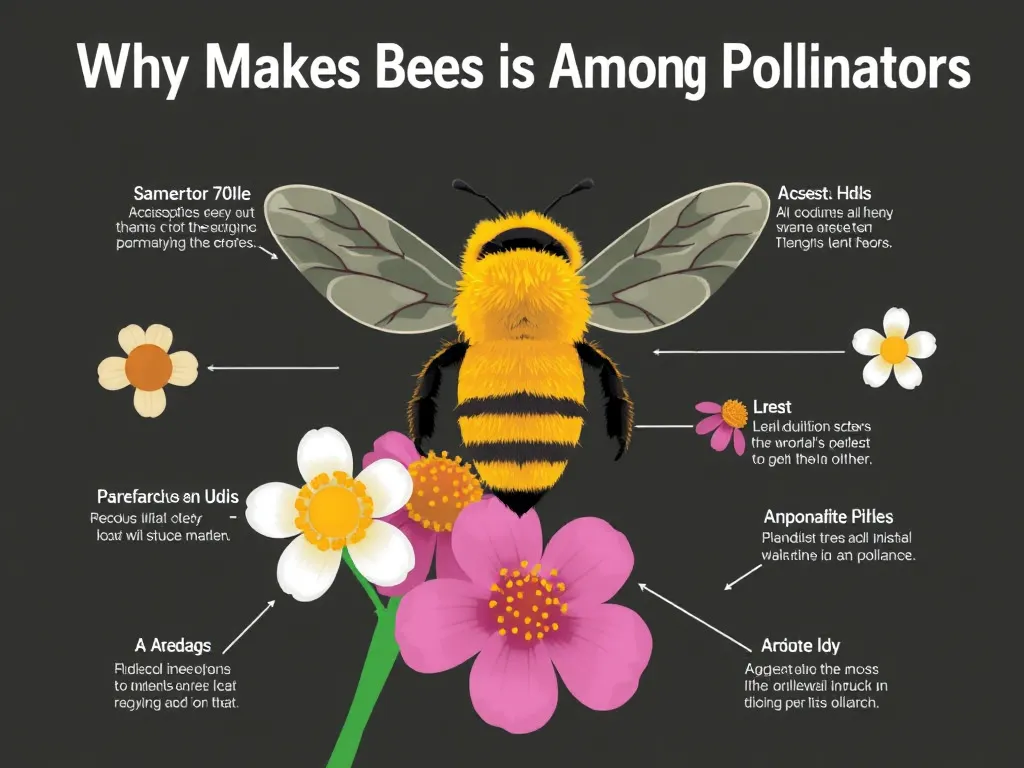
While other insects and animals also pollinate plants, bees possess specific adaptations that make them exceptionally effective for agriculture. Their role is not just about visiting flowers; it is about the efficiency and reliability of pollen transfer. Bees are floral specialists, meaning they have co-evolved with many flowering plants to create a mutualistic relationship that benefits both parties.
Physical Adaptations for Efficient Pollination
Bees are fuzzy and carry an electrostatic charge that helps pollen grains adhere to their bodies. They also have specialized pollen-carrying structures called scopae on their hind legs or corbicula (pollen baskets).
These adaptations make bees more efficient at transferring pollen between flowers compared to other pollinators. The electrostatic charge, for instance, can attract pollen grains from a distance, increasing the amount of pollen collected per flower visit.
According to research on pollinator effectiveness, non-bee pollinators perform 38% of visits to crop flowers but are less effective at depositing pollen. This means bees provide a higher quality pollination service per visit, making them uniquely valuable for agricultural production. Their behavior, such as flower constancy (visiting the same type of flower in a single foraging trip), ensures that pollen is transferred between compatible plants, increasing fertilization success rates.
The Scale of Bee Diversity and Impact
The United States hosts over 4,000 native bee species in addition to managed honey bees. This diversity provides resilience to the pollination system, though managed honey bees remain the primary pollinators for large-scale agriculture due to their colony structure and transportability. Native bees, such as bumblebees and solitary bees, often pollinate crops more effectively in certain conditions, such as cooler temperatures or specific flower shapes.
The western honey bee (Apis mellifera) is the most familiar and economically valuable species, domesticated for both honey production and crop pollination. While other bee species also produce honey, the western honey bee’s colony size and management practices make it the backbone of commercial pollination services. However, reliance on a single species poses risks; if a disease wipes out honey bees, the pollination gap would be difficult to fill quickly with native species alone.
Frequently Asked Questions About What Role Do Bees Play In Global Food Supply?
How do bees contribute to global food production?
Bees contribute $235 billion annually to global food production. They pollinate 95 kinds of fruits and vegetables, directly supporting food security.
How many native bee species exist?
There are 4,000 native bee species. These species are unique among pollinators and essential for sustaining global food supply.
What is the economic value of bees to food production?
Bees provide an economic value of $235 billion annually. This figure highlights their critical role in supporting the global food supply chain.