A food web is an interconnected network of multiple food chains, illustrating how energy flows through an ecosystem from producers to apex predators. When an animal goes extinct, it removes a vital link, triggering trophic cascades where the loss of one species causes prey overpopulation or predator starvation, reducing ecosystem stability and causing further extinctions. Understanding this mechanism is critical for protecting global Wildlife.
- A food web consists of all food chains in a single ecosystem, showing how organisms rarely rely on a single food source.
- Animal extinctions break food webs by removing connections, leading to trophic cascades and loss of stability.
- Keystone species, like sea otters, have a disproportionate effect on their environment; their loss can collapse entire habitats.
What Defines a Food Web and Its Components?
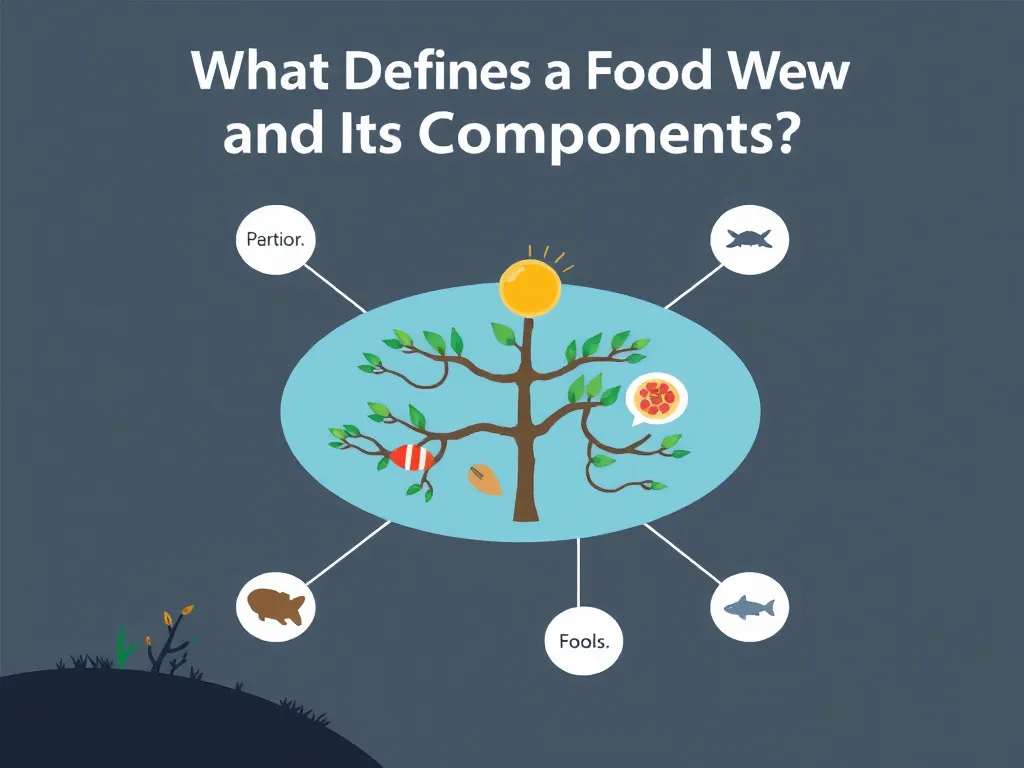
A food web maps the complex, overlapping paths of energy movement within an ecosystem. It is not a simple chain but a network that shows how organisms are linked through feeding relationships.
According to National Geographic Education (2023), a food web consists of all the food chains in a single ecosystem. This structure includes three main components that work together to sustain life.
Producers, Consumers, and Decomposers
The foundation of any food web is the producers, primarily plants and algae that create energy via photosynthesis. Consumers, including herbivores and carnivores, eat other organisms to obtain energy.
Decomposers, such as bacteria and fungi, break down dead organic matter, recycling nutrients back into the system. These groups form the base, middle, and cleanup crew of the ecological network.
Interconnected Food Chains
Each living thing in an ecosystem is part of multiple food chains. A single food chain is one possible path that energy and nutrients may take, but a food web includes all these overlapping paths.
This interconnectedness means that removing one species can affect multiple others, as highlighted in research from NOAA on aquatic food webs. The structure shows that organisms rarely depend on just one food source, making the web resilient yet vulnerable to breaks.
Energy Flow and Trophic Levels
Energy flows from the sun to producers, then to consumers, and finally to decomposers. Trophic levels classify organisms based on their position in this flow, from autotrophs (producers) to heterotrophs (consumers).
This classification, pioneered by ecologists like Charles Elton, helps scientists understand how disruptions at one level ripple through the entire web. The loss of a species at any level can alter this energy flow, leading to instability.
How Do Animal Extinctions Break Food Webs?
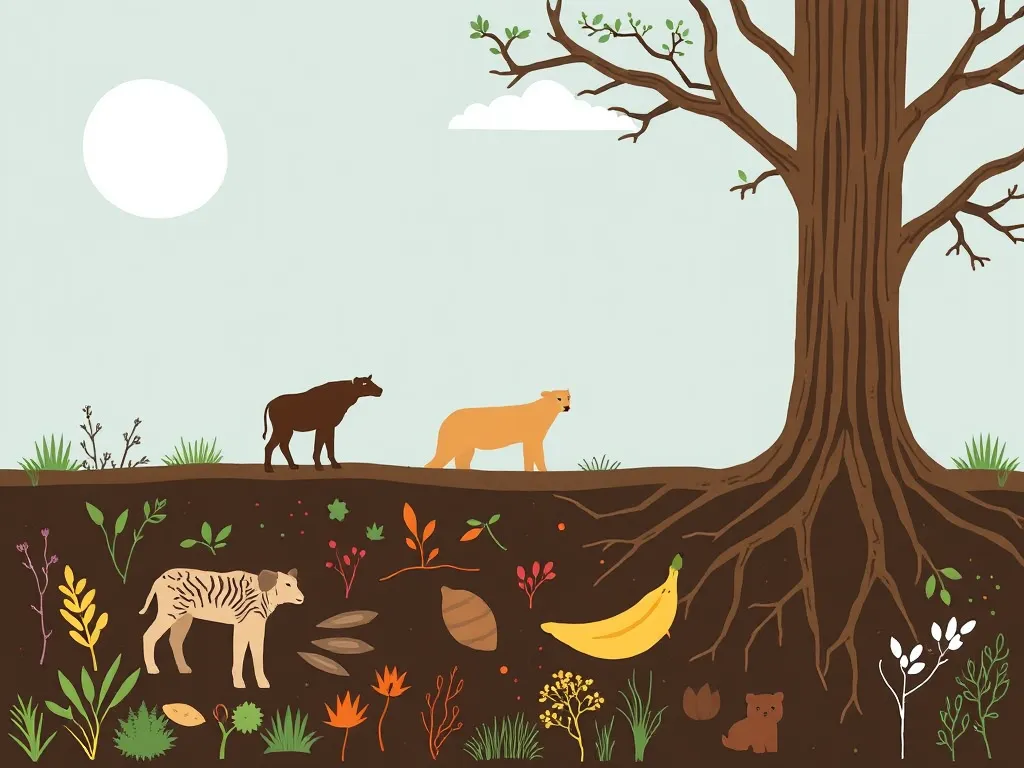
When an animal goes extinct, the food web is severely weakened or broken, leading to lasting ecological disruption. This happens because extinctions remove critical links in the network, causing immediate and indirect effects that cascade through the ecosystem. Research from PMC (2025) shows that species extinctions can trigger bottom-up extinction cascades, driven by the loss of resources for consumers higher up in the food web.
Trophic Cascades and Top-Down Collapse
The extinction of a top predator allows its prey populations to boom, resulting in overconsumption of plants or lower-level species. This top-down collapse can destroy habitats. For example, removing top predators like sea otters causes sea urchin populations to explode, which then destroy kelp forests.
This eliminates habitats for numerous other species, as documented in studies by Estes et al. (1978). The loss of a keystone species, defined by Robert T. Paine (1969) as a species with a disproportionate effect on its environment, often initiates these cascades.
Loss of Food Source and Bottom-Up Collapse
If a herbivore or key prey species goes extinct, predators that rely on them for food will starve. This bottom-up collapse reduces the population of higher-level consumers.
For instance, the loss of krill, a abundant organism providing food for many species, would interrupt the food web, according to Baldwin (via AccuWeather, 2025). The interconnected nature of food webs means that even small extinctions can have large ripple effects.
Loss of Stability and Domino Effect
A food web depends on its connections. The more species that disappear, the more fragile the ecosystem becomes, often leading to a domino effect of further extinctions.
National Geographic Education (2023) notes that the structure of food webs shows that removing one species can affect multiple others. This loss of stability makes ecosystems less resilient to other stresses, such as climate change or pollution.
Direct and Indirect Impacts
Extinctions cause both immediate and long-term damage. Direct effects include immediate hunger or loss of predators for connected species.
Indirect effects, such as disease outbreaks from overpopulated prey species (e.g., too many deer) or species forced into new areas to find food, can be equally damaging. These impacts highlight the fragility of ecological networks when key links are removed.
What Are the Real-World Examples and Solutions?
Real-world examples illustrate how food webs break and what can be done to prevent it. The sea otter and kelp forest case is a classic example of a trophic cascade.
When sea otters were hunted to near extinction, sea urchin populations exploded, decimating kelp forests and the species that depend on them. This loss of heterogeneity served as a loss of habitat for fish and eagle populations, as noted in the ecological extinction research from Wikipedia (sourced from Estes et al., 1978).
The Role of Keystone Species
Keystone species, like the ochre starfish studied by Robert T. Paine (1969), have a large effect on their environment relative to their abundance. Paine’s experiments showed that removing the starfish led to mussels outgrowing other species, reducing biodiversity from 15 to just one species over ten years.
Protecting keystone species is essential for maintaining food web stability. For a related story on how predators change ecosystems, see the Yellowstone trophic cascade story.
Conservation and Ecosystem Management
To prevent food web breaks, conservation efforts must focus on protecting biodiversity and habitat. This includes addressing threats like urbanization, which pushes wildlife to the edge of extinction. For more on this, read about how urbanization impacts wildlife.
Additionally, understanding what happens when top predators disappear is crucial, as explored in the effects of predator loss on ecosystems. These steps help maintain the connections that sustain Wildlife and ecosystem health.
Future Outlook and Research
Ongoing research, such as the 2025 study on species loss in key habitats, continues to reveal how extinctions accelerate regional food web collapse. By synthesizing data from multiple sources, scientists can better predict and mitigate these impacts. The goal is to preserve the intricate networks that support life on Earth, ensuring that food webs remain intact for future generations.
Frequently Asked Questions About What Is A Food Web And How Do Animal Extinctions Break It?
What is a food web and how can extinction disrupt one?
A food web is a complex network of connections between plants, animals, and other organisms that eat—and are eaten by—each other. Because life forms in a food web depend on one another, the extinction of one species can spell trouble for the entire ecosystem.
What is a food web and how does it work?
A food web consists of all the food chains in a single ecosystem, showing how energy flows through an ecosystem. Each living thing is part of multiple food chains, and unlike a food chain, a web shows the complex network of who eats whom.
How to explain food web to a child?
A food web consists of all the food chains in a single ecosystem. Each living thing in an ecosystem is part of multiple food chains, showing how energy and nutrients move through the environment.