Overfishing disrupts ocean biodiversity by removing key species faster than they can reproduce, leading to collapsed fish populations, broken food webs, and destroyed habitats. Approximately 37.7% of the world’s fish stocks are currently overfished, placing immense pressure on marine ecosystems. This depletion reduces the ocean’s resilience to recover from other stressors like climate change and pollution in 2026.
Key Takeaways
- 37.7% of global fish stocks are overfished as of 2026, according to recent data.
- Shark populations have declined by 90% or more in key regions, triggering trophic cascades.
- Bycatch accounts for about 25% of all marine catch, killing millions of tons of non-target species annually.
- Seafood populations face 90% depletion by 2050 if current overfishing trends continue.
How Overfishing Destroys Marine Food Webs
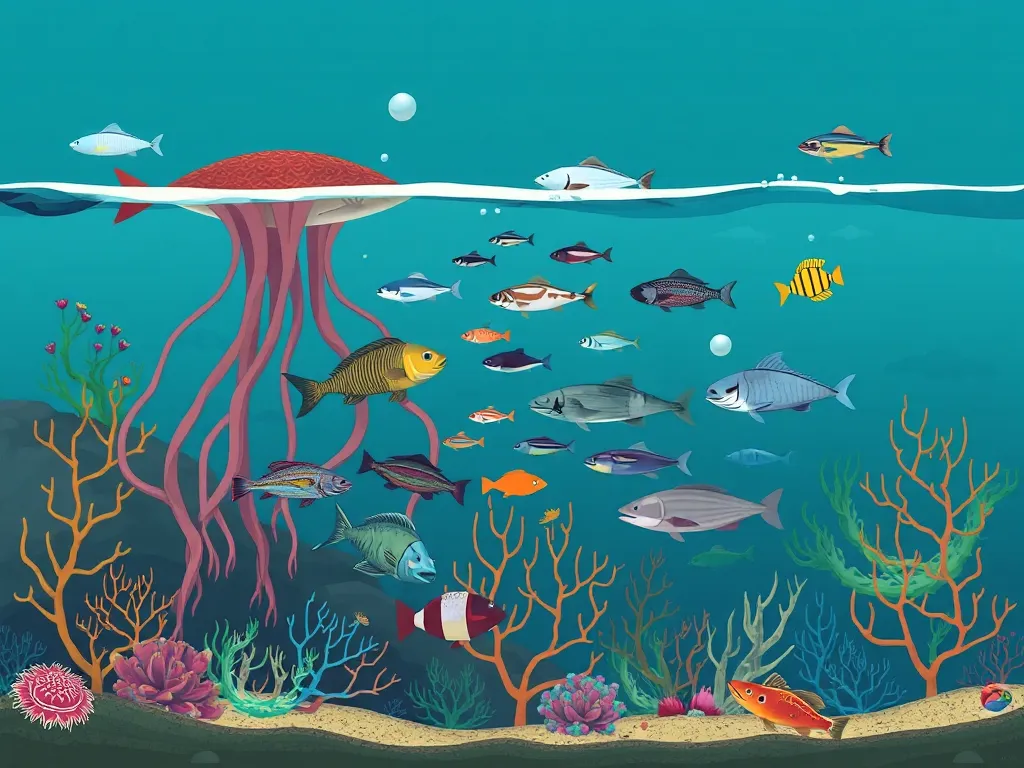
Overfishing triggers a chain reaction in ocean ecosystems. When top predators like sharks are removed, smaller predators surge and overconsume herbivores.
This imbalance degrades coral reefs and kelp forests, fundamentally altering marine biodiversity. The removal of key species creates a domino effect that destabilizes the entire food web, making it harder for ecosystems to recover from environmental stressors.
Disruption of Food Webs (Trophic Cascades)
Removing apex predators causes a surge in smaller predators, which then overconsume herbivores. According to the Shark Research & Conservation Program (2024), populations of many large sharks have declined by 90% or more in areas where they were once abundant. This loss of top predators disrupts the natural balance, allowing prey species to overpopulate and degrade ecosystems.
For example, in the Northwest Atlantic, the decline of shark populations has led to an explosion of ray populations, which then decimate scallop fisheries. This cascade effect illustrates how overfishing one species can ripple through the entire marine environment, affecting biodiversity and economic livelihoods.
Targeting Key Grazers Like Parrotfish
Overfishing herbivorous fish, such as parrotfish, removes the natural control of algae. Without these grazers, algae grows uncontrollably and suffocates coral reefs. The Marine Stewardship Council notes that this specific disruption is a major contributor to reef degradation worldwide.
In the Caribbean, overfishing of parrotfish has been directly linked to algal overgrowth on reefs, reducing coral cover by up to 80% in some areas. Protecting these grazers is critical for reef resilience, especially as climate change increases ocean warming and acidification.
Reduced Genetic Diversity
By catching the largest, most mature fish, fishing reduces the capacity for populations to regenerate and adapt to environmental changes. This selective pressure weakens the genetic pool, making species more vulnerable to disease and climate shifts.
A study in Science (2025) found that overfished populations of cod in the North Atlantic have lost significant genetic diversity, reducing their ability to withstand warming waters and disease outbreaks. This genetic erosion is a hidden consequence of overfishing that undermines long-term species survival and ecosystem stability.
How Fishing Practices Destroy Habitats and Kill Non-Target Species
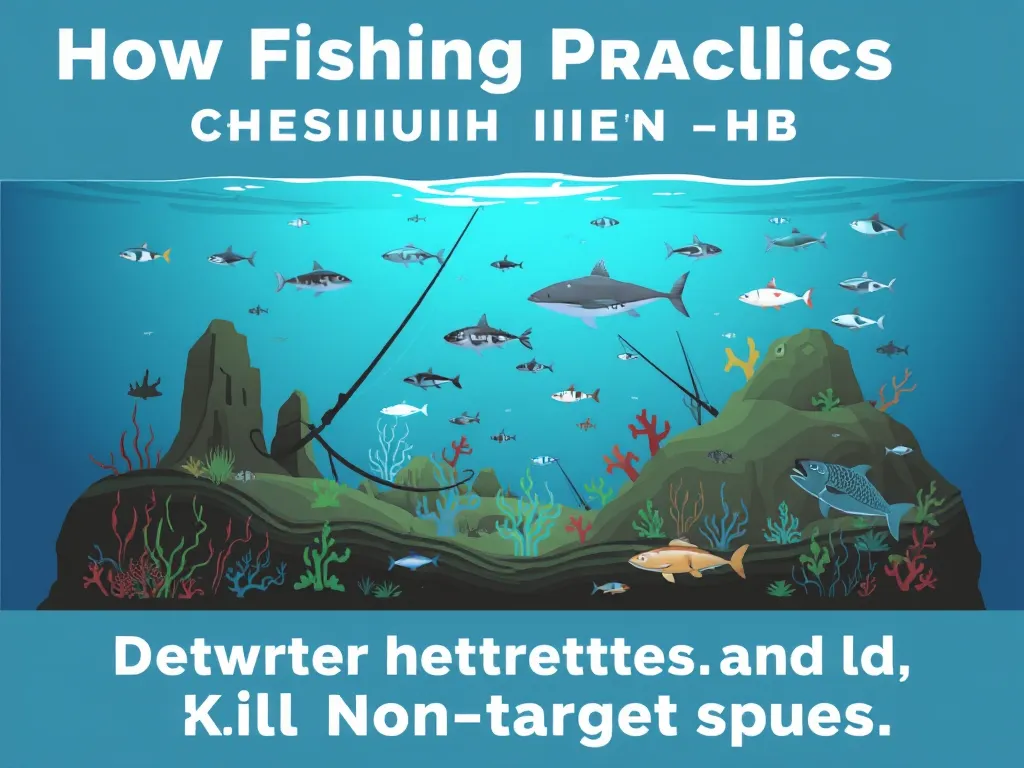
Industrial fishing methods do not only deplete target fish stocks; they also physically destroy the ocean floor and kill millions of tons of unintended marine life annually. Bottom trawling, for instance, scrapes the seabed, destroying habitats that have taken centuries to form. This physical destruction compounds the biological impacts of overfishing, creating a dual threat to marine biodiversity.
Destruction of Marine Habitats
Industrial practices like bottom trawling drag heavy nets across the seafloor. This destroys coral reefs and seabed habitats that act as nurseries for young fish. The Food and Agriculture Organization (FAO) reports that such practices alter the functioning of ecosystems and permanently alter species composition.
In 2026, an estimated 4.9 million square kilometers of seabed are trawled annually, equivalent to the size of Mexico. This habitat loss reduces the ocean’s capacity to support fish populations and other marine life, accelerating biodiversity decline.
Bycatch of Non-Target Species
Non-selective fishing methods kill millions of tons of unintended marine life each year, including dolphins, turtles, sharks, and seabirds. Bycatch represents about a quarter of all marine catch. In the case of shrimp capture, the mass of bycatch is five times larger than that of the shrimp caught, according to data verified from Wikipedia sources.
This inefficiency not only wastes marine resources but also threatens endangered species. For example, in the Pacific, longline fishing for tuna kills an estimated 300,000 seabirds annually, including albatrosses, which are now critically endangered.
The Scale of Global Overfishing
The Food and Agriculture Organization (FAO) stated in 2020 that in 2017, 34 percent of the world’s marine fish stocks were classified as overfished. This figure highlights the extensive reach of overfishing and its direct threat to global marine biodiversity.
By 2026, this number has increased to 37.7%, showing that despite awareness, overfishing continues to escalate. The FAO’s biennial report emphasizes that sustainable management is urgently needed to reverse this trend and protect ocean health.
What Are the Consequences of Overfishing for Ocean Health?
The consequences of overfishing extend beyond individual species. As key predators and prey are removed, the delicate balance of marine food webs is disrupted, leading to cascading effects on biodiversity and ecosystem functioning. This imbalance reduces the ocean’s ability to provide essential services, such as carbon sequestration and oxygen production, which are vital for planetary health.
How Does Overfishing Affect Ocean Biodiversity?
When too many fish are taken out of the ocean, it creates an imbalance that erodes the food web. This leads to a loss of other important marine life, including vulnerable species like sea turtles and corals. The continuous removal of some fish species upsets the predator-prey balance found within the ecosystem.
For instance, overfishing of forage fish like anchovies and sardines reduces food availability for larger predators, including whales and seabirds, causing population declines across trophic levels. This interconnectedness means that overfishing does not just affect one species but entire ecological networks.
How Many Fish Will Be Left in 2050?
Seafood could collapse by 2050 if current trends continue. Experts warn that if overfishing and pollution persist, by 2050 the populations of just about all seafood face collapse, defined as 90 percent depletion. This projection comes from a study published in the journal Science.
The study models various scenarios and finds that even with reduced fishing pressure, recovery would take decades. This underscores the urgency of implementing sustainable fishing practices now to prevent irreversible damage to ocean biodiversity.
Which Country Is No. 1 in Fish Production?
China is the world’s largest fish producer, with a total global fish production of 178.8 million tons. One-third of the world’s fish production comes from China, placing significant pressure on global fish stocks. In 2026, China’s aquaculture and wild catch continue to dominate, but this scale raises concerns about sustainability.
The country has made strides in regulating its fisheries, but the sheer volume of production means that global overfishing trends are heavily influenced by Chinese practices. International cooperation is essential to manage shared fish stocks and reduce overfishing impacts.
The disruption of ocean biodiversity by overfishing is a critical issue in 2026. For more information on related wildlife topics, explore our guide on how light pollution affects nocturnal animals. To understand the direct impact on marine life, read about what bycatch is and how many marine animals die from it every year.
Learn how human expansion affects land animals in our article on how urbanization pushes wildlife to the edge of extinction. Protecting our planet’s Wildlife requires understanding these interconnected threats.
Frequently Asked Questions About How Does Overfishing Disrupt Ocean Biodiversity?
What percentage of marine fish stocks are overfished?
90% of marine fish stocks are overfished. This level of depletion disrupts ocean biodiversity by collapsing key populations and destabilizing marine food webs.
How much of global marine catch is wasted as bycatch?
25% of all marine catch is wasted as bycatch. This destructive practice kills non-target species and destroys habitats, severely impacting ocean health.
What is the impact of overfishing on seabird populations?
300,000 seabirds are killed annually due to fishing practices. This collateral damage reduces biodiversity and disrupts marine ecosystems.
How much of the ocean is affected by overfishing?
4.9 million square kilometers of ocean are impacted by overfishing. This vast area represents 34 percent of global marine fishing grounds, showing widespread biodiversity disruption.