Why the Platypus Confused Scientists for Decades After Discovery
When the first platypus specimen arrived in England in 1798, scientists were utterly baffled. This creature had the bill of a duck, the feet of an otter, the tail of a beaver, and fur like a mammal—yet it laid eggs like a bird or reptile.
Naturalists couldn’t reconcile these contradictory features, leading many to believe it was an elaborate hoax. The platypus (Ornithorhynchus anatinus) would go on to confuse scientists for nearly a century, challenging our understanding of biological classification and evolutionary biology.
- The platypus baffled scientists with its mix of mammalian, reptilian, and avian traits
- Early naturalists suspected it was a hoax with stitched-together body parts
- It took nearly 90 years for scientists to accept it as a legitimate egg-laying mammal
- Modern discoveries continue to reveal new bizarre traits like biofluorescence
Initial Hoax Suspicions: When Science Met the Impossible
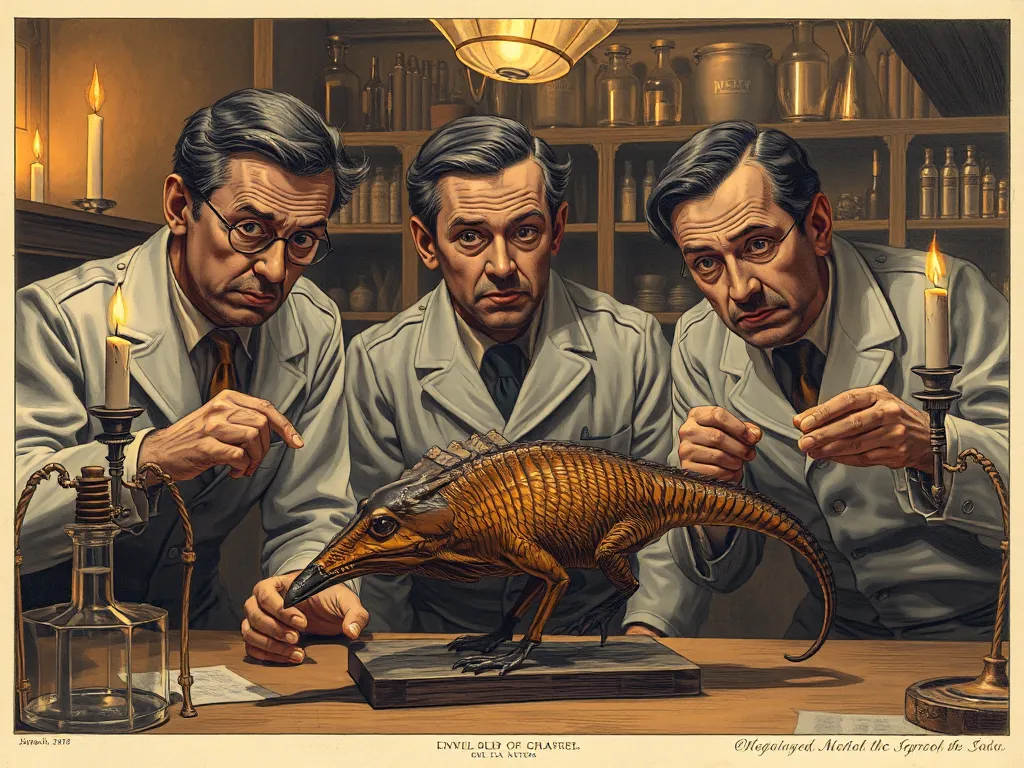
George Shaw’s Stitch Hunt: The First Scientific Reaction
When the first platypus pelt reached England in 1798, zoologist George Shaw was so incredulous that he actually checked the specimen for stitches. The Natural History Museum curator couldn’t believe that a creature could possess a duck’s bill, otter-like body, and webbed feet all on the same animal. Shaw reportedly tried to find evidence of forgery by cutting the pelt with scissors, searching for signs that someone had stitched together parts of different animals to create this impossible creature.
The scientific community’s initial reaction wasn’t just skepticism—it was outright dismissal. Many prominent naturalists of the era believed the platypus must be a prank played on European scientists by Australian colonists or Aboriginal Australians. The creature’s combination of features was so contradictory to the established biological classifications that it seemed impossible for such an animal to exist in nature.
European Skepticism and the “Impossible Creature” Debate
Throughout the early 19th century, European scientists remained deeply divided about the platypus’s authenticity. Some, like French naturalist Georges Cuvier, initially dismissed it as a hoax, while others debated whether it might represent a transitional form between different classes of animals. The debate intensified as more specimens arrived from Australia, each time challenging the prevailing notions of biological classification.
The scientific community struggled to reconcile the platypus with the Linnaean system of classification, which had been the foundation of biology for over a century. How could one animal possess fur and produce milk (mammalian traits) while also laying eggs and having a cloaca (reptilian/bird-like traits)? This biological contradiction seemed to violate the fundamental principles of zoology that had been established over centuries.
The Journey from Hoax to Scientific Legitimacy
It wasn’t until 1827 that the scientific consensus began to shift, thanks to Scottish zoologist Robert Knox. After examining multiple specimens, Knox presented evidence that the platypus was indeed a real animal, not a fabrication—similar to how the coelacanth’s rediscovery challenged scientific understanding.
Still, even after accepting its existence, scientists remained puzzled about its classification. The debate continued for decades, with some arguing it was a mammal that had somehow evolved egg-laying capabilities, while others suggested it might represent an entirely new class of animals.
The turning point came in 1884 when Scottish biologist William Caldwell definitively proved that female platypuses lay eggs and then nurse their young through milk secretion—a combination of traits that would eventually lead to their classification as monotremes, a specialized order of egg-laying mammals. This discovery resolved the classification debate but only deepened the scientific fascination with this bizarre creature that seemed to break all the rules of biological classification.
Biological Contradictions: Why the Platypus Defied Classification
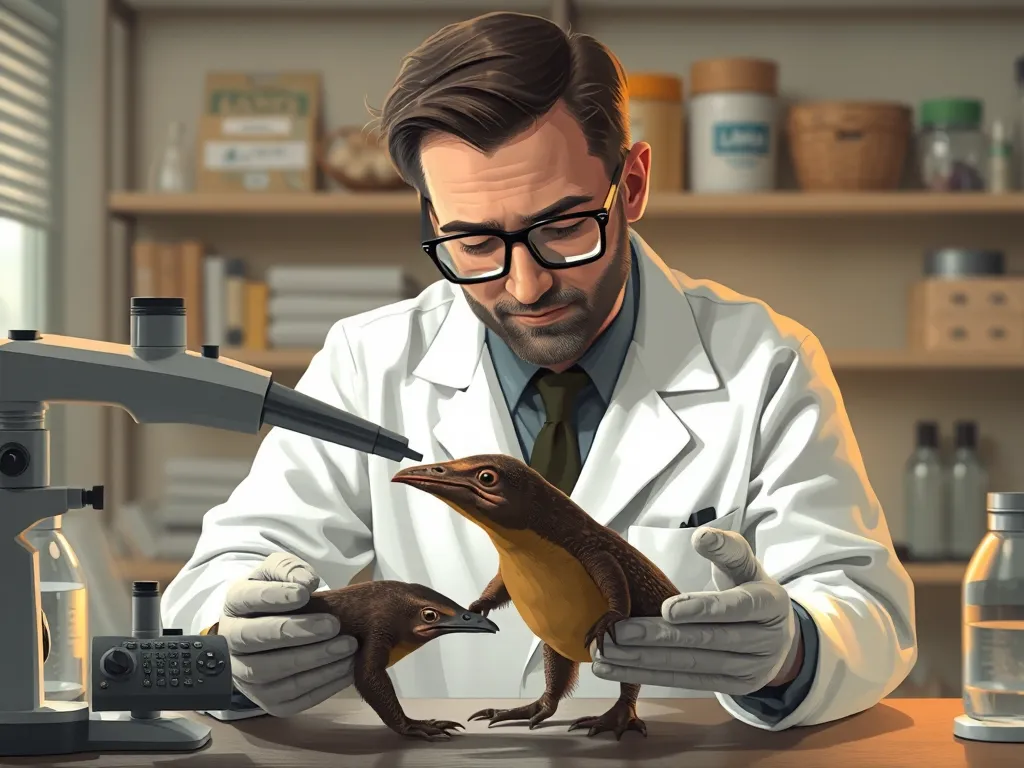
The Mammal-Reptile-Bird Paradox
The platypus presents one of the most striking examples of evolutionary mosaic in the animal kingdom, combining characteristics that should have belonged to entirely different classes. Unlike any other mammal, female platypuses lack nipples and instead secrete milk through specialized skin pores, which the young lap up. At the same time, they lay soft, leathery eggs like reptiles and birds, rather than giving birth to live young.
The creature’s sensory systems are equally contradictory. While adult platypuses lose their teeth, they develop an extraordinary hunting ability using 40,000 electroreceptors on their bill that can detect the electrical fields generated by muscle contractions in their prey.
This unique electrical sensing ability is reminiscent of how electric eels generate powerful electrical fields to stun their prey. This unique sensory system allows them to hunt underwater with their eyes and ears completely closed, a method that combines elements from multiple evolutionary lineages.
| Biological Feature | Mammal Traits | Non-Mammal Traits |
|---|---|---|
| Reproduction | Produces milk for young | Lays soft, leathery eggs |
| Body Covering | Fur (dense, waterproof) | Bill with electroreceptors |
| Thermoregulation | Mammalian temperature control | Bird-like lower body temperature |
| Skeletal Features | Mammalian jaw structure | Reptile-like venom glands |
This table illustrates the remarkable biological contradictions that made the platypus so challenging to classify. The combination of these features represents an evolutionary snapshot—a living fossil that preserves characteristics from an ancient period when mammalian evolution was still sorting itself out.
What’s the weird fact about platypus?
Perhaps the most bizarre feature of the platypus is its venomous spurs. Male platypuses possess hollow, sharp spurs on each hind leg connected to venom-producing glands.
Perhaps the most bizarre feature of the platypus is its venomous spurs. Male platypuses possess hollow, sharp spurs on each hind leg connected to venom-producing glands—a remarkable defensive mechanism similar to how the mantis shrimp punches with the force of a bullet to defend itself.
The composition of platypus venom is equally fascinating. Research has revealed that it contains over 80 different toxins, many of which are unique to this species.
Scientists have identified peptides that can disrupt cell membranes, inhibit neurotransmitter function, and cause prolonged pain. What makes this particularly puzzling is that venom is typically associated with defensive adaptations or predatory behavior, but the platypus is neither a dangerous predator nor particularly vulnerable to attack from animals that would require such potent venom.
Unique Reproductive Strategies That Confirmed Evolution
The platypus’s reproductive system represents one of the most compelling pieces of evidence for evolutionary theory. The fact that it lays eggs yet produces milk places it in a unique evolutionary position as a monotreme—one of only five mammal species (along with echidnas) that exhibit this reproductive strategy. This combination of traits suggests that monotremes diverged from other mammals very early in evolutionary history, preserving ancestral characteristics while developing specialized adaptations.
Studies of platypus reproduction have revealed additional complexities. Female platypus burrows contain multiple chambers, including incubation chambers where they maintain stable temperatures for their eggs.
After hatching, the young remain in the burrow for several months, feeding on their mother’s milk secreted through skin pores rather than suckling from nipples. This extended parental care period provides further evidence that despite their primitive reproductive traits, platypuses exhibit sophisticated mammalian behaviors.
Modern Mysteries: New Discoveries That Continue to Amaze
What unique trait did scientists discover the platypus has in 2020?
In 2020, scientists made a startling discovery that added another layer of weirdness to the platypus: biofluorescence. Researchers found that platypus fur glows green or cyan under ultraviolet light, a phenomenon observed in only a few mammal species. This biofluorescence is caused by structural proteins in the fur that reflect UV light as visible light, creating an ethereal glow that’s invisible to the human eye but detectable by many nocturnal animals — Wildlife.
This discovery was particularly surprising because biofluorescence was previously thought to be rare in mammals, with only flying squirrels and some marsupials known to exhibit this trait. The function of biofluorescence in platypuses remains unclear, though scientists speculate it might play a role in communication, camouflage, or mate selection. The finding illustrates that even after centuries of study, the platypus continues to reveal new secrets about biological adaptation and evolutionary innovation.
Does the platypus disprove evolution? The Genetic Evidence
Contrary to what some might claim, the platypus doesn’t disprove evolution—it actually provides compelling evidence for it. Genetic studies have revealed that the platypus genome contains a fascinating mix of mammalian, reptilian, and avian genes, reflecting its evolutionary position as an early branch of mammalian evolution. These studies show that monotremes split from other mammal lineages approximately 187 million years ago, preserving many ancestral traits while developing unique adaptations.
One particularly striking genetic discovery is the platypus’s unusual sex chromosome system. While most mammals have an XX female/XY male system, platypuses have 10 sex chromosomes—five X and five Y chromosomes in males. This complex system suggests that the platypus represents an early stage in the evolution of sex determination in mammals, providing valuable insights into how genetic mechanisms can evolve over time.
The Platypus in 2026: Still Surprising Scientists
Nearly 230 years after its initial discovery, the platypus continues to surprise scientists with new research findings. In 2026, researchers announced the discovery of additional electroreceptor variations in the platypus bill that allow for even more precise detection of prey movements. These findings suggest that the platypus’s sensory capabilities are even more sophisticated than previously understood, representing an evolutionary solution to the challenges of hunting in murky underwater environments.
Conservation concerns have also become increasingly prominent in platypus research. Scientists warn that the platypus could be extinct within the next 50 years due to habitat loss, climate change, and pollution.
This threat has intensified research efforts to understand the species’ biology and develop effective conservation strategies. Despite centuries of study, the platypus remains one of nature’s most enigmatic creatures—a living testament to the unexpected paths that evolution can take and a reminder of the mysteries still waiting to be discovered in the natural world.
The platypus’s journey from scientific hoax to evolutionary icon demonstrates how nature can defy our expectations and challenge our understanding of biological classification. As research continues to reveal new aspects of this remarkable creature, it serves as a powerful reminder that the natural world still holds many secrets waiting to be discovered. The study of the platypus not only advances our knowledge of evolutionary biology but also highlights the importance of preserving these unique animals for future generations to study and appreciate.
Frequently Asked Questions About Why The Platypus Confused Scientists For Decades After Discovery
Why did scientists initially think the platypus was a hoax?
Scientists initially suspected the platypus was a hoax because it combined seemingly impossible biological traits – a mammal that lays eggs, has a duck-like bill with electroreceptors, and venom glands in its hind legs.
What biological features made the platypus difficult to classify?
The platypus defied classification due to its unique combination of mammal and non-mammal traits. It produces milk for young (mammal trait) but also lays soft, leathery eggs (non-mammal trait). It has dense, waterproof fur (mammal trait) but also a bill with electroreceptors (non-mammal trait).
How does the platypus combine mammal and non-mammal traits?
The platypus combines mammal and non-mammal traits across multiple biological systems: In reproduction, it produces milk for young (mammal trait) while laying soft, leathery eggs (non-mammal trait).