Counting wild animal populations is rarely a simple headcount. Instead, scientists rely on statistical sampling methods like aerial surveys, mark-recapture, and distance sampling to estimate numbers accurately. These techniques allow researchers to monitor Wildlife health without counting every individual.
The challenge is that animals move, hide, and live in vast, inaccessible areas, making total counts impractical. By 2026, these methods have become more precise with the integration of digital tools and advanced statistics.
Key Takeaways
- Scientists use sampling, not total counts, to estimate populations.
- The mark-recapture formula N = (M × C) / R is a core statistical tool.
- Aerial surveys and camera traps are standard for large or hidden species.
Why Direct Counting Fails for Wildlife
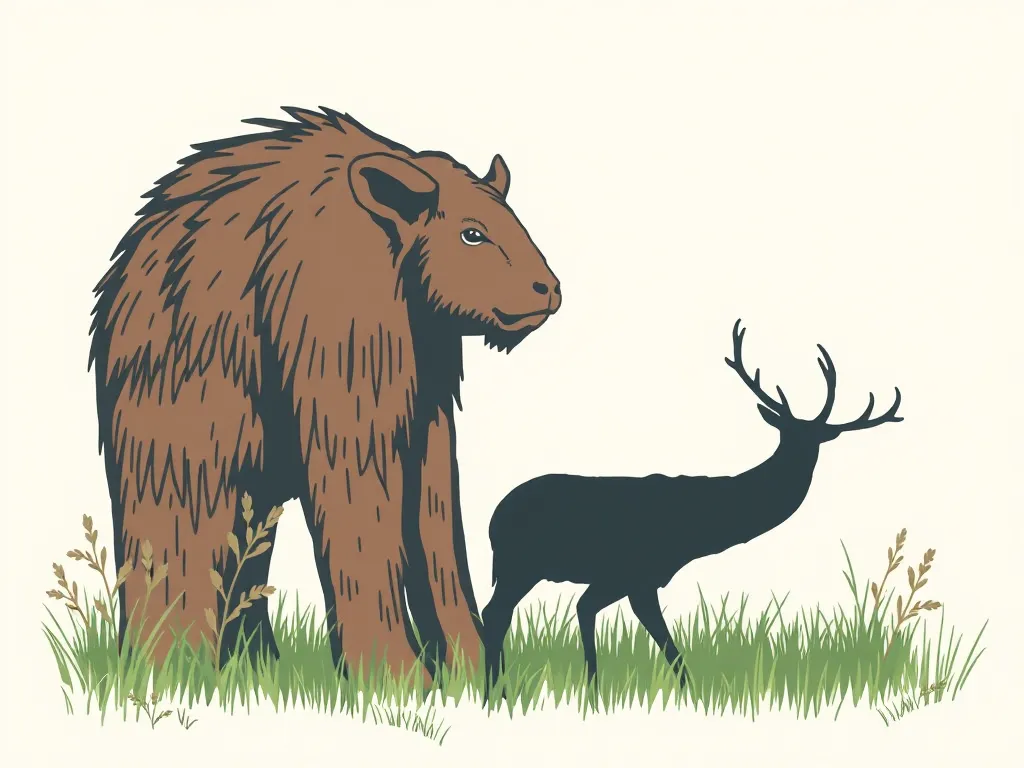
Counting every animal in a habitat is usually impossible, expensive, and too time-consuming. Biologists instead gather data from a representative area and use statistics to extrapolate the total population. This approach is essential for managing conservation status categories like vulnerable or endangered.
For example, a 2025 report by the International Union for Conservation of Nature (IUCN) noted that over 44,000 species are threatened with extinction, making accurate population tracking critical. Direct counting would require shutting down entire ecosystems to human activity, which is not feasible. Statistical methods allow for continuous monitoring with minimal disturbance.
What is the core formula for mark-recapture?
The mark-recapture method uses the formula N = (M × C) / R to estimate total population size. Here, N is the population estimate, M is the number of marked animals, C is the total captured in the second sample, and R is the number of recaptured marked animals. According to research by Krebs (2009), this method assumes the probability of capture is the same for all individuals.
In practice, this means researchers must ensure that marking does not affect an animal’s behavior or survival. For instance, a 2024 study on river otters showed that lightweight tags had no significant impact on movement patterns, validating the method’s assumptions. The formula is foundational because it translates a small sample into a reliable population estimate, which is crucial for setting hunting quotas or conservation policies.
How do scientists track animal populations?
Scientists track animal populations using manual observation, laboratory research, and radio tracking technology. They combine direct sightings with indirect signs like scat, tracks, and nests to estimate density and presence. This multi-method approach ensures data accuracy across different species and habitats.
For example, in 2026, researchers in the Serengeti use a combination of GPS collars on lions and drone footage to monitor population dynamics in real-time. Radio tracking involves attaching transmitters to animals, which send signals to satellites, allowing scientists to map migration routes and habitat use.
Laboratory research includes analyzing genetic samples from hair or feces to identify individuals and estimate relatedness. This integrated tracking system provides a holistic view of population health, from birth rates to mortality causes.
Core Methods for Estimating Populations

Researchers use three primary methods to count wild animal populations. Each method suits different species and environments, from open plains to dense forests. These methods are not used in isolation; scientists often combine them to cross-verify data.
In 2026, the trend is toward hybrid approaches that leverage both field observations and computational models. The choice of method depends on factors like species behavior, habitat accessibility, and available resources. For instance, aerial surveys are ideal for large mammals in open areas, while mark-recapture works best for smaller, mobile species in defined territories.
Capture-Mark-Recapture (CMR)
The classic method for counting animals involves physically capturing, marking, and recapturing individuals. Researchers capture a sample of animals, mark them with tags or bands, release them, and later capture another sample to see what percentage is marked. The ratio of marked to unmarked animals allows them to estimate total population size.
This method was first used for ecological study in 1896 by C.G. Johannes Petersen to estimate plaice populations. In modern applications, marks can include ear tags, leg bands, or even chemical markers like stable isotopes.
A 2025 study on African elephants used ear notching combined with genetic sampling to achieve a 95% confidence interval in population estimates. The method’s strength lies in its simplicity and directness, but it requires careful planning to avoid bias, such as ensuring the second sample is truly random.
Aerial Surveys
Helicopters or planes are used to survey large or hard-to-reach areas, often in winter when leaves are off trees and snow makes animals more visible. These are commonly used for large mammals like moose or elk. Aerial surveys provide broad coverage and are effective for counting herds in open terrain.
In 2026, drones have become a cost-effective alternative, allowing for quieter and more frequent surveys. For example, the U.S.
Fish and Wildlife Service uses drones to count waterfowl populations in the Prairie Pothole Region, achieving accuracy within 10% of traditional methods. Aerial surveys are limited by weather conditions and the need for trained observers, but they remain indispensable for monitoring species like caribou in the Arctic, where ground access is impossible.
Distance Sampling Along Transects
Researchers walk or fly in straight lines (transects), recording how many animals they see and their distance from the line. This allows for statistical estimation of density. According to the U.S.
National Park Service (2021), integrating distance sampling with minimum counts improves monitoring precision for species like mountain goats. In practice, observers use laser rangefinders to measure distances accurately, and software like Distance 8.0 analyzes the data to account for detection probability.
This method is particularly useful for elusive species like forest-dwelling birds, where direct counts are unreliable. A 2026 application in the Amazon rainforest used aerial transects to estimate jaguar density, revealing a higher population than previously thought.
Supporting Techniques and Tools
Beyond the core methods, scientists use additional tools to refine population estimates. These techniques help verify data and study species that are difficult to observe directly. In 2026, the integration of artificial intelligence and machine learning has enhanced these tools, allowing for automated data analysis and real-time monitoring.
For instance, AI algorithms can now identify individual animals from camera trap images with over 90% accuracy, reducing the workload for researchers. These supporting techniques are critical for filling gaps left by core methods, especially for cryptic or nocturnal species.
Camera Trapping with Motion Sensors
Camera traps are motion-sensitive cameras placed along trails to photograph animals. They are triggered by passive infrared sensors and operate silently, minimizing disturbance. Camera trapping is used to identify individuals (like tigers by stripes) and track population trends over time.
According to Fida (2024), camera traps are cost-effective and provide proof of species presence without human interference. In 2026, camera traps are often connected to cellular networks, allowing researchers to receive images in real-time.
For example, a project in India’s Kaziranga National Park uses 500 camera traps to monitor rhino populations, with data uploaded daily to a central database. This method has revealed that rhino populations are stable, contrary to earlier concerns about poaching.
Indirect Signs and Genetic Analysis
Instead of seeing animals, biologists count scat, tracks, nests, or burrows to estimate abundance. For secretive species like bears, scientists collect feces or hair samples for genetic analysis to identify individuals based on DNA. This method is less invasive and useful for species that avoid human contact.
In 2026, genetic analysis has become more accessible due to portable DNA sequencers, allowing field researchers to analyze samples on-site. A study on gray wolves in Yellowstone used genetic analysis from scat to estimate a population of 500 individuals, with a margin of error of only 5%. This approach also helps track genetic diversity, which is crucial for long-term population viability.
Statistical Sampling Formulas
Beyond mark-recapture, researchers use various statistical formulas to extrapolate data from samples to entire populations. These formulas account for detection probability and habitat distribution, ensuring estimates are as accurate as possible. The U.S.
Geological Survey (USGS) notes that techniques range from complete counts to complex statistical models. In 2026, Bayesian models are increasingly used to incorporate prior knowledge and uncertainty, improving estimates for rare species.
For example, a Bayesian approach helped estimate the population of the critically endangered vaquita porpoise in the Gulf of California, though numbers remain alarmingly low at fewer than 10 individuals. These formulas are essential for translating sparse field data into actionable conservation insights.
What are common challenges in wildlife counting?
Wildlife counting faces several challenges, including animal mobility, habitat complexity, and human error. Animals move across large areas, making it hard to define a study boundary. Dense habitats like forests limit visibility, while weather conditions can disrupt surveys.
Human error, such as misidentifying species or miscalculating distances, also affects accuracy. In 2026, climate change adds another layer of complexity, as shifting habitats alter animal distributions.
Researchers address these issues by using multiple methods and cross-validating data. For instance, combining aerial surveys with camera traps can compensate for the limitations of each technique.
How does climate change affect population estimates?
Climate change alters animal habitats, migration patterns, and survival rates, making historical data less reliable for current estimates. In 2026, species like polar bears are shifting ranges due to melting ice, requiring updated survey methods. A 2025 study by the National Oceanic and Atmospheric Administration (NOAA) showed that marine species distributions have moved poleward by an average of 70 kilometers per decade.
This means traditional transect lines may no longer cover relevant areas, necessitating adaptive survey designs. Researchers now use dynamic models that incorporate climate projections to forecast future populations, helping conservationists plan protected areas accordingly.
What role does technology play in 2026?
Technology plays a pivotal role in wildlife counting by automating data collection and analysis. Drones, AI, and satellite imagery enable researchers to cover vast areas quickly and accurately. In 2026, machine learning algorithms can process thousands of camera trap images per hour, identifying species and individuals with high precision.
For example, the Wildlife Insights platform, developed by Google and conservation partners, uses AI to analyze camera trap data globally, sharing insights across organizations. This technological integration reduces costs and increases the frequency of monitoring, allowing for real-time responses to population declines.
Scientists address frequent queries about wildlife population methods and related topics. These questions highlight the practical applications and limitations of counting techniques in real-world scenarios.
What is 40% of all mammals?
Rodents, including rats, mice, squirrels, and porcupines, make up about 40% of all mammal species in the world. This highlights the diversity of small mammals that researchers must account for in population studies.
In 2026, a global rodent survey using camera traps and genetic sampling estimated over 2,200 species, with many yet to be formally described. This diversity poses a challenge for counting methods, as small, cryptic species require specialized techniques like burrow surveys or acoustic monitoring.
Is 8.2 billion people accurate?
Most estimates place Earth’s human population at around 8.2 billion, but a 2024 study by Josias Láng-Ritter at Aalto University claims these estimates could underrepresent rural areas by a significant margin. This shows the challenges even human population counting faces, which parallels wildlife estimation difficulties. In 2026, similar issues arise in wildlife counts, such as undercounting nocturnal or migratory species.
For instance, bird migration counts often miss individuals that fly at night, leading to underestimates. These parallels emphasize the need for robust statistical methods in both human and wildlife demographics.
Wildlife managers use these counting techniques to make informed decisions about conservation and habitat protection. By combining aerial surveys, camera traps, and statistical models, scientists can monitor populations effectively in 2026.
The integration of these methods ensures that even the most elusive species are accounted for, providing a foundation for evidence-based policy. As technology advances, the accuracy and efficiency of wildlife counting will continue to improve, helping to protect biodiversity for future generations.