The IUCN Red List classifies species into three main threat levels: Vulnerable, Endangered, and Critically Endangered, based on specific population decline and size thresholds. According to the International Union for Conservation of Nature (IUCN), these categories define a species’ risk of extinction, ranging from high risk (Vulnerable) to extremely high risk (Critically Endangered).
What Are the Key Differences in IUCN Red List Categories?
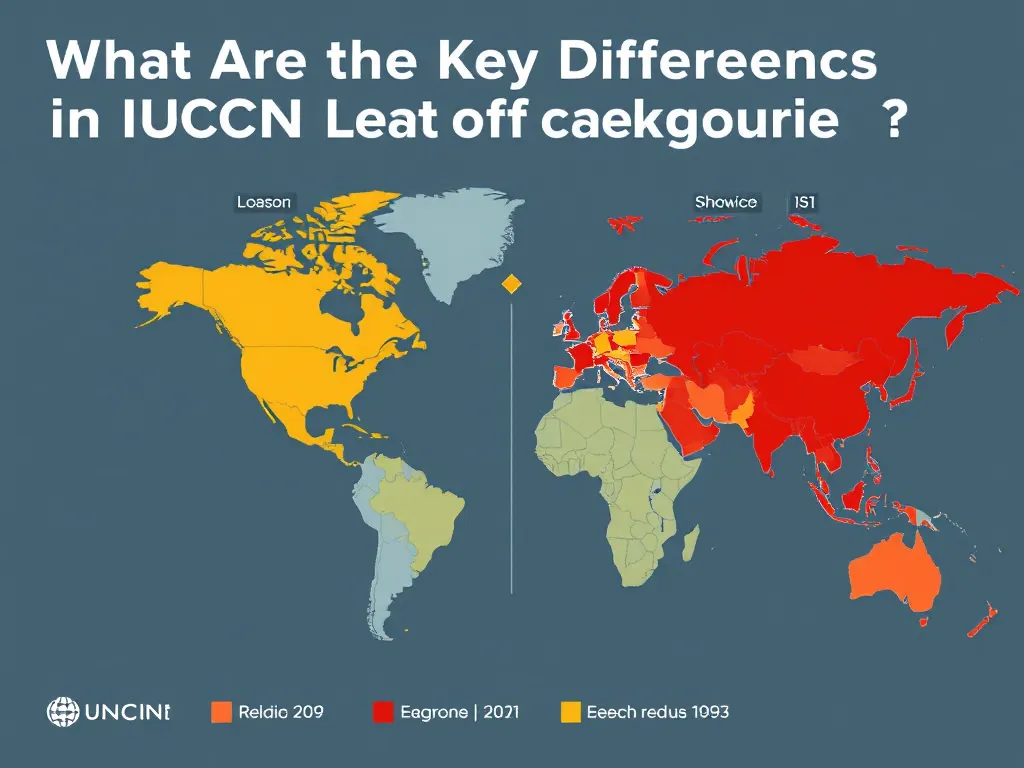
The primary differences between Vulnerable, Endangered, and Critically Endangered species lie in their population decline rates, the number of mature individuals remaining, and the statistical probability of extinction. These categories help conservationists prioritize efforts to protect Wildlife globally.
How Does Population Decline Define Each Category?
Population decline is measured over 10 years or three generations, whichever is longer. The specific thresholds distinguish each category clearly.
- Vulnerable (VU): Species face a high risk of extinction. Example criteria include a population decline of ≥30–50%.
- Endangered (EN): Species face a very high risk of extinction. Example criteria include a population decline of ≥50–70%.
- Critically Endangered (CR): Species face an extremely high risk of extinction. Example criteria include a population decline of ≥70–90%.
These thresholds are based on data from the IUCN Red List (2026). A species classified as Vulnerable is likely to become Endangered if threats do not improve.
What Is the Threshold for Mature Individuals?
The total number of mature individuals remaining is a critical factor in IUCN assessments. Lower numbers indicate higher extinction risk.
- Vulnerable (VU): Fewer than 10,000 mature individuals.
- Endangered (EN): Fewer than 2,500 mature individuals.
- Critically Endangered (CR): Fewer than 250 mature individuals.
According to the National Geographic Education (2026), these population size criteria are essential for determining a species’ conservation status. For example, the Rice’s Whale has an estimated population of less than 50 individuals, placing it in the Critically Endangered category.
What Other Factors Determine Conservation Status?
Besides population decline and size, the IUCN evaluates geographic range and extinction probability. A restricted geographic range increases vulnerability.
- Geographic Range: Species with a tiny or very restricted range are more likely to be classified as Endangered or Critically Endangered.
- Extinction Probability: Quantitative analysis estimates the likelihood of extinction within a specific timeframe.
The World Wildlife Fund notes that these factors collectively assess a species’ risk. This multi-faceted approach ensures accurate classification.
What Does “Threatened” Mean in Conservation?
The term “threatened” is a collective category that includes Vulnerable, Endangered, and Critically Endangered species. According to the IUCN Red List (2026), species in these three categories are considered threatened with extinction.
How Does “Threatened” Differ from Individual Categories?
“Threatened” is a broad term, while Vulnerable, Endangered, and Critically Endangered are specific risk levels. This distinction helps in policy-making and conservation planning.
- Threatened: Encompasses all three high-risk categories (VU, EN, CR).
- Vulnerable: The lowest risk level within the threatened group.
- Critically Endangered: The highest risk level before extinction.
The U.S. Endangered Species Act (ESA) defines “Endangered” as in danger of extinction throughout all or a significant portion of its range, while “Threatened” is similar to Vulnerable—likely to become endangered in the foreseeable future.
What Is the Role of the IUCN Red List in Defining Threats?
The IUCN Red List is the world’s most comprehensive information source on global extinction risk. Founded in 1964, it assesses species using peer-reviewed criteria.
As of 2023, of 150,388 species surveyed, 42,108 are considered at risk of extinction due to human activity, including overfishing and land development. The IUCN aims to re-evaluate each category every ten years to ensure accuracy.
How Do Scientists Classify Species as Vulnerable, Endangered, or Critically Endangered?
Scientists use specific criteria from the IUCN Red List to classify species. These criteria are based on quantitative data and peer-reviewed assessments.
What Are the Example Criteria for Each Category?
The IUCN provides clear example criteria for each category, focusing on population decline, mature individuals, and geographic range.
- Vulnerable (VU): Population decline of 30–50%, fewer than 10,000 mature individuals, or a restricted geographic range.
- Endangered (EN): Population decline of 50–70%, fewer than 2,500 mature individuals, or a very restricted geographic range.
- Critically Endangered (CR): Population decline of 70–90%, fewer than 250 mature individuals, or a tiny geographic range.
These criteria are outlined by the IUCN and verified by sources like National Geographic (2026). For instance, a species with a population dropping by 90% over 10 years would be labeled Critically Endangered.
How Does the Classification Process Work?
The classification process involves data collection, analysis, and peer review. Major assessors include BirdLife International and the Institute of Zoology.
The IUCN Species Survival Commission Specialist Groups conduct assessments.
This ensures that classifications are scientifically sound and up-to-date. The process helps guide actions to conserve biological diversity.
What Is the Difference Between Vulnerable, Endangered, and Critically Endangered Species?
The main difference is the level of extinction risk. Vulnerable species face a high risk, Endangered species face a very high risk, and Critically Endangered species face an extremely high risk.
Why Are These Classifications Important for Wildlife Conservation?
These classifications prioritize conservation efforts. Species in higher risk categories receive more immediate attention and resources.
For example, protecting a Critically Endangered species like the Amur Leopard involves urgent habitat restoration and anti-poaching measures. This targeted approach helps prevent extinction.
How Can the Public Support Species Protection?
The public can support by advocating for conservation policies, reducing habitat destruction, and supporting organizations like the World Wildlife Fund. Understanding these classifications empowers individuals to make informed decisions.
By learning the differences between Vulnerable, Endangered, and Critically Endangered, everyone can contribute to protecting Wildlife for future generations.