A keystone species is an organism that defines an entire ecosystem, playing a disproportionately large role in maintaining biodiversity and structure relative to its population size. Losing one causes ecosystem collapse because they hold complex food webs together and have low redundancy, meaning no other species can fill their ecological niche.
- Keystone species were first defined by zoologist Robert T. Paine in 1969.
- They maintain ecosystem structure through predation, habitat engineering, or mutualism.
- Loss triggers trophic cascades and habitat destruction due to low functional redundancy.
What defines a keystone species in an ecosystem?
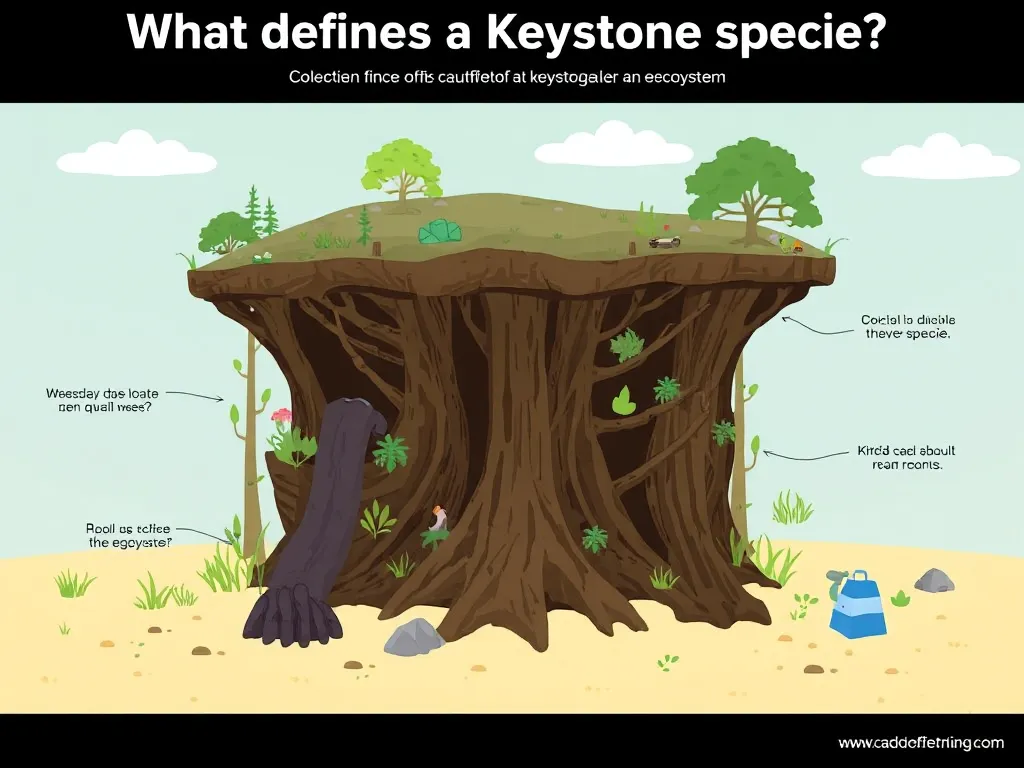
A keystone species is defined by its disproportionately large impact on its environment relative to its abundance. According to National Geographic Society (2025), these organisms help define an entire ecosystem, and without them, the ecosystem would be dramatically different or cease to exist altogether.
The term was coined by zoologist Robert T. Paine in 1969, based on his observations of marine invertebrates in the intertidal zone.
How did Robert Paine introduce the concept?
Paine introduced the concept in 1969 to explain his experiments on marine invertebrates. He removed the ochre starfish (Pisaster ochraceus) from a rocky shoreline, which led to mussels (Mytilus californianus) dominating the space and crowding out other species. This demonstrated that a single predator could maintain biodiversity by preventing any one species from monopolizing resources.
What are the three main types of keystone species?
Keystone species generally fall into three categories based on their ecological roles:
- Predators: Control prey populations to prevent dominance (e.g., wolves, sea otters).
- Ecosystem Engineers: Physically alter habitats to create conditions for other species (e.g., beavers, prairie dogs).
- Mutualists: Support the life cycles of many other species through symbiosis (e.g., bees, bats).
Why is the arch analogy used to describe keystone species?
The arch analogy illustrates how a keystone holds an arch together despite bearing the least pressure. Similarly, a keystone species maintains ecosystem stability even if it is not the most abundant. If removed, the ecosystem structure collapses, much like an arch without its keystone.
Why does losing a keystone species collapse ecosystems?
Losing a keystone species collapses ecosystems primarily due to trophic cascades and low functional redundancy. When a keystone predator is removed, prey populations explode, leading to overconsumption of resources and the loss of other species.
How do trophic cascades cause ecosystem collapse?
Trophic cascades occur when the removal of a top predator triggers a chain reaction through the food web. For example, gray wolves control herbivore populations like elk; without wolves, elk overgraze vegetation, reducing plant diversity and affecting other animals that depend on those plants.
What role does low redundancy play in ecosystem collapse?
Keystone species often hold unique ecological roles. According to Defenders of Wildlife (2023), they have low functional redundancy, meaning no other species can fill their niche if they disappear. This lack of backup leads to a breakdown in ecosystem processes, such as nutrient cycling or habitat maintenance.
How do ecosystem engineers contribute to collapse when lost?
Ecosystem engineers like beavers create wetlands that support diverse species. Without beavers, streams remain narrow and lack the pools and wetlands that provide shelter and resources. This physical change removes habitats for countless organisms, leading to biodiversity loss.
What are real-world examples of keystone species and their impact?
Real-world examples show how keystone species maintain ecosystem health. Their removal demonstrates the rapid decline in biodiversity and stability.
How do sea otters maintain kelp forests?
Sea otters prevent sea urchins from overconsuming kelp forests. Without otters, urchin populations explode, devouring kelp and creating “urchin barrens” where little else survives. This loss affects fish, invertebrates, and coastal erosion patterns.
What happens when gray wolves are removed from Yellowstone?
The reintroduction of gray wolves to Yellowstone in 1995 showed their keystone role. Wolves control elk populations, allowing vegetation to recover. This supports beavers, birds, and other species, demonstrating how predators shape entire landscapes.
Why are bees considered keystone mutualists?
Bees are essential pollinators for countless plants. Their removal would disrupt plant reproduction, affecting food sources for herbivores and ultimately the entire food web. This mutualistic role highlights how keystone species can be small in size but massive in impact.
For more on wildlife conservation efforts, visit Wildlife. To understand species protection status, read about the difference between vulnerable, endangered, and critically endangered.
Learn how scientists track populations in how scientists count wild animal populations. Explore rewilding initiatives in what is rewilding and how scientists bring back lost wildlife.