Yosemite National Park is a biodiversity hotspot supporting over 400 species of vertebrates, making it one of North America’s premier wildlife destinations. From the iconic black bears roaming the meadows to the rare Sierra Nevada red fox in the high country, this remarkable ecosystem hosts an incredible diversity of animals across multiple taxonomic groups. The park’s varied elevation zones—from deep valleys to alpine peaks—create unique habitats that support an extraordinary range of species, each adapted to their specific environment.
- Yosemite National Park supports over 400 species of vertebrates
- 90 mammal species including iconic black bears, mule deer, and coyotes
- 262+ bird species plus diverse reptiles, amphibians, and fish populations
Mammals of Yosemite National Park: 90 Species and Counting
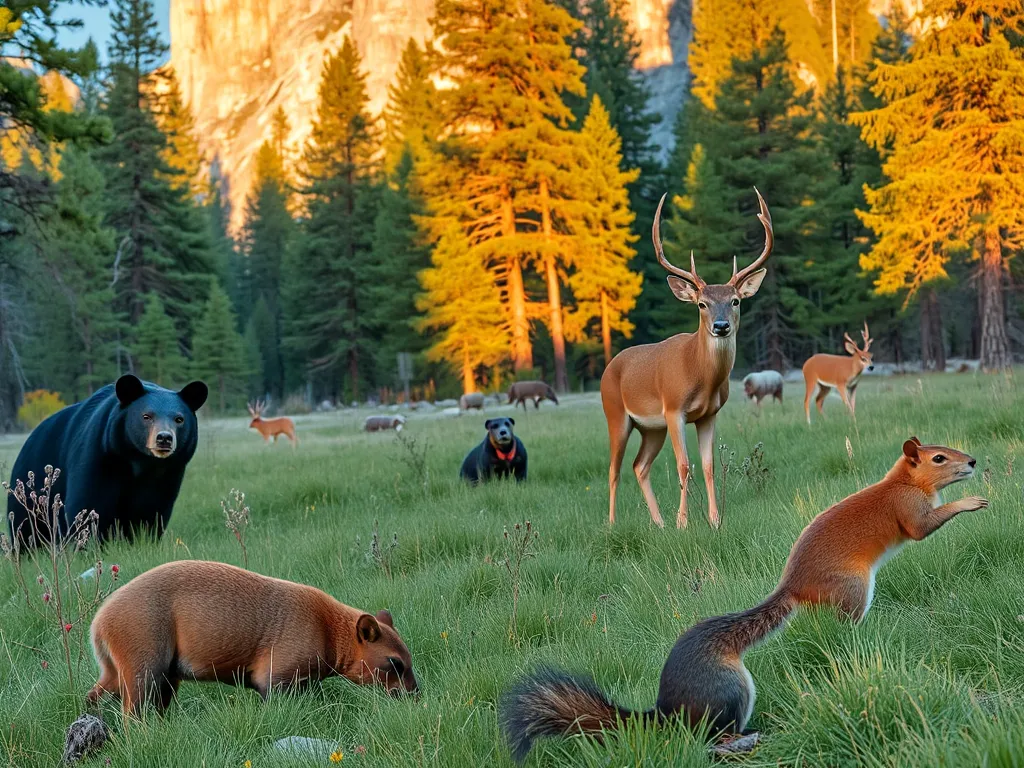
Yosemite National Park is home to 90 different mammal species, ranging from the commonly seen black bears to the elusive predators that roam the wilderness. These mammals play crucial roles in maintaining the park’s ecological balance, with each species adapted to specific habitats and elevation zones. The park’s diverse landscape—from valley floors to alpine meadows—provides habitats for everything from small rodents to large carnivores, creating a complex mammal community that has captivated visitors and researchers alike.
Iconic Mammals: Black Bears, Mule Deer, and Coyotes
- American Black Bear: Roughly 300-500 live in the park, with 90% displaying brown or blond coats rather than pure black. These intelligent omnivores are frequently spotted in Yosemite Valley, especially during spring when they emerge from hibernation.
- Mule Deer: Commonly seen grazing in Yosemite Valley and meadows throughout the park.
Their distinctive large ears and bounding gait make them easy to identify, and they’re often observed at dawn and dusk when they’re most active.
- Coyotes: Frequently spotted throughout the park, these adaptable canines have learned to coexist with humans while maintaining their wild nature. They’re often seen in open areas and are known for their distinctive howling at night.
Predators and Rare Species in Yosemite’s Wilderness
While Yosemite’s iconic mammals get most attention, the park is also home to several fascinating predator species and rare mammals that thrive in its protected wilderness. Mountain lions, though rarely seen by visitors, maintain a healthy population in the park’s remote areas. These elusive predators play a vital role in maintaining ecosystem balance by controlling prey populations.
The Sierra Nevada red fox stands out as one of North America’s rarest mammals and one of only two native fox species in Yosemite. This endangered species has become an important focus for park wildlife teams collaborating with other agencies to study and protect these animals.
The Pacific fisher, another protected species, inhabits the park’s coniferous forests, where it helps control small mammal populations. Other notable predators include bobcats, red foxes, and the occasional gray wolf that passes through the park’s boundaries.
Birds and Other Vertebrates: 262+ Species and Counting
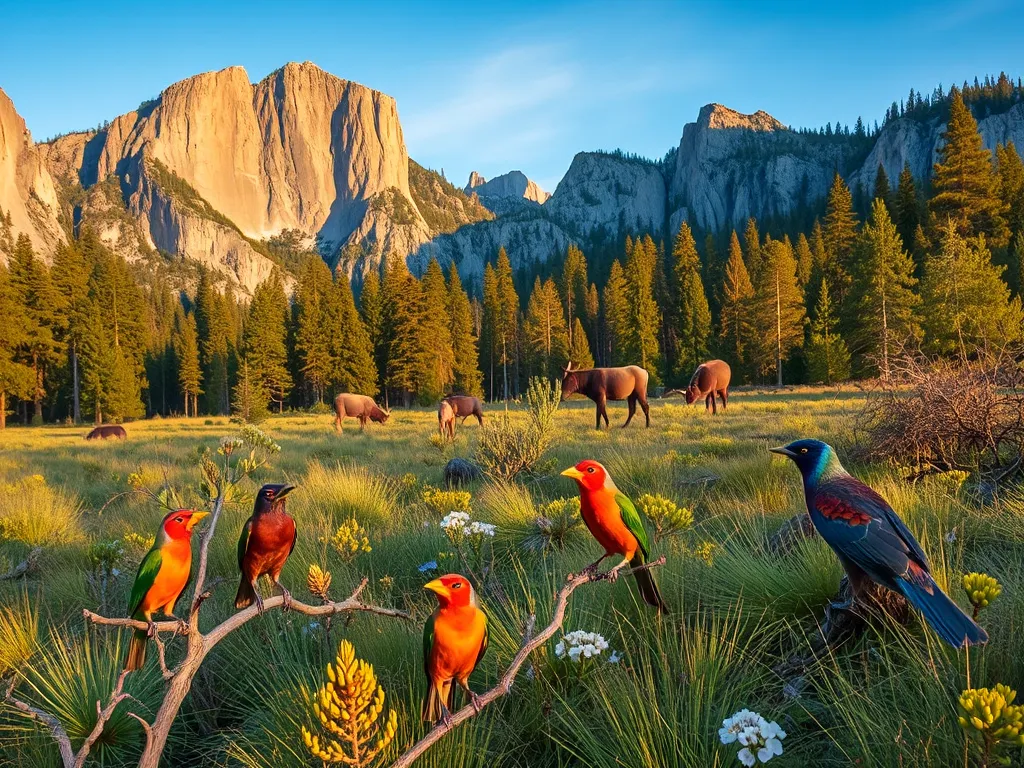
Beyond its impressive mammal diversity, Yosemite National Park boasts an extraordinary avian community with 262+ documented bird species. This makes the park a premier destination for birdwatchers, from casual observers to dedicated ornithologists.
The park’s varied habitats support everything from majestic raptors that soar above alpine peaks to colorful songbirds that flit through forest understories. Many bird species migrate through Yosemite seasonally, while others remain year-round, creating a dynamic and ever-changing avian landscape that reflects the park’s ecological diversity.
Yosemite’s Diverse Bird Species: Raptors and Common Birds
- 262+ bird species documented in Yosemite, making it one of California’s premier birdwatching destinations
- Raptors include peregrine falcons that nest on cliff faces, bald eagles that patrol reservoirs, and great gray owls that hunt in the high country
- Common birds include Steller’s jays (the blue birds often seen near picnics), acorn woodpeckers that store thousands of acorns in granary trees, and ravens that are frequently heard echoing through the valleys
Reptiles, Amphibians, and Fish: Yosemite’s Hidden Wildlife
While mammals and birds often steal the spotlight, Yosemite’s reptiles, amphibians, and fish form an essential part of the park’s biodiversity. These species often go unnoticed by visitors but play critical roles in maintaining ecological balance throughout the park’s aquatic and terrestrial ecosystems.
| Category | Species Count | Notable Examples | Habitat |
|---|---|---|---|
| Reptiles | 22 species | Western fence lizard, California mountain kingsnake | Rocky areas, forest edges |
| Amphibians | 11 species | Sierra Nevada yellow-legged frog (endangered), Yosemite toad | Alpine lakes, meadows, streams |
| Fish | 12 species | Rainbow trout, brown trout | Yosemite’s lakes and streams |
Wildlife Viewing Tips and Safety Guidelines

Observing Yosemite’s incredible wildlife is a highlight for many visitors, but doing so responsibly requires knowledge and respect for these wild animals. The park’s wildlife has adapted to natural conditions but can be negatively impacted by human interaction if proper guidelines aren’t followed. By understanding animal behavior, knowing when and where to look, and maintaining appropriate distances, visitors can enjoy memorable wildlife encounters while ensuring the safety of both themselves and the animals.
Best Times and Locations for Spotting Animals
Dawn and dusk are consistently the best times for spotting animals in Yosemite National Park, as these crepuscular periods coincide with peak activity times for many species. Early morning light creates perfect conditions for photography, while animals are more likely to be active before temperatures rise. Yosemite Valley offers excellent opportunities to see black bears, mule deer grazing in meadows, and various squirrel species.
For those willing to venture higher, Tuolumne Meadows and Tioga Road provide chances to spot yellow-bellied marmots, pikas, and the rare Sierra Nevada bighorn sheep. The Merced and Tuolumne rivers attract different bird species throughout the day, while the high country offers alpine specialists like the gray-crowned rosy-finch.
Safety Guidelines for Wildlife Viewing
- Never feed animals – Human food habituates wildlife to human presence, leading to dangerous encounters and potential euthanasia of animals that become too comfortable around people
- Store food properly – Use bear-resistant canisters provided by the park to store all food, beverages, toiletries, and scented items, both in campgrounds and while hiking
- Maintain safe distances – Stay at least 50 yards from bears and other large mammals, and 25 yards from all other wildlife; use binoculars or zoom lenses for closer viewing
- Never approach or disturb animals – Keep pets on leashes, never leave food unattended, and move away slowly if animals show signs of discomfort
The Sierra Nevada red fox stands out as Yosemite’s rarest mammal, representing one of North America’s most endangered carnivores. With fewer than 100 individuals estimated
Frequently Asked Questions About What Animals Live In Yosemite National Park? A Complete Species
What is the rarest animal in Yosemite?
As one of North America's rarest mammals, and one of only two native fox species in Yosemite, the Sierra Nevada red fox has become an important focus for the park's wildlife teams as they collaborate with other agencies and organizations to study and protect the animals.
What's prettier, Yellowstone or Yosemite?
So head to Yellowstone if you want to see unique hydrothermal marvels like hot springs, geysers, mudpots and more. Also it's good for a bit more solitude. On the other hand, Yosemite is better for classic unbeatable vistas over the Sierra nevada mountains, and world-class hikes over varied terrain.
What is the leading cause of death in Yosemite?
The top 3 common causes of death were: Slips/falls: 53. Natural death: 33. Drowning: 21.
What is the rarest animal in Yosemite?
As one of North America's rarest mammals, and one of only two native fox species in Yosemite, the Sierra Nevada red fox has become an important focus for the park's wildlife teams as they collaborate with other agencies and organizations to study and protect the animals.
What's prettier, Yellowstone or Yosemite?
So head to Yellowstone if you want to see unique hydrothermal marvels like hot springs, geysers, mudpots and more. Also it's good for a bit more solitude. On the other hand, Yosemite is better for classic unbeatable vistas over the Sierra nevada mountains, and world-class hikes over varied terrain.