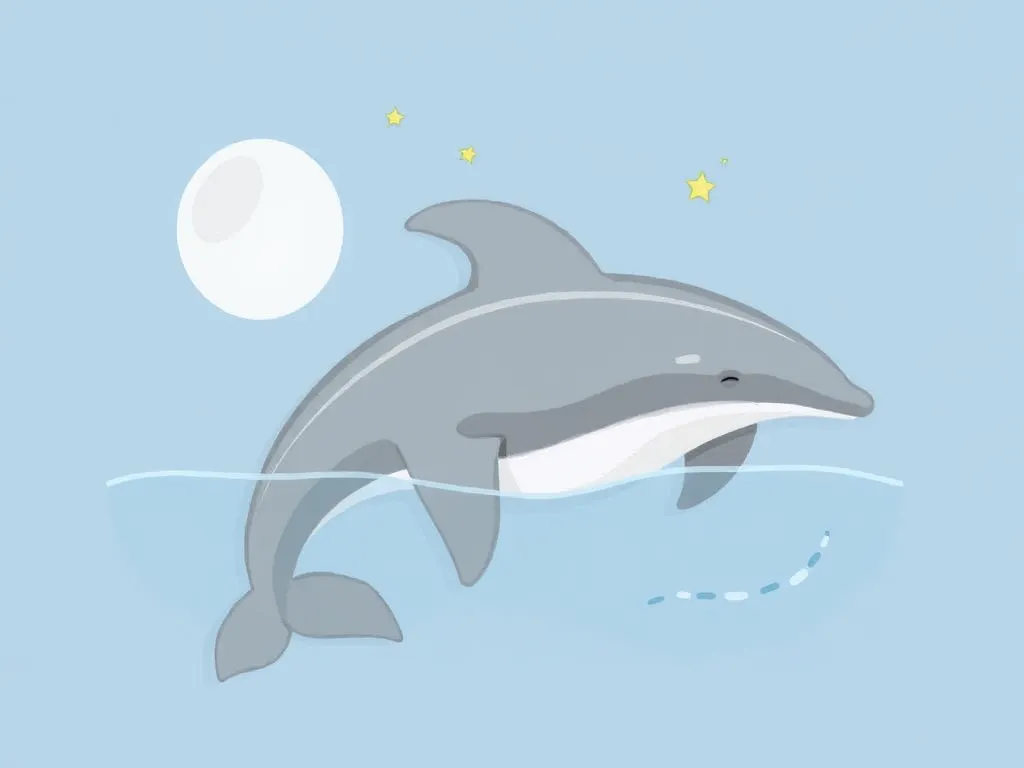
Dolphins sleep without drowning by using a unique biological mechanism called unihemispheric slow-wave sleep (USWS), where only one half of their brain rests at a time. This allows the other half to remain awake, control breathing, and monitor the environment for threats. Unlike humans, dolphins are conscious breathers, so they must surface for air even while resting.
- Dolphins take short naps of 15 to 20 minutes throughout the day instead of one long sleep session
- They need about 8 hours of sleep daily, split between both brain hemispheres
- The awake hemisphere keeps one eye open to watch for predators while the other half sleeps
How Dolphins Use Unihemispheric Sleep to Stay Safe

Dolphins rest by shutting down one brain hemisphere while the other stays alert. This process, known as unihemispheric slow-wave sleep, lets them breathe and avoid drowning.
The left eye closes when the right brain hemisphere sleeps, and vice versa. This allows them to “sleep with one eye open” at all times.
The Science Behind Unihemispheric Slow-Wave Sleep
Unihemispheric slow-wave sleep (USWS) is a state where one half of the brain enters deep sleep while the other half remains awake. Electroencephalography (EEG) shows slow-wave sleep tracings from one side and wakefulness from the other. This adaptation helps dolphins rest without becoming fully unconscious, which is critical for survival in the ocean.
According to research published in The Journal of Neuroscience (2007), USWS is linked to unique physiology, including the differential release of the neurotransmitter acetylcholine. This allows dolphins to maintain environmental awareness while sleeping. The phenomenon challenges traditional notions of sleep, showing that rest does not require full brain shutdown.
Breathing Control During Sleep
Dolphins are conscious breathers, meaning they must actively decide to surface for air. During USWS, the awake hemisphere reminds the dolphin to breathe. This is different from humans, who breathe automatically.
Without this mechanism, dolphins would drown while sleeping.
A study in PLOS Biology (2008) notes that USWS evolved in aquatic animals to handle the need to breathe and regulate body temperature while resting.
Dolphins surface every few minutes during sleep to inhale, even when only half their brain is awake. This ensures they never miss a breath.
Sleep Positions and Patterns
Dolphins take short naps of 15 to 20 minutes throughout the day and night, rather than one long sleep session. They generally need about 8 hours of sleep daily, split between both brain hemispheres. Common positions include swimming slowly just below the surface or “logging”—floating vertically like a log.
Research from Scientific American (1998) describes two basic sleep methods: resting quietly in the water vertically or horizontally, or sleeping while swimming slowly next to another animal. This behavior helps them stay with their pod and evade predators. Physical adaptations, such as body structure and buoyancy, make it easier to rest on the surface without sinking.
What Makes Dolphin Sleep Different from Other Animals?
Dolphins are not the only animals with unihemispheric sleep, but their adaptation is specialized for aquatic life. Birds and seals also use USWS, but dolphins combine it with conscious breathing control. This section explores how dolphins compare to other species and addresses common questions.
Can Humans Enter Unihemispheric Sleep?
Unihemispheric sleep is not known to occur naturally in humans. However, recent research shows that humans exhibit similar asymmetric brain activity during the “first night effect” when sleeping in a new location. This involves one hemisphere remaining more alert than the other, but it is not true USWS.
According to a 2024 study in PMC, dolphins sleep one half of their brain at a time to avoid drowning, a trait not found in humans. The study suggests that while humans may show partial asymmetry, they cannot fully replicate dolphin-like unihemispheric sleep.
How Does Unihemispheric Sleep Work in Other Species?
Birds use USWS during long migratory flights to maintain awareness and control their wings. Seals use it to surface for air while resting in water. In dolphins, USWS is tied to their need to breathe consciously and avoid predators.
This makes their sleep pattern uniquely adapted to marine environments.
Research from Nature and Science of Sleep (2016) explains that USWS offers benefits like rest in high-predation areas.
Dolphins, as cetaceans, show preserved health and great memory skills despite reduced sleep quantity. This challenges the idea that sleep must be bilateral for optimal function.
What Animal Sleeps 90% of Its Life?
Koalas sleep around 22 hours a day, which is about 90% of their life. This is unrelated to dolphin sleep but highlights how sleep patterns vary across species. Koalas sleep in trees, while dolphins sleep in water with half their brain awake.
This fact from general knowledge contrasts with dolphins’ active sleep style. Dolphins cannot afford to sleep 90% of the time because they must surface for air and stay alert in the ocean. Their unihemispheric adaptation allows them to rest while remaining functional.
Practical Insights into Dolphin Sleep Behavior

Dolphins’ sleep behavior is a marvel of evolution, allowing them to thrive in the ocean without drowning. This section provides practical insights based on verified research and observations from marine experts.
Physical Adaptations for Buoyancy and Rest
Dolphins have streamlined bodies and blubber layers that help them float effortlessly. This buoyancy reduces energy expenditure during rest, making it easier to sleep while swimming slowly. Their tail flukes and flippers provide stability, even when only half the brain is awake.
According to Whale & Dolphin Conservation USA, dolphins’ body structure supports unihemispheric sleep by allowing them to rest on the surface without sinking. This adaptation is crucial for avoiding drowning and conserving energy during short naps.
Predator Avoidance During Sleep
The awake hemisphere keeps one eye open to scan for threats. This “sleeping with one eye open” behavior is a direct response to predation risks in the ocean. Dolphins often sleep in groups, where pod members can watch over each other.
Research from Smithsonian Magazine (2012) notes that dolphins can stay alert for at least 15 days in a row using USWS. This ability helps them avoid predators like sharks or orcas, even while resting. Sleeping in pods adds an extra layer of safety.
Linking to Wildlife and Related Topics
Understanding dolphin sleep highlights the complexity of marine life and its connection to broader wildlife conservation. For example, similar adaptations are seen in other animals, such as flamingos standing on one leg to conserve heat, which is explored in why flamingos stand on one leg. These behaviors show how animals evolve unique strategies for survival.
Dolphins’ sleep patterns also relate to hibernation in other species. While dolphins do not hibernate, their unihemispheric sleep is a form of energy conservation.
Learn more about animal sleep strategies at why some animals hibernate while others don’t. This cluster of articles on Wildlife explores diverse adaptations across the animal kingdom.
In summary, dolphins sleep without drowning by using unihemispheric slow-wave sleep, a process that balances rest with survival needs. This secret allows them to navigate the ocean safely, showcasing the incredible adaptability of marine mammals.
Frequently Asked Questions About How Do Dolphins Sleep Without Drowning? The Unihemispheric Secret

How do dolphins sleep without drowning?
90% of the time, dolphins use unihemispheric sleep to stay safe. This method allows one half of their brain to sleep while the other half remains awake to control breathing and maintain awareness, preventing drowning.
What is unihemispheric sleep in dolphins?
Unihemispheric sleep is a process where one hemisphere of the brain sleeps while the other stays alert. This is how dolphins sleep without drowning, as it ensures continuous breathing and vigilance, differing from other animals that sleep with both hemispheres.
How does dolphin sleep behavior differ from other animals?
Dolphins use unihemispheric sleep for 90% of their rest, unlike most animals that sleep with both brain hemispheres. This allows dolphins to stay safe by maintaining breathing and awareness, a key practical insight into their sleep behavior.