Decomposers act as nature’s essential recycling crew, breaking down dead plants and animals into nutrients that sustain Wildlife. Without these organisms, vital elements like nitrogen and phosphorus would remain locked in dead matter, leaving soil barren and halting new growth. In 2026, this process remains the invisible engine driving every forest, grassland, and aquatic ecosystem on Earth.
Key Takeaways
- Decomposers return vital nutrients like nitrogen and phosphorus to the soil, enabling plants to grow.
- They prevent dead organic matter from piling up and choking ecosystems.
- Soil health improves through the activity of earthworms, bacteria, and fungi.
How Decomposers Recycle Nutrients to Sustain Life
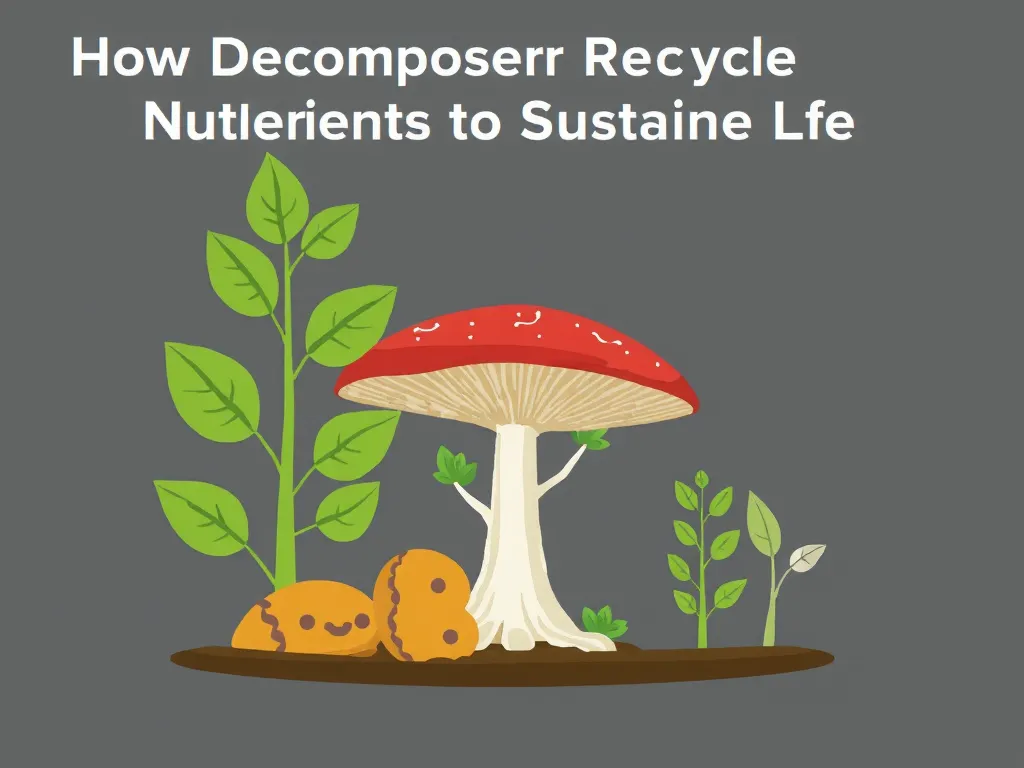
Decomposers turn dead organic matter into inorganic nutrients that plants can absorb. According to National Geographic Education (2023), without this process, nutrients would remain locked in dead carcasses or fallen leaves, and soil would become barren. This nutrient cycling is the foundation of ecosystem survival.
Nitrogen and Phosphorus Return to Soil
Decomposers return vital elements like nitrogen and phosphorus to the soil, enabling new producers (plants) to grow. This is a critical function because plants cannot access nutrients trapped in dead tissue.
By breaking down complex molecules, decomposers make these elements available for absorption. For example, when a tree dies, fungi and bacteria mineralize its wood, releasing nitrogen that nearby saplings use to build chlorophyll and photosynthesize effectively.
Preventing Nutrient Lock-Up
Without decomposition, organic waste accumulates. Dead leaves, wood, and animal remains would pile up, blocking sunlight and water from reaching living plants.
Decomposers act as a cleanup crew, ensuring that dead matter does not overwhelm the environment. This prevents the formation of thick, impenetrable layers of detritus that would stifle seed germination and root development.
Supporting Primary Producers
By recycling nutrients, decomposers directly support the primary producers that fuel the entire food chain. Plants use the released nutrients to photosynthesize, creating the energy base for herbivores, carnivores, and omnivores. Without this constant supply of recycled minerals, primary productivity would decline, causing ripple effects throughout the trophic levels.
The Cleanup Crew: Waste Removal and Soil Health

Decomposers function as a natural waste management system. They break down dead leaves, wood, and waste, preventing these materials from choking new growth.
This role is essential for maintaining clean and productive ecosystems. The US EPA highlights that decomposition is a key component of natural waste processing, reducing the volume of organic debris that could otherwise clog waterways and habitats.
Breaking Down Tough Materials
Microorganisms like bacteria and fungi release enzymes to break down tough materials such as cellulose and lignin. These compounds are difficult to digest, but decomposers chemically dismantle them into simpler forms.
This process is similar to digestion but occurs externally in the environment. Fungi, for instance, secrete lignin-peroxidase enzymes that break the complex bonds in wood, a capability that few other organisms possess.
Improving Soil Structure
Organisms like earthworms, bacteria, and fungi improve soil structure, increase aeration, and boost fertility. Earthworms, for example, tunnel through soil, creating channels that allow air and water to penetrate.
This enhances root growth and nutrient uptake for plants. Their castings—excreted waste—are rich in nitrogen, phosphorus, and potassium, acting as a natural fertilizer that improves soil porosity and water retention.
Detritivores and Microbes Working Together
Detritivores—such as worms, insects, and millipedes—shred debris into smaller pieces. This allows microbes to finish the decomposition process more efficiently.
The collaboration between these groups accelerates nutrient recycling and soil formation. For example, a fallen log is first colonized by fungi that soften the wood, then insects bore holes and shred it, and finally bacteria complete the breakdown into humus.
Core Functions of Decomposer Groups
Different decomposer groups perform specific roles in ecosystems. Understanding these functions clarifies how they keep environments alive and productive. Each group targets different materials and operates under varying conditions, ensuring comprehensive decomposition.
Microorganisms: Chemical Decomposers
Bacteria and fungi act as chemical decomposers. They release enzymes that break down complex organic molecules into inorganic nutrients.
This process is essential for recycling carbon, nitrogen, and phosphorus back into the soil. Bacteria dominate in nitrogen-rich environments, while fungi excel at breaking down carbon-heavy materials like wood and leaves.
Detritivores: Physical Shredders
Detritivores like earthworms, woodlice, and sea cucumbers digest dead matter internally. They shred large pieces of debris into smaller fragments, increasing the surface area for microbial action.
Their feces also enrich the soil with nutrients. Earthworms can process up to 1.5 tons of soil per acre annually, significantly enhancing soil fertility.
The Role of External Digestion
Many decomposers use external digestion, releasing enzymes onto food sources rather than ingesting them. This allows them to break down materials like fallen logs or animal carcasses without consuming them entirely.
After digestion, they absorb the released nutrients directly from the environment. Fungi are masters of this technique, extending hyphae into substrates to absorb digested compounds.
Ecosystem Role vs. Organism Type
The term “decomposer” refers to an ecosystem role, not a specific class of organisms. It includes bacteria, fungi, and invertebrates that release nutrients locally via their feces.
This role is defined by the outcome—nutrient availability—rather than the method of digestion. A single organism can even switch roles; for example, some nematodes act as both predators and decomposers depending on food availability.
What Happens Without Decomposers?
Without decomposers, the nutrient flow that supports life would cease. Ecosystems would turn into stagnant piles of dead waste, unable to support new growth. This scenario is not theoretical; it mirrors conditions on early Earth before complex decomposer communities evolved.
Nutrient Flow Stops
Decomposers are the only organisms that can break down dead matter and release nutrients back into the environment. Without them, plants would starve, and the food chain would collapse. Nitrogen fixation by lightning or atmospheric deposition would be insufficient to replace the locked nutrients.
Dead Matter Accumulates
Dead plants and animals would pile up, blocking resources for living organisms. This accumulation would choke new growth and create unsanitary conditions. In forests, thick layers of undecomposed litter would prevent seedling establishment and increase fire risk due to dry fuel loads.
Soil Becomes Barren
Nutrients locked in dead tissue would never return to the soil. Over time, the land would lose its fertility, making it impossible for plants to thrive. Soil organic matter would decline, reducing water-holding capacity and increasing erosion.
Decomposers keep ecosystems alive by recycling nutrients, removing waste, and building healthy soil. In 2026, their role remains critical for sustaining wildlife and plant life. By breaking down dead matter, they ensure that nitrogen, phosphorus, and other elements continue to support the food chain.
For more insights into ecosystem dynamics, explore how coral reefs support ocean life or learn about apex predators in wildlife conservation.