Agricultural expansion is the primary driver of global deforestation, threatening nearly 90% of animal species’ habitats by 2026. Beef production alone accounts for 41% of global deforestation, with cattle ranching responsible for 80% of current deforestation rates in the Amazon region of Brazil. This expansion destroys forests for pastures and crops, leaving animals with no place to live, food, or mates.
- Cattle ranching drives 80% of Amazon deforestation, directly destroying wildlife habitats.
- Agricultural expansion threatens 90% of animal species’ habitats by 2050.
- Soy and palm oil production replace biodiverse forests with monoculture plantations.
How Cattle Ranching Drives Deforestation in the Amazon
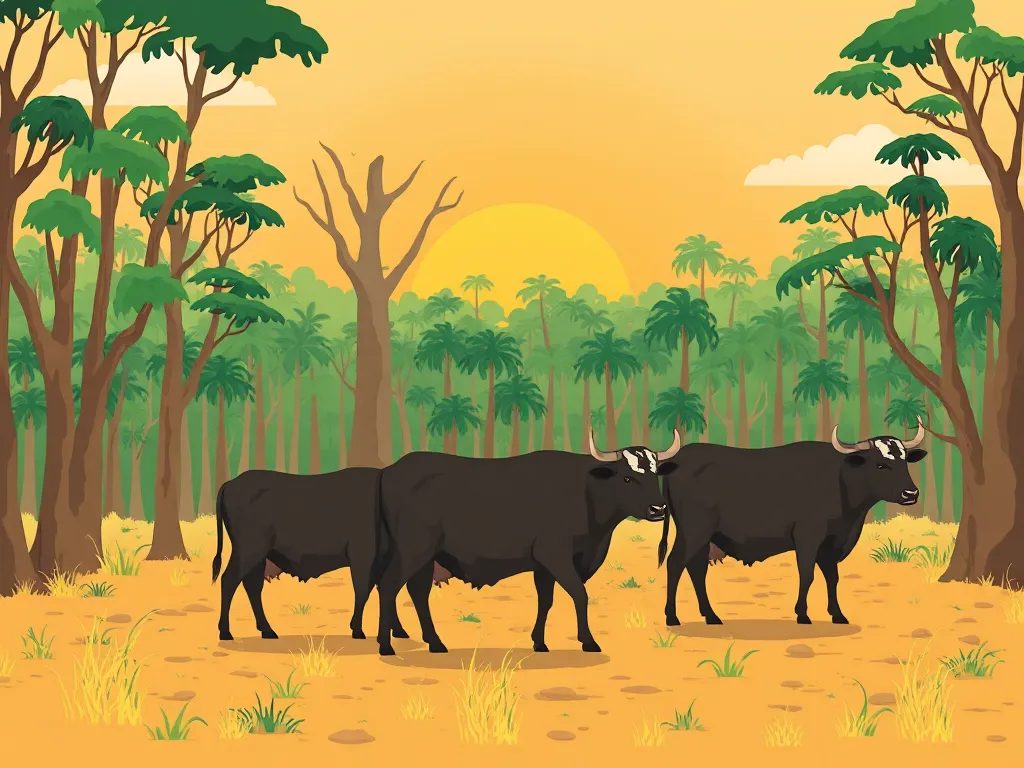
Cattle ranching is the dominant cause of deforestation in the Amazon rainforest. In Brazil, it accounts for 80% of current deforestation rates, clearing forests for grazing land and feed production. This expansion is not isolated; beef production is responsible for at least 41% of deforestation globally, mostly in the Amazon region.
The mechanism is direct and aggressive. Forests are cleared using fire and heavy machinery, converting complex ecosystems into simple pastureland. This process is not a one-time event; it is a continuous cycle where degraded pastures are abandoned and new forest areas are cleared, expanding the deforestation frontier.
“Expanding agricultural activities—including large-scale commercial farming and small-scale farms—is the leading cause of deforestation.” — IFAW (2024)
Why is agricultural expansion a threat to rainforests?
Agricultural expansion threatens rainforests because it converts forest land into pastures and croplands. In 2025, nearly 90% of global deforestation was caused by agriculture, with cropland expansion and pasture creation as the primary drivers (FAO, 2025). This destroys the complex ecosystems that support rainforest wildlife.
The threat is not just the loss of trees but the loss of the entire ecological network. Rainforests are built on intricate relationships between plants, animals, fungi, and microorganisms.
When the forest is cleared, this network collapses. Soil quality degrades, water cycles are disrupted, and the microclimate changes, making it impossible for many species to survive.
How does agriculture affect animals?
Agriculture affects animals by destroying their habitats and fragmenting ecosystems. Clearing land for pastures and crops leaves animals with no place to live, food, or mates. According to the International Fund for Animal Welfare (IFAW), agriculture is the primary threat to 86% of species facing extinction.
The impact is immediate and severe. Animals that require large territories, such as jaguars and tapirs, find their ranges reduced to isolated patches of forest.
Species that depend on specific plants for food lose their primary source of nutrition. The loss of habitat also increases competition for remaining resources, leading to population declines and local extinctions.
The Role of Commodity Crops in Habitat Loss
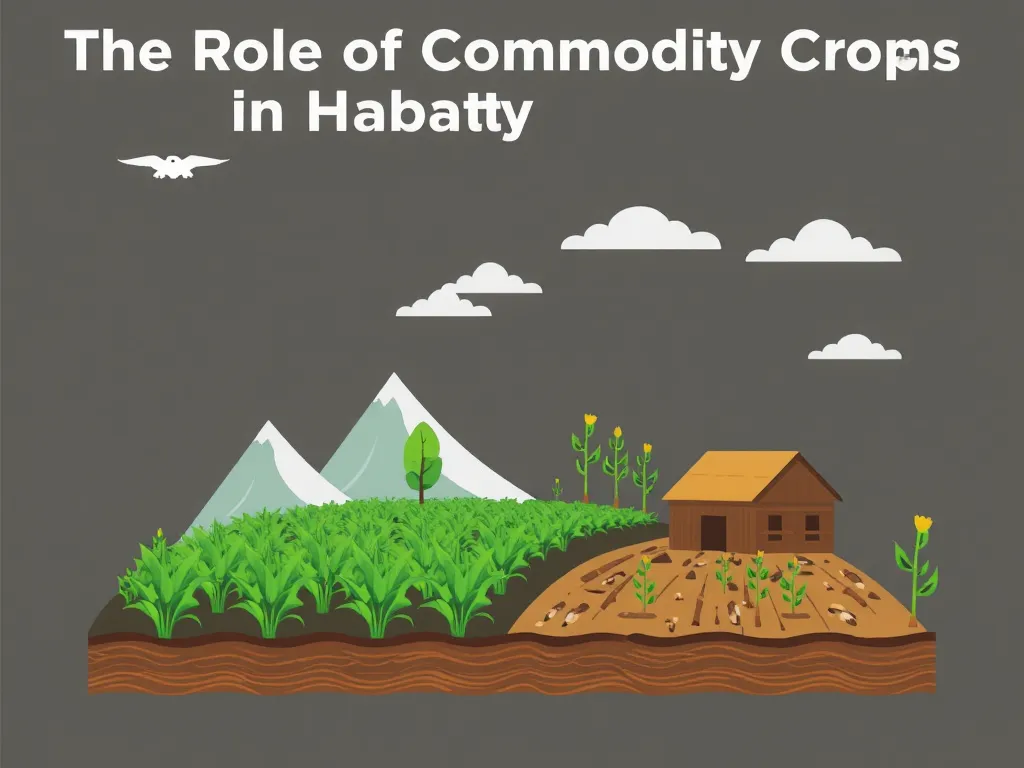
Soy and palm oil production are key commodity crops threatening rainforests. Soy cultivation, largely for livestock feed, and palm oil plantations replace biodiverse forests with monoculture crops. The expansion of soy cultivation is a powerful agent of rainforest loss, particularly in South America.
Soy production in the Amazon basin has increased dramatically in recent years. The crop is primarily used for animal feed, linking it directly to the beef industry. Palm oil plantations, while more common in Southeast Asia, are also expanding into tropical forests in other regions, creating similar patterns of habitat destruction.
What are the three biggest threats to rainforests?
While logging and urbanization are threats, agricultural expansion is the leading cause. The three biggest threats to rainforests include:
- Agricultural expansion: Responsible for nearly 90% of global deforestation.
- Logging: Cuts down trees for timber, furniture, and paper.
- Infrastructure development: Includes power plants and urbanization that clear forests.
Agricultural expansion, however, dwarfs these other threats in scale and impact on wildlife. Logging often targets specific tree species, leaving some habitat intact, while infrastructure development is typically more localized. Agricultural expansion, by contrast, requires clearing vast contiguous areas of forest, leading to more extensive habitat loss and fragmentation.
How does deforestation for animal agriculture threaten wildlife?
Deforestation for animal agriculture threatens wildlife by causing habitat destruction and fragmentation. Fragmented forests make wildlife more vulnerable to predators, hunting, and increased fire risks. By 2050, agricultural expansion is projected to threaten the habitat of nearly 90% of all animal species (Yale E360, 2020).
Fragmentation creates “edge effects” where the boundary between forest and cleared land exposes wildlife to new threats. Species that avoid edges, such as many forest-interior birds, suffer population declines. The remaining forest patches are often too small to support viable populations, leading to genetic isolation and increased risk of extinction.
Biodiversity Loss and Future Projections
Agricultural expansion is accelerating biodiversity loss. The loss of forests reduces the uptake of carbon dioxide, but more critically, it destroys the habitats of countless species. Tropical forest ecosystems cover less than one-fifth of Earth’s terrestrial area and contain about 50% of the world’s species (Faith, 1992).
The rate of species loss is unprecedented. Scientists estimate that we are losing species at a rate 1,000 times higher than the natural background rate.
This loss is directly linked to habitat destruction caused by agricultural expansion. The Amazon alone is home to an estimated 10% of all known species, many of which are found nowhere else on Earth.
What is the impact of edge effects on rainforest wildlife?
Edge effects occur when forests are fragmented, creating boundaries between forest and cleared land. These edges expose wildlife to new threats, including predators and human activity. According to habitat fragmentation research, fragmented habitats change the properties of the remaining forest, making species more vulnerable (van den Berg et al., 2001).
The physical environment at the edge is different from the forest interior. It is hotter, drier, and windier, which can stress plants and animals adapted to the stable microclimate of the deep forest.
Invasive species often colonize these edges, outcompeting native species. Predators that hunt along edges, such as certain birds of prey, can have a disproportionate impact on forest-interior species.
How does agricultural expansion connect to global biodiversity loss?
Agricultural expansion connects to global biodiversity loss by being the primary driver of habitat destruction. In 2025, the rate of deforestation was estimated at 10 million hectares per year, down from 16 million hectares per year in the 1990s, but the impact on species remains severe. Deforestation results in habitat destruction which in turn leads to biodiversity loss (IPCC, 2019).
The connection is direct and measurable. Each hectare of forest cleared for agriculture represents a loss of habitat for multiple species.
The cumulative effect of clearing millions of hectares each year is a global decline in biodiversity. This loss is not just a future risk; it is happening now, with species going extinct before they are even discovered by science.
For more on how pollution impacts wildlife, see how ocean plastic pollution kills marine wildlife. Additionally, understanding how light pollution affects nocturnal animals provides insight into other human-driven threats.
To learn about another major threat to species, read about illegal wildlife trafficking and which animals are most targeted. Protecting Wildlife requires addressing these interconnected issues.
Frequently Asked Questions About How Does Agriculture Expansion Threaten Rainforest Animals?
Which billionaire bought 400000 acres of rainforest?
In 2005, Swedish-British billionaire Johan Eliasch bought about 400,000 acres of Amazon rainforest in Brazil near the Madeira River. The land had been used for commercial logging, and he acquired it to stop logging and keep the forest intact.
What is responsible for 80% of deforestation?
Agriculture is easily the biggest driver of global deforestation. It transforms vast forest landscapes to support the production of commodities like soy, palm oil, and beef. An astonishing 80 per cent of global deforestation is linked to altering natural landscapes for crops and livestock.
What is the 3 animal rule?
The “3Rs alternatives” refers to the replacement, reduction, and refinement of animals used in research, teaching, testing, and exhibition. Drs. William Russell and Rex Burch first described the 3Rs in 1959 in their book, "The Principles of Humane Experimental Technique".