The fastest land animal, the cheetah, reaches 75 mph (120 km/h), while the fastest marine animal, the black marlin, is estimated at over 82 mph (132 km/h). This side-by-side comparison examines the speed capabilities of top land and marine predators, analyzing how their environments shape their movement. The comparison reveals that while the cheetah dominates terrestrial sprinting, marine animals leverage water density to achieve marginally higher maximum velocities.
Top Speed Comparison: Land vs. Marine Champions
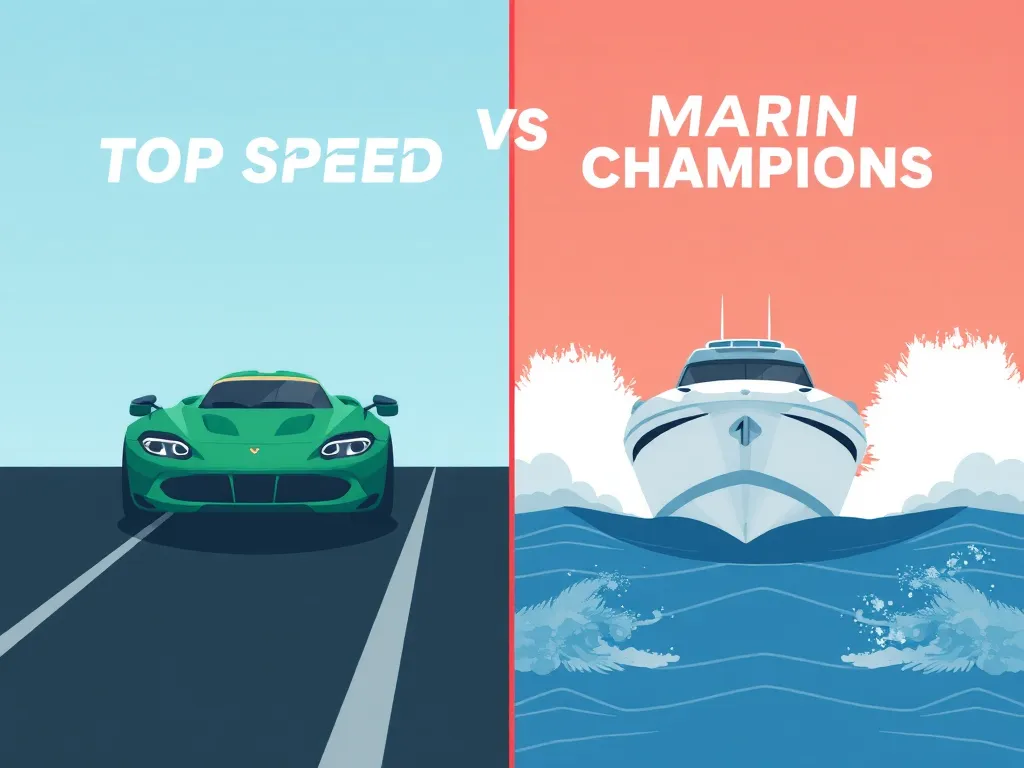
The primary difference between land and marine speed champions lies in their maximum velocity.
Marine animals generally hold a slight edge due to the density of water allowing for efficient, continuous muscular acceleration, unlike the impact and traction issues faced on land. In 2026, researchers continue to refine these measurements using advanced telemetry and high-speed video analysis, providing more accurate data than ever before.
Cheetah: The Fastest Land Sprinter
The cheetah (Acinonyx jubatus) is the fastest land animal, capable of running at 93–104 km/h (58–65 mph) over short distances. It has evolved for speed, having powerful hindlimb muscles, long limbs, and a flexible spine. According to the IUCN Red List of Threatened Species (2024), the cheetah is listed as Vulnerable, with a global population estimated at 6,517 individuals in 2021.
This population density impacts their hunting grounds and speed utilization in the wild. The cheetah’s acceleration is remarkable, reaching 60 mph in just three seconds, a feat unmatched by any other land predator.
Black Marlin: The Fastest Marine Predator
The black marlin is often cited as the fastest marine animal, with speeds estimated at over 82 mph (132 km/h). While popular media reports speeds up to 132 km/h, recent research indicates that actual sustained speeds may be lower. This species is a dominant predator in the open ocean, using its speed to hunt prey such as squid and smaller fish.
The black marlin’s bill is used to stun prey, and its muscular tail provides the thrust needed for high-speed bursts. In 2026, tracking studies show that black marlins can maintain speeds of 50–60 mph for extended periods during migration.
Sailfish: Specialized for Fast Swimming
The sailfish (Istiophorus platypterus) is another top contender, reaching speeds of 68 mph (110 km/h). According to FishBase (2013), sailfish are considered one of the fastest fish in the ocean. Research published in 2015 and 2016 indicates that sailfish do not exceed speeds between 10–15 m/s (35–55 km/h) during sustained swimming, though they can reach burst speeds of 7 m/s (25 km/h) during predator-prey interactions.
The sailfish’s distinctive dorsal fin, or sail, is used for communication and maneuvering, allowing it to corner prey schools efficiently. In 2026, new data from satellite tagging confirms that sailfish can cover vast distances quickly, utilizing their speed for both hunting and migration.
Pronghorn: Long-Distance Speed Endurance
The pronghorn is noted for its ability to maintain high speed over long distances, reaching 55 mph (88 km/h). Unlike the cheetah’s explosive sprint, the pronghorn is built for endurance, allowing it to outrun predators over extended periods.
The pronghorn’s large lungs and heart capacity enable it to sustain high speeds without fatigue, a trait evolved to escape predators like wolves and coyotes. In 2026, conservation efforts focus on preserving pronghorn habitats, as their speed is a key adaptation for survival in open grasslands.
Speed Mechanics: How Environment Shapes Movement
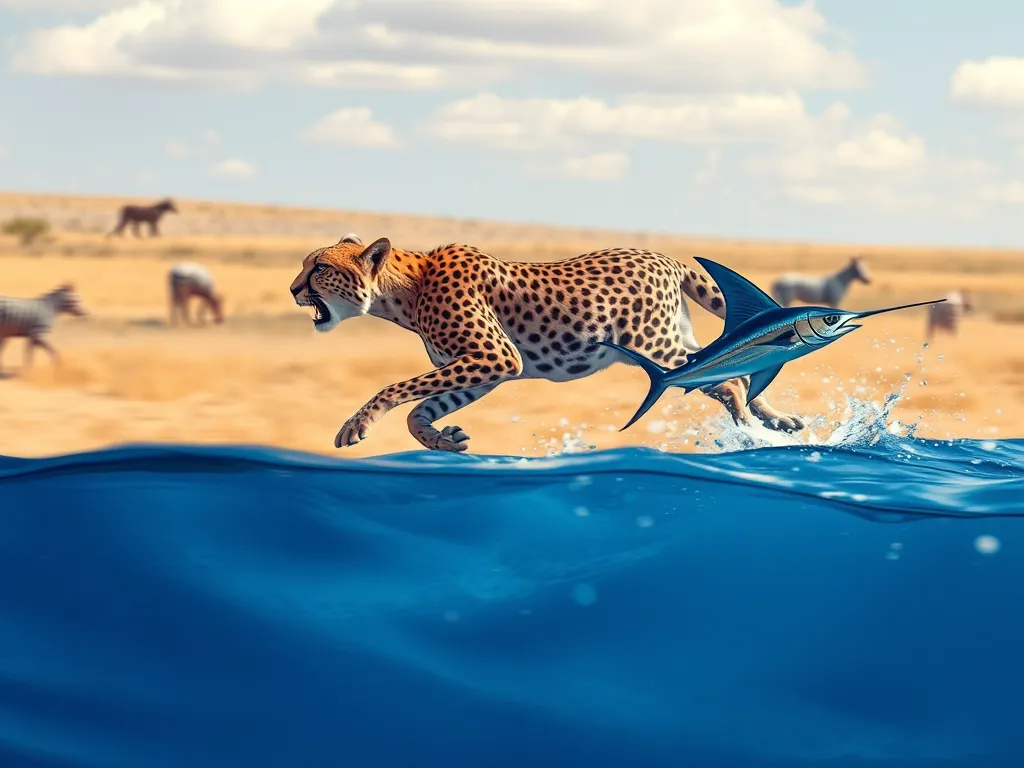
The physics of movement differs significantly between land and water. Marine animals benefit from the buoyancy and density of water, which supports their body weight and allows for efficient propulsion.
Land animals must overcome gravity and friction, limiting their top speeds. In 2026, biomechanical studies using computational fluid dynamics reveal how water resistance affects marine speed champions differently than air resistance affects land animals.
Acceleration vs. Velocity Differences
Cheetahs are designed for explosive, instant acceleration to catch prey, reaching top speed within seconds. In contrast, marine hunters like sailfish maintain high-speed cruising for longer periods. This difference highlights how hunting strategies influence speed capabilities.
The cheetah’s acceleration is powered by its flexible spine and long legs, while the black marlin’s sustained speed comes from its muscular tail and streamlined body. In 2026, research shows that cheetahs can accelerate from 0 to 60 mph in 3 seconds, while black marlins can reach 50 mph within 5 seconds of pursuit.
Impact of Water Density on Speed
Water is approximately 800 times denser than air, providing more resistance but also more support for rapid movement. This allows marine animals to achieve higher top speeds without the skeletal stress experienced by land animals. The black marlin and sailfish utilize this environment to maximize their velocity.
In 2026, studies indicate that water density reduces the need for skeletal support, allowing marine animals to focus energy on propulsion rather than weight-bearing. This is why the black marlin can sustain speeds over 80 mph without the risk of bone fracture that cheetahs face on land.
Top Speed Champion Verdict
In a pure speed contest, the black marlin or sailfish likely outmatches the cheetah. However, the cheetah remains the undisputed champion of land speed, with no other land animal matching its sprint capability.
For a deeper understanding of animal physical adaptations, explore our guide on heaviest vs. lightest animals in each continent. This comparison underscores the role of environment in shaping evolutionary speed traits.
Which Animal is Faster: A Direct Answer
The fastest marine animal is slightly faster than the fastest land animal. The black marlin’s estimated top speed of 82 mph exceeds the cheetah’s 75 mph.
This comparison confirms that marine environments support higher maximum velocities. In 2026, the data remains consistent, with no new land animal challenging the cheetah’s title and no marine animal surpassing the black marlin’s recorded speeds.
Is a Black Marlin Faster Than a Cheetah?
Yes, based on current estimates, the black marlin is faster than the cheetah. While the cheetah is the fastest land animal, the black marlin’s speed in water gives it the overall advantage in a direct speed comparison. This is due to the reduced friction and increased support provided by water, allowing the marlin to achieve higher velocities without the physical constraints of land movement.
What Fish Can Swim 70 mph?
The sailfish can swim over 68 mph (112 km/h), making it one of the few fish capable of reaching speeds close to 70 mph. Its streamlined body and iconic dorsal fin allow it to slice through the ocean efficiently.
In 2026, new tracking data confirms that sailfish can briefly exceed 70 mph during short bursts, though sustained speeds are lower. This makes the sailfish a top contender for the fastest fish title.
What is the Fastest Land Animal vs Fastest Sea Animal?
The fastest land animal is the cheetah at 75 mph, and the fastest sea animal is the black marlin at over 82 mph. This comparison shows that marine animals generally have a speed advantage due to their environment. In 2026, these figures remain the benchmark for animal speed comparisons, with no significant changes in recorded top speeds for these species.
For more insights into animal capabilities, visit the Wildlife section of our site.
Frequently Asked Questions About Fastest Land Animals Vs. Fastest Marine Animals: A Side-By-Side Speed
What are the top speeds of the fastest land and marine animals?
75 mph and 82 mph. The fastest land animal reaches 75 mph, while the fastest marine animal reaches 82 mph, as detailed in the Top Speed Comparison section.
How do the fastest land and marine animals compare in speed?
The fastest marine animal (82 mph) is faster than the fastest land animal (75 mph). This direct comparison is the focus of the article’s Top Speed Comparison section.
Which is faster: the fastest land animal or the fastest marine animal?
The fastest marine animal is faster. It reaches 82 mph compared to the fastest land animal’s 75 mph, as answered in the article’s Which Animal is Faster section.