Giant pandas eat almost exclusively bamboo, with 99% of their diet consisting of this plant, despite descending from carnivores. This dietary shift occurred 2–2.4 million years ago, allowing them to exploit an abundant, competition-free food source in their mountain habitats.
How Did Pandas Evolve to Eat Bamboo?
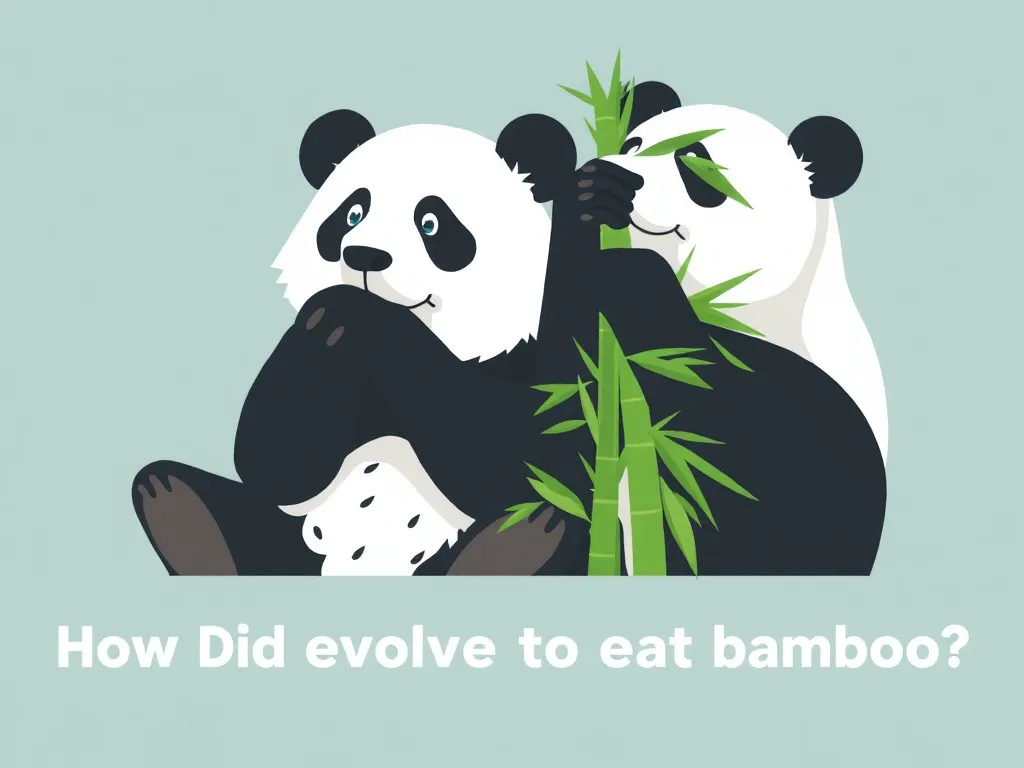
The giant panda belongs to the order Carnivora, but it has evolved specialized traits to thrive on a bamboo diet. This adaptation began millions of years ago when pandas shifted from a meat-based diet to one dominated by bamboo.
The Evolutionary Shift to a Bamboo Diet
Pandas made a significant evolutionary change between 2–2.4 million years ago. During this period, they adapted to eat bamboo because it was plentiful in their environment and faced little competition from other animals. This shift allowed them to occupy a unique ecological niche.
Genetic Adaptations for a Plant-Based Diet
Pandas lost the T1R1 umami taste receptor gene, which makes meat less appealing to them. This genetic change helped them adapt to a plant-based diet. Additionally, they developed a “pseudo-thumb” on their forepaw, which helps them grasp bamboo stalks effectively.
Anatomical Changes for Bamboo Consumption
The giant panda has large molar teeth and expanded temporal fossae to meet its dietary requirements. These physical traits enable them to crush and process bamboo, which is tough and fibrous. According to the IUCN Red List, the giant panda is classified as Vulnerable, with a population of approximately 2,060 individuals in the wild (Swaisgood, 2017).
Why Do Pandas Spend So Much Time Eating Bamboo?

Bamboo is low in calories and nutrients, so pandas must consume large quantities to survive. This leads to a unique eating behavior that occupies most of their day.
Low Energy Yield of Bamboo
Bamboo has a low concentration of nutrients, requiring pandas to eat 20 to 40 pounds of it daily just to get by. This is why pandas spend up to 16 hours a day eating to meet their energy needs. Their slow metabolism helps them conserve energy on this low-calorie diet.
How Pandas Digest Bamboo
Despite having a carnivore’s digestive system, pandas have a unique gut microbiome adapted to process starch and hemicelluloses from bamboo. They cannot digest cellulose efficiently, but their gut bacteria help break down the plant material. This adaptation allows them to extract some nutrients from bamboo, even though their digestive tract is short and simple, typical of carnivores.
The Role of a Slow Metabolism
Pandas expend just 38% of the energy expected for their size, which helps them survive on a bamboo diet. This slow metabolic rate is a key adaptation for conserving energy while consuming low-nutrient food. For more on animal adaptations, explore how octopuses change color using chromatophores at chromatophore color change mechanisms.
Can Pandas Survive Without Bamboo?
Pandas are highly specialized for a bamboo diet, but they can occasionally eat other foods. However, their survival depends heavily on bamboo availability.
Pandas’ Dietary Flexibility
In the wild, pandas occasionally eat other grasses, wild tubers, or even small animals, but 99% of their diet is bamboo. This specialization makes them vulnerable to habitat loss, as bamboo forests are essential for their survival. According to CNN (2025), bamboo influences the behavior and sensory regulation of these carnivorous bears.
Impact of Habitat Loss on Pandas
As a result of farming and deforestation, pandas have been driven out of lowland areas. The Fourth National Survey (2011–2014) estimated 1,864 individuals over 1.5 years old in the wild.
Conservation efforts are crucial to protect their bamboo habitats and ensure their survival. For insights into wildlife tracking, learn how sharks detect blood from miles away at shark blood detection methods.
Conservation Status and Efforts
The giant panda is listed as Vulnerable on the IUCN Red List. By 2007, there were 239 captive pandas in China and 27 outside the country.
Conservation-reliant species like pandas require ongoing protection of their bamboo forests to thrive in the wild.
This article connects to broader wildlife topics, including Wildlife conservation efforts.