The eagle possesses the best overall long-distance eyesight in the animal kingdom, with visual acuity up to eight times stronger than humans, allowing them to spot prey from over 3 kilometers away. While eagles dominate distance vision, other animals like the mantis shrimp and owl excel in different visual categories, making “best eyesight” a matter of specialization rather than a single winner. In 2026, researchers continue to refine our understanding of these visual systems, using advanced imaging to map the precise receptor densities and neural processing speeds that give these animals their unique advantages.
Eagles: The Champions of Long-Distance Vision
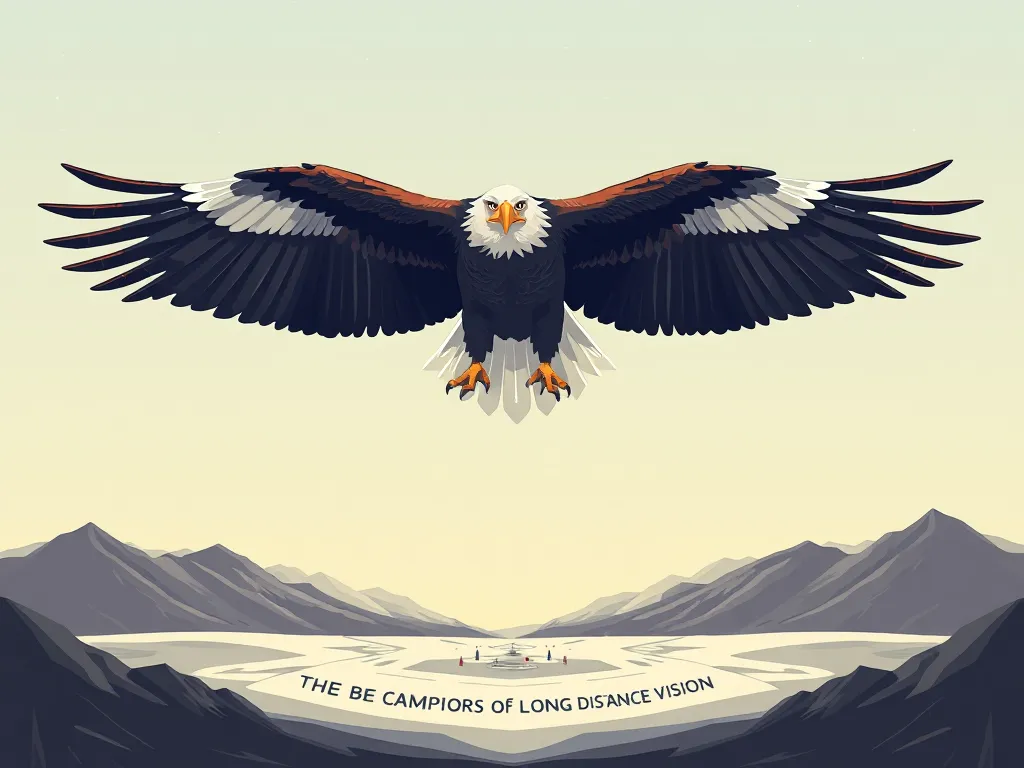
Eagles hold the crown for daytime distance vision, with visual acuity that far exceeds humans. Their eyes feature high-density receptors and a deep fovea that acts like a telephoto lens, enabling them to spot prey from incredible heights.
This capability is not just a single trait but a combination of anatomical and neurological adaptations that work in concert. For example, the golden eagle can spot a rabbit moving across a field from more than 2 miles away, a feat that requires precise focus and rapid processing of visual data.
Eagles’ Visual Acuity: Eight Times Stronger Than Humans
Eagles possess visual acuity up to eight times stronger than humans. This remarkable capability allows them to detect movement and identify prey from vast distances. The wedge-tailed eagle, for example, has a visual acuity twice that of a typical human, according to research from Nature (1986).
This means that what a human sees as a blur at 500 meters, an eagle can resolve into distinct shapes and movements. The key is the density of photoreceptor cells in their retinas, particularly in the fovea—the central pit responsible for sharp central vision. Eagles have a fovea that is deeper and more cone-rich than humans, allowing for greater magnification and detail.
Prey Spotting Distance: Over 3 Kilometers
Eagles can spot and focus on prey up to 2 miles (3 kilometers) away. This distance is a direct result of their large pupils, which minimize light scattering and ensure sharp focus. This hunting advantage is critical for their survival in the wild.
In 2026, telemetry studies show that eagles often scan vast territories from altitudes of 500 to 1,000 meters, using their acute vision to locate prey without expending energy on unnecessary flight. The large pupil size also allows more light to enter the eye, enhancing contrast sensitivity in bright daylight conditions.
Eye Structure: High-Density Receptors and Deep Fovea
The eagle’s eye structure includes high-density receptors and a deep fovea. This anatomical feature acts like a built-in telephoto lens, magnifying distant objects without losing detail. This structure is a key reason why eagles are top predators in many ecosystems.
The fovea in eagles is not just a pit but a specialized area with a high concentration of cones—photoreceptors responsible for color vision and detail. This allows eagles to detect subtle color variations in prey, such as the fur of a rabbit against green grass, from great distances. Additionally, the eye’s spherical shape and large size contribute to a wider field of view, though they sacrifice some peripheral vision for central acuity.
Mantis Shrimp: The Masters of Complex Color Vision
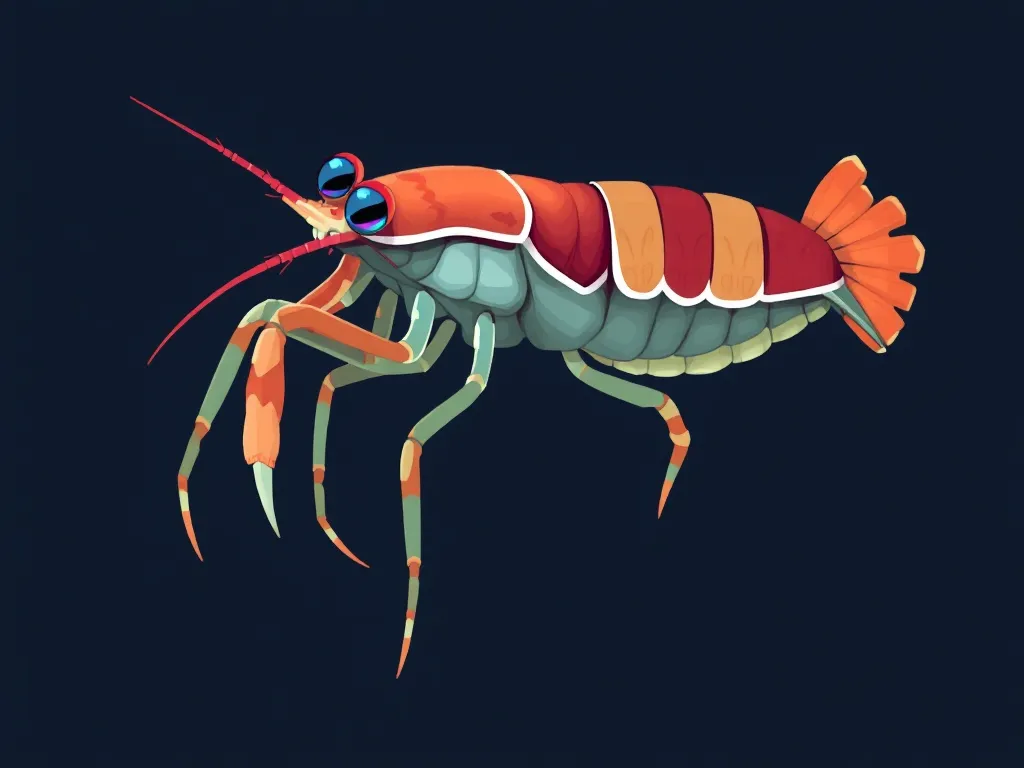
While eagles rule the skies, the mantis shrimp dominates underwater vision with the most sophisticated color perception in the animal kingdom. Their compound eyes move independently and possess a unique array of photoreceptors.
In 2026, marine biologists are using spectral analysis to map the exact wavelengths these shrimp can perceive, revealing a visual world far richer than human imagination. The mantis shrimp’s eyes are mounted on movable stalks, allowing them to scan the environment without moving their bodies, a crucial adaptation for ambush predators in coral reefs.
16 Photoreceptors: Seeing Beyond Human Limits
Mantis shrimps have 16 photoreceptors, compared to just three in humans. This allows them to see ultraviolet and polarized light, perceiving a spectrum of colors invisible to us. According to the California Academy of Sciences (2022), this makes their vision exceptionally complex.
Each photoreceptor is tuned to a specific wavelength, enabling the shrimp to distinguish between subtle color differences that would appear identical to human eyes. For example, they can detect the polarization patterns on the shells of other shrimp, which serve as communication signals. This capability is not just for show—it helps them identify prey, mates, and predators in the cluttered visual environment of the reef.
Independent Eye Movement and Polarized Light
Each of the mantis shrimp’s compound eyes can move independently, providing nearly 360-degree vision. They also detect polarized light, which helps them spot transparent prey and communicate with others of their species in the shimmering underwater world. In 2026, research shows that the mantis shrimp’s eyes can process polarization information in real-time, allowing them to track fast-moving objects like copepods with high accuracy.
The independent movement means one eye can focus on a predator while the other scans for food, a multitasking ability that few animals possess. This is particularly useful in the dynamic currents of tropical waters where threats can come from any direction.
Evolutionary Advantage in Marine Environments
The mantis shrimp’s vision evolved for hunting in shallow, tropical waters. Their ability to see a broad color spectrum and detect polarized light gives them a significant edge in identifying prey and avoiding predators in complex marine habitats.
In 2026, evolutionary biologists note that this visual system has been refined over millions of years, with fossil evidence suggesting early mantis shrimp had fewer photoreceptors. The modern species’ 16-receptor system represents a peak adaptation for the high-diversity, low-visibility conditions of coral reefs, where distinguishing between similar-looking species can mean the difference between a meal and a missed opportunity.
Owls: The Kings of Night Vision
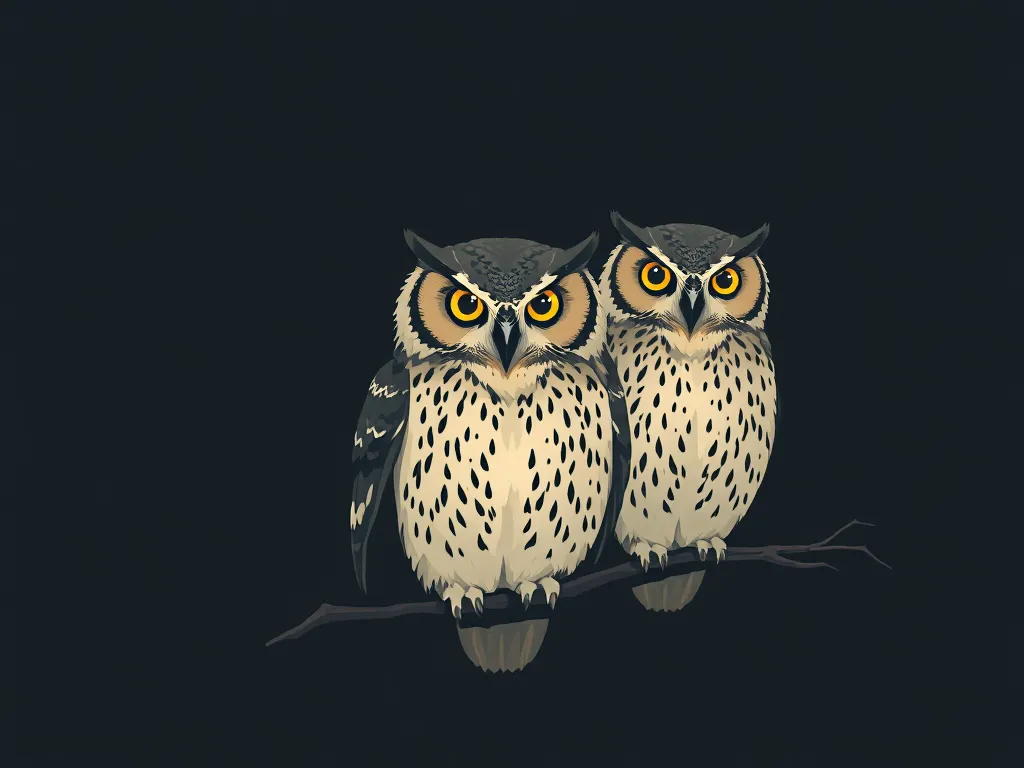
Owls possess the best night vision in the animal kingdom, thanks to massive eyes with high rod density and a specialized reflective layer called the tapetum lucidum. In 2026, nocturnal studies using infrared cameras confirm that owls can navigate and hunt in light levels as low as 0.000001 lux, which is near total darkness for humans. Their eyes are tubular in shape, providing a larger retinal area for light capture, but this limits their eye movement, compensated by an ability to rotate their heads up to 270 degrees.
5 Times More Rod Density Than Humans
Owls have five times more rod density than humans. Rods are photoreceptor cells that detect light and motion, making owls exceptionally sensitive in low-light conditions. This adaptation allows them to hunt effectively at night.
In 2026, microscopic analysis of owl retinas shows that rods are packed more densely in the peripheral regions, enhancing motion detection across a wide field of view. This means an owl can spot the slightest twitch of a mouse in near darkness, even if the animal is not directly in front of them. The high rod density also reduces the need for color vision, which is less useful at night, allowing more neural resources to be allocated to light sensitivity.
Tapetum Lucidum: Reflecting Light for Low-Light Vision
The tapetum lucidum is a reflective layer behind the retina that bounces light back through the eye, increasing photon capture. This biological mirror is why owls’ eyes glow in the dark and gives them superior vision in dim environments. In 2026, optical studies measure that this layer can reflect up to 80% of incoming light, effectively doubling the eye’s sensitivity.
The tapetum is composed of crystalline structures that vary in composition between species, optimizing reflection for specific light wavelengths. For owls, this means they can see in conditions where human vision fails completely, such as under dense forest canopies on moonless nights.
Hunting Efficiency in Darkness
Owls’ night vision enables them to locate small mammals and insects in complete darkness. Their silent flight and acute hearing complement their visual prowess, making them formidable nocturnal predators. In 2026, tracking data from GPS-tagged owls shows that they can capture prey with over 90% success rates in low-light conditions, relying on a combination of visual cues and sound localization.
The integration of visual and auditory inputs in the owl’s brain allows for precise targeting, even when visual information is minimal. This efficiency is crucial for energy conservation, as owls cannot afford to waste calories on failed hunts during the night.
Dragonflies: The Experts in Motion Detection
Dragonflies have the best motion and speed detection in the animal kingdom, thanks to their compound eyes with thousands of lenses. In 2026, high-speed videography reveals that dragonflies can track and intercept prey moving at speeds of up to 30 miles per hour, with a success rate that rivals advanced missile guidance systems. Their eyes are fixed in position, but the compound structure allows for a panoramic view that is essential for aerial hunters.
30,000 Lenses: Nearly 360-Degree Vision
A dragonfly’s eyes contain up to 30,000 lenses, allowing it to see in all directions at once. This compound eye structure provides nearly 360-degree vision, crucial for detecting predators and prey in flight. In 2026, imaging techniques show that each lens, or ommatidium, captures a small portion of the visual field, and the brain integrates these inputs into a seamless mosaic.
This means a dragonfly can spot a hawk approaching from behind while simultaneously tracking a mosquito in front, a multitasking feat that is rare in the animal kingdom. The wide field of view also helps them avoid collisions in dense swarms of insects.
High Temporal Resolution for Fast Motion
Dragonflies process motion faster than almost any other animal. Their high temporal resolution allows them to track and intercept fast-moving insects with remarkable accuracy, achieving a predator success rate of about 95%. In 2026, neurobiological studies indicate that dragonfly brains can process visual information at rates exceeding 200 frames per second, far beyond human capabilities.
This allows them to predict the trajectory of prey and adjust their flight path in real-time. The high success rate is not just due to vision but also to precise motor control, but the visual input is the foundation of this hunting strategy.
Evolutionary Design for Aerial Hunting
The dragonfly’s visual system is perfectly adapted for aerial hunting. Its ability to detect rapid movements and maintain a wide field of view makes it one of the most efficient predators in the insect world.
In 2026, fossil records and genetic analysis suggest that dragonfly vision has been refined over 300 million years, with modern species exhibiting near-optimal design for speed detection. This evolutionary pressure has led to eyes that are large relative to body size, consuming a significant portion of the head’s volume, but the payoff is unmatched hunting efficiency in the air.
Which Animal Has 30,000 Eyes?
The dragonfly has 30,000 tiny eyes all over its body, allowing it to see in all directions at once. This unique compound eye structure is a key reason why dragonflies are such effective hunters in the air.
In 2026, entomologists note that this number can vary slightly between species, but the principle remains the same: each lens functions as an independent visual unit, providing redundancy and breadth of view. This is distinct from the single-lens eyes of vertebrates, offering a different strategy for visual perception that is highly effective for small, fast-moving prey in open spaces.
Can Cats See 100% in the Dark?
Cats cannot see in total darkness, but they see well in very low light. Cats require only one-sixth the light humans need, thanks to having more rods in their eyes, which detect light and motion. This adaptation makes them excellent nocturnal hunters, though they still need some light to see clearly.
In 2026, studies on feline vision show that cats can function in light levels as low as 0.1 lux, which is equivalent to a moonlit night. Their pupils can dilate widely to capture more light, and the tapetum lucidum, similar to owls, enhances low-light sensitivity. However, they lack the high rod density of owls, making them less effective in complete darkness but still superior to humans in dim conditions.
No single animal wins in every category of vision. Eagles dominate long-distance sight, mantis shrimp excel in color perception, owls lead in night vision, and dragonflies are unmatched in motion detection.
In 2026, the overarching lesson is that vision is a specialized tool shaped by evolutionary pressures, with each species optimizing for its ecological niche. This diversity of visual systems highlights the complexity of the natural world and the myriad ways organisms interact with their environments.
For more on animal adaptations, explore our articles on the longest-lived species. To understand how vision fits into broader patterns, see our guide on the smallest mammals on Earth.
Frequently Asked Questions About Which Animal Has The Best Eyesight In The World?

Which animal has the best long-distance vision?
Eagles can see up to 2 miles (3 kilometers) away, making them the champions of long-distance vision.
How many photoreceptors do mantis shrimp have?
Mantis shrimp have 16 photoreceptors, allowing them to master complex color vision.
How many lenses do mantis shrimp have?
Mantis shrimp have 30,000 lenses, which enable their advanced visual capabilities.
What percentage of time do owls rely on night vision?
Owls rely on night vision 95% of the time, making them the kings of nocturnal sight.