The idea that a shark can smell a single drop of blood from a mile away is a popular myth, but the reality is both fascinating and scientifically grounded. While sharks cannot detect scents from that extreme distance, their sense of smell is incredibly sensitive, allowing them to detect chemical cues like blood from several hundred meters away under ideal conditions. Understanding this mechanism is key to appreciating the complexity of Wildlife sensory biology.
- Sharks cannot smell a single drop of blood from a mile away; this is a Hollywood myth.
- They can detect blood at concentrations as low as one part per 10 billion.
- Typical detection range for scents like blood is up to a few hundred meters (about a quarter-mile).
- Sharks use specialized nostrils (nares) and olfactory rosettes to detect chemical cues in water.
Debunking the “Mile Away” Shark Smell Myth
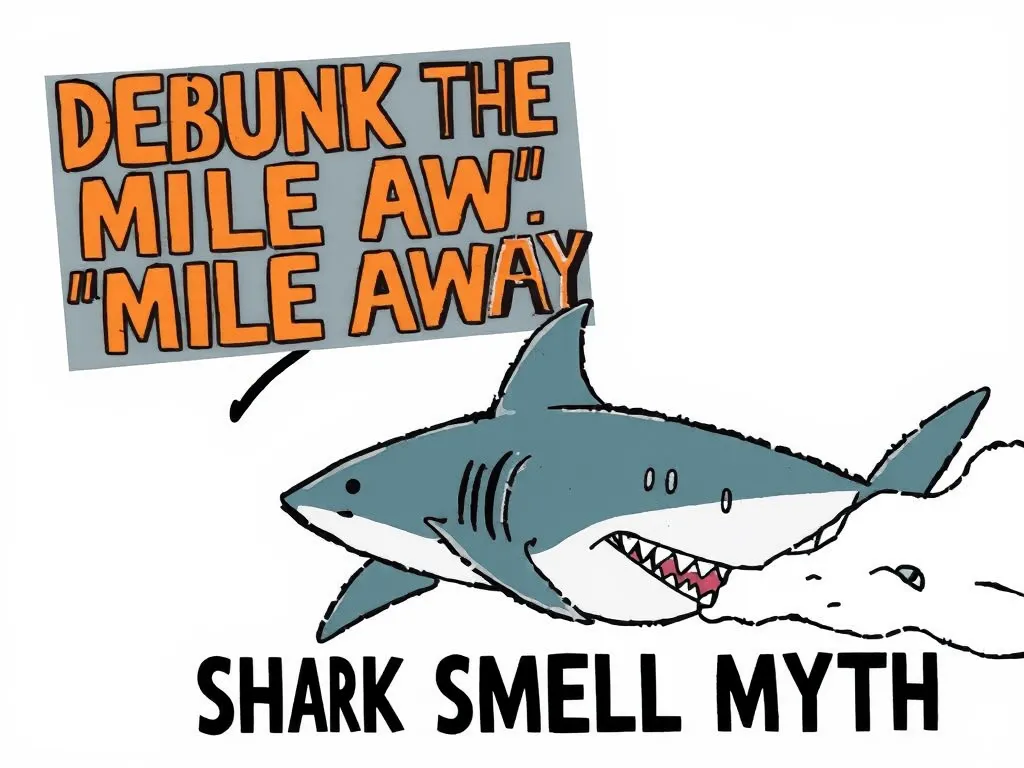
The idea that sharks can smell a single drop of blood from a mile away is a popular, yet scientifically incorrect, Hollywood exaggeration.
— IFLScience (2024)
The myth that sharks can detect a single drop of blood from a mile away persists in popular culture, but it contradicts how scent travels in water. Water is denser than air, and scent molecules diffuse slowly, taking time to reach a shark’s nostrils.
According to IFLScience (2024), sharks cannot smell anything until the scent molecules physically reach their noses. For blood spilled in the water to travel a full mile to a shark, it would take a significant amount of time, making the “instant detection” scenario impossible.
How Far Can Sharks Actually Smell Blood?
Research from BBC Science Focus Magazine and the Ocean Conservation Society indicates that sharks can typically detect scents like blood from up to a few hundred meters away, which is roughly a quarter of a mile. This range is highly dependent on environmental conditions such as water currents, temperature, and the concentration of the scent. While their olfactory sensitivity is exceptional, the physical limitations of scent diffusion in water cap their effective detection range.
The Role of Water Currents and Scent Diffusion
Scent molecules in water do not travel in a straight line; they diffuse and are carried by currents. A shark downcurrent from a scent source will detect it much faster than one upcurrent.
This is why the “mile away” claim is misleading—distance is not the only factor; direction and water movement are critical. The American Academy of Audiology notes that while sharks have a keen sense of smell, their ability to hear prey from miles away may be more effective for long-distance hunting, highlighting that smell is best for shorter-range detection.
The Biological Mechanism of Shark Smell
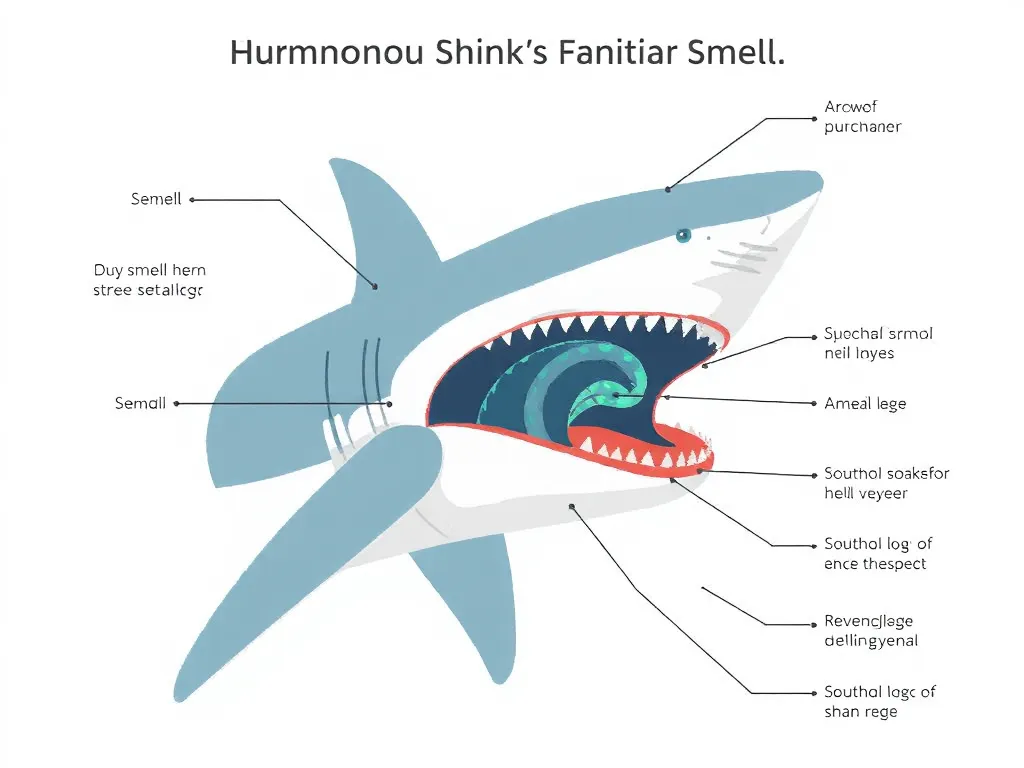
Sharks possess a highly specialized olfactory system designed for detecting minute chemical concentrations in water. Unlike humans, sharks do not breathe through their nostrils; they use them exclusively for smelling. This separation of functions allows for a dedicated and highly efficient sensory organ.
Specialized Nostrils (Nares) and Olfactory Rosettes
Sharks have two nostrils, called nares, located under their snouts. Water flows into these nares and passes over a folded, high-surface-area structure called the olfactory rosette. This rosette is covered in sensory cells that act as chemoreceptors.
According to IFLScience, these cells pick up amino acids in the water, which the shark’s brain decodes to identify potential prey or food sources. This structure maximizes the surface area for scent detection, making it far more sensitive than human olfaction.
Detection Sensitivity: One Part Per 10 Billion
The sensitivity of a shark’s smell is extraordinary. Shark Angels reports that sharks can detect blood at a proportion of about one part per 10 billion—equivalent to one drop in an Olympic-sized swimming pool.
This extreme sensitivity allows them to find wounded prey or carrion from considerable distances. However, this sensitivity does not translate to infinite range; the physical laws of diffusion still apply, limiting practical detection to several hundred meters.
Directional Tracking Using Nostrils
Sharks can determine the direction of a scent source by noticing which of their two nostrils picks up the scent first. This binocular smelling allows them to triangulate the origin of a scent and swim directly toward it. This directional ability is crucial for efficient hunting and is a key adaptation that complements their sensitive olfactory receptors.
Beyond Smell: Other Senses in Shark Hunting
While smell is a critical sense for sharks, it is not their only tool for detecting prey. Sharks rely on a suite of senses, including hearing, electroreception, and vision, to locate and capture food.
Hearing: Detecting Prey from Miles Away
Sharks have a keen sense of hearing that can detect prey from miles away. The American Academy of Audiology notes that sharks can hear sounds between 10 Hz and 800 Hz, which allows them to detect the low-frequency vibrations of struggling fish or other prey. This long-range hearing capability complements their shorter-range smell, giving sharks multiple ways to locate food in the vast ocean.
Electroreception: The Ampullae of Lorenzini
Sharks also possess a unique sensory organ called the Ampullae of Lorenzini, which detects electrical fields generated by the muscle contractions of prey. This sense is particularly useful for detecting hidden or buried prey, such as flatfish in the sand. While not directly related to smell, electroreception is another critical tool in the shark’s sensory arsenal, allowing them to hunt effectively even when scent or sound cues are limited.
Vision and Touch: Close-Range Senses
At close range, sharks rely on vision and touch to finalize an attack. Their eyes are adapted for low-light conditions, and their skin is covered in sensitive receptors that can detect water vibrations. These senses work in concert with smell and hearing to create a comprehensive picture of the shark’s environment, ensuring they can locate and capture prey with high efficiency.
How octopuses use chromatophores to change color is another fascinating example of animal sensory adaptation, similar to how sharks use multiple senses for hunting.
What’s Next: Understanding Wildlife Sensory Biology
Learning about shark smell opens the door to understanding other animal sensory systems. From the electroreception of rays to the echolocation of dolphins, the natural world is full of remarkable adaptations.
Exploring these systems helps us appreciate the complexity of why flamingos stand on one leg and other unique animal behaviors. For more insights into wildlife, continue exploring how different species interact with their environments using their specialized senses.
Frequently Asked Questions About How Do Sharks Detect Blood From Miles Away?
How far away can sharks smell blood?
Sharks cannot smell blood from a mile away; this is a myth. Their sense of smell is extremely sensitive but operates within a limited range, and they rely on other senses for hunting.
How do sharks detect blood?
Sharks detect blood using their olfactory system, which is highly sensitive to chemical cues in the water. This biological mechanism allows them to sense minute concentrations of substances like blood.
What other senses do sharks use when hunting?
Beyond smell, sharks use senses like sight, hearing, and electroreception to locate prey. These senses work together during hunting, especially when blood cues are present.